Category Archives: Sea Stories

Fairly self explanatory, from what I can remember that is.

NJP Introduction…Mine

These are sea stories about an institution in military life not found in civilian organizations, at least not officially or legally.

For those who haven’t served in the military, the institution is called Non-Judicial Punishment or NJP. NJP is the beginning of the justice system for military organizations, which ends with court martials.

i’m sure the other services will disagree, but because of the nature of being isolated on a ship at sea, NJP is unique in the power it has over the crew and the necessity it has for good order and discipline as well, of course, with justice.

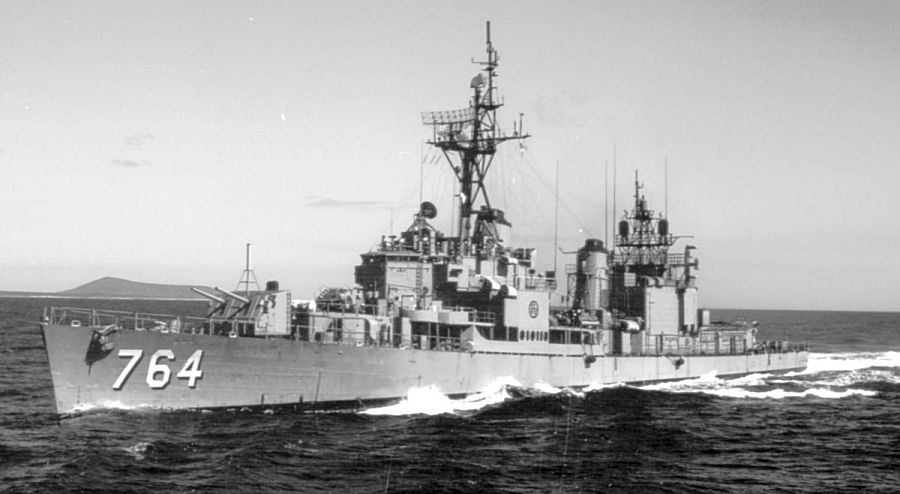
The USS Lloyd Thomas (DD-764) was old school in 1963 when i rode her as a third class midshipman. A “FRAM II” destroyer, she had no ASROC, torpedo tubes amidships, two 5″ x 38 twin gun mounts, DASH, and the amazing hedgehogs.

My first introduction to NJP just happened to involve me. In 1963, i was aboard the USS Lloyd Thomas (DD 764) as one of 21 third class NROTC midshipmen. Our first liberty port out of Newport, Rhode Island was Sydney, Nova Scotia. We were not aware, or at least i was not impressed with the idea of sticking to rules and regulations. We had just concluded our first year of college, and we were raring to have a good time, which we did.

While in Sydney, liberty on the Thomas was declared by rank: Liberty for second class petty officers and below expired at 2200. First class petty officers and below expired at 2300; Midshipmen and chiefs liberty expired at midnight, and Officers at 0600 (as i recall) before we were to get underway at 0800. On our last night of liberty in Sydney, a half-dozen third class middies executed our plan to have a good time for as long as possible with the assistance of one of the first class midshipmen. He had the duty that last day and had drawn the OOD quarterdeck midwatch. He agreed to not report us if we came back after liberty call during his watch.

We arranged to meet some local young ladies at one of their homes. The crew had found the local dance hall and went there in mass, but we opted to miss that and have our own rendezvous and, of course party, party, party. As i remember, my night was really uneventful, but i did drink a good bit of Carling Black Label (Do you remember, “Hey Mabel, Black Label?) and was happy to stay until about 0200.

That is when our plan pretty much fell apart. When we crossed the brow to report aboard around 0230, our accomplice was no longer the Officer of the Deck. A junior officer had taken over and the Executive Officer, a stern, no fooling kind of guy, was on the quarterdeck.

The dance hall had created some jealousy when the sailors began dancing with girls of the local boys, also at the hall. A fistfight began between a sailor who was dancing with a local was confronted by her boyfriend. The fight expanded until all the men were rioting while the ladies went home. It was a doozy. Bottles of Mabel’s beer were apparently missiles in the air and used as weapons as well.

Liberty was cancelled around 2100 when the shore patrol and local police reported the melee to the ship. The ship was had mustered to see who was missing and began counting heads to ensure everyone got back.

The Exec ordered the quarterdeck to put the six of us on report. We acknowledged but rather than head for our racks, hung around close to the quarterdeck to watch sailors straggle back from the brouhaha. It was a constant but decreasing stream of sailors in varying degrees of disarray.

My favorite returnee was a third class petty officer. He stumbled off the quarterdeck around 0230 on his way aft to his berthing, drunk in partial uniform with his whites torn and bloody and big chunk of his jumper top missing. He also had no shoes or socks. We caught him as he reeled down the weatherdeck.

“Did you win the fight?” we asked.

“Win?” the sailor shouted, “Hell, i got back didn’t I?”

One of the last groups to return were in a cab. About four chiefs and the captain poured out and stumbled (a nice way to describe it) across the brow. The captain, a former submariner, preferred running with the chief petty officers rather than the wardroom. Seeing the stern XO there, the chiefs disappeared immediately after reporting aboard.

The XO, looking for some command guidance and relief apparently, approached the more than slightly inebriated CO and almost pleaded, “Captain, liberty was cancelled at 2100. They had a big fight between the town guys and our sailors at the dance hall. i’ve been very worried about you.”

The captain reeled about, looking cockeyed, and said, “Dammit, that’s great. Liberty for all hands.”

The XO, as quietly and unobtrusively as possible, which wasn’t very unobtrusive, escorted the captain to his cabin.

The next morning, the Lloyd Thomas left the pier to join the other ships of the USS Intrepid (CV 11) flotilla in the eight-week cruise. i’m not saying the captain might have been a little bit hungover and i cannot find a report of the incident in any search, but while standing out the harbor, the Thomas sideswiped a Japanese fishing vessel. i know because standing the port wing lookout, i watched as the startled Japanese crew went from eating their bowls of rice to jumping over the side. Amazingly, the ship proceeded out as if nothing had happened.

A day later at Captain’s Mast, i was assigned three weeks of extra duty, meaning after the working day, i was assigned a couple of hours each day to do onerous tasks. With my devil-may-care, good-times-roll demeanor, i had a good time. The best moment was the night i was assigned to scrub down the after-steering gear room, just aft of my berthing which was on the first deck below the fantail. With the huge gearbox creaking and groaning, i climbed atop and took a nap. Figured that would show the XO.

i never quite understood how i and the other midshipmen got such punishment at NJP for our pretty innocent foray while the Captain was doing his thing and the chiefs got off Scot free.

But i was beginning to understand NJP.

I Knew Admiral Rickover and He Knew Me

I Knew Admiral Rickover and He Knew Me

BONITA, CA – Last Friday, one regular golfer noted he had an Admiral Rickover story.

When I mentioned last week’s column and the midshipmen who broke his engagement only to be rejected by Rickover, my golfer exclaimed, “I knew that guy. He was my roommate at the Academy.”

The two stories were similar but took different twists at the end. When Rickover noticed the roommate’s grades had slipped, the midshipman confided his fiancé had moved to Annapolis for his senior year, a distraction, but his focus would be on nuclear power if accepted. Then Rickover used the ploy he had used with my story.

“Call you fiancé and cancel the engagement,” Rickover demanded. Doing as told, the midshipman called his fiancé with Rickover listening, he announced, “Honey, I just wanted to tell you I’m going to be an Naval aviator, not a nuclear submariner.”

Then there were two moments when I was A&M’s nuclear power advisor and in Rickover’s gun sight.

Texas A&M was renowned for it’s nuclear engineering program, and one NROTC cadet was a brilliant nuclear engineer. He held a 4.0 grade point average when I counseled him in preparation for the Navy’s Nuclear Power program acceptance process.

“Midshipman (name not included intentionally), I am sure you will get to the final interview with Admiral Rickover,” I commenced, “But I can find no commonality in Rickover’s interviewing techniques to tell you what you should say or do.”

“However,” I continued, “The one consistent thing I’ve found in all of the post-interview comments I’ve read is this: If you make a statement or respond to a question from the admiral, do not recant. When interviewees go back on a previous comment to the admiral, they are not accepted in the program.”

Concluding, I cautioned, “So I advise you to stick to your guns, no matter how hard the admiral tries to dissuade you.”

The young man went to Washington, D.C. and flew through the preliminary process. He entered Rickover’s lair in the late morning. When he refused to budge on a statement, Rickover sent him to the “waiting room,” a small room with a chair and a light bulb where he waited for several hours before being summoned again.

Again Rickover pressed him to recant his position. The midshipman refused. He went back to the room for a couple of more hours. The process was repeated into the late evening before Rickover directed him to stay over and see him again the next morning. After another round of refusing to budge and more time in the “waiting room,” the admiral finally asked the midshipman if he had been coached and by whom.”

The midshipman told the admiral “Lieutenant Commander Jewell” in the NROTC unit had given him some suggestions about how to respond in the interview. He was dismissed. Rickover picked up his phone and called the president of Texas A&M. The Admiral demanded his Navy staff, a.k.a. me, should not counsel midshipmen when they were to interview. Then he called the NROTC Unit Commanding Officer, my direct boss, Colonel Ivins. The next morning the colonel called me in and told me what transpired.

“And you know, Jim, Admiral Rickover called in the middle of supper,” he griped, “I swallowed my taco whole, nearly choked.”

The midshipman? He never made it to submarines. The nukes considered him so valuable after he was commissioned, they sent him straight to the research arm of the Nuclear Regulatory Commission. He never wore a uniform, but did very well.

Another prize midshipman was the regimental commander of the Cadet Corps, probably the first Navy cadet to hold the position. He also was brilliant and loved the Aggie Corps. I gave him the same direction, but it did not prove a factor.

Upon his return, he noted the interview went well until Rickover asked him what was entailed in being the regimental commander. The cadet told Rickover he was responsible for leadership of the 3,000 strong corps. Rickover mumbled something to the effect that was his job.

That evening, the TAMU president and Col. Ivins received their second calls from the admiral. “What the heck do you think you’re doing down there,” he screamed at the president, “You teach them nuclear engineering. I’ll take care of the leadership.”

The colonel got off a bit lighter this time. He didn’t swallow his taco.


Fill’er Up

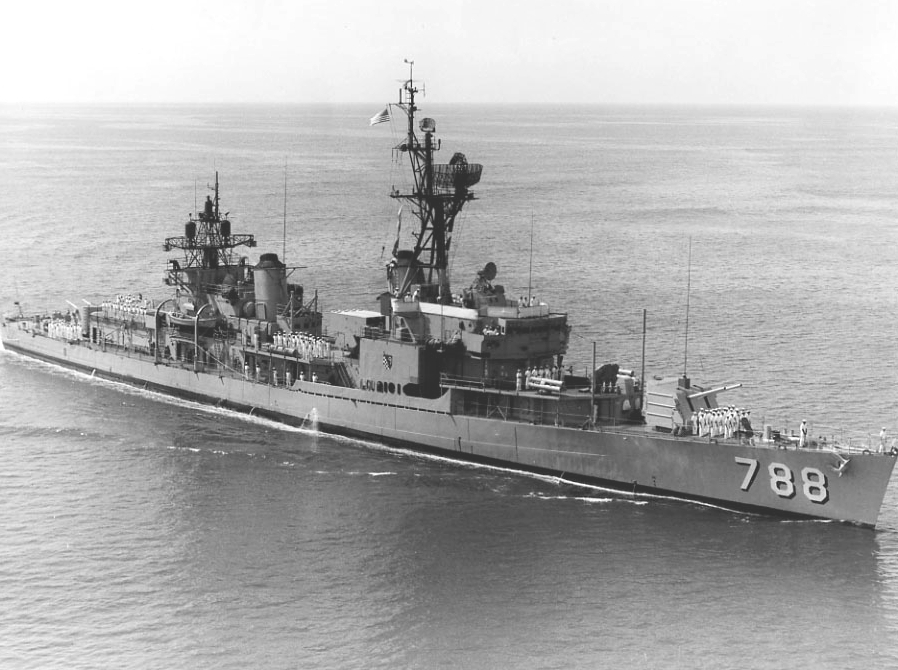
i probably worked harder In 1973-74 as Chief Engineer (CHENG, i preferred to be called) of the USS Hollister (DD 788), than in any of my other Navy tours. i had longer hours and more things to do in less time as First Lieutenant of the USS  Anchorage (LSD 36) or the Weapons Officer, nee First Lieutenant of the USS Okinawa (LPH 3), but my previous tours had given me experience in those two jobs. As CHENG, it was a whole new ball game, and i had no real experience in engineering. Not only that, it was a time when a commanding officer with no engineering experience, like mine, left CHENG alone. i had to insist he come down to main control to see a malfunctioning pump for himself. i think, in the nearly two years i was the engineer, it was the only time he went into the engineering spaces.

But there were a number of good moments, most of which were funny experiences i had as engineer. Today, shuffling through old files, i found a note i had written of one such incident.

As CHENG, i tried to go through all of my spaces daily to catch any problems requiring correction, to talk to my sailors, and just get a feel of how things were going. After all, the Hollister was 29 years old, and the previous CHENG, who had been a corpsman before getting his commission through the NESEP program, fixed auxiliary steam lines using plaster casts like the ones he had previously used for broken bones when the ship was on line in Vietnam. She wasn’t in great engineering shape.

But on one of my daily walk-throughs, i was checking out the forward fire room and had slid down the ladder to the lower level. There, two firemen had placed a 55-gallon drum on the deck plates. The two were cleaning out debris and oil from the bilges below and dumping it into the drum.

i pointed out to them the drum, once full, would be much too heavy to lift up the ladders and out to the pier. They seemed puzzled when a BT3 (Boiler Tender third class petty officer), who had overheard the conversation from the boiler flats, slid down the ladder seeking to remedy the problem.

“Don’t worry, sir,” he explained to me, “There won’t be any problem with lifting it out of here.”

And then pointing to the bottom of the drum, he further explained, “There’s a hole in the bottom of the drum. All of the oil and water is going right back into the bilges.”

Unfortunately, or maybe fortunately, i did not record my reaction or the ensuing result. Today, i just shook my head and laughed.

It was a good tour.


CHENG and My Father

This is a slight rewrite from about fifteen years ago. A very special moment in my life initiated my writing this. i don’t recall if it was newspaper column or i simply wrote it. 

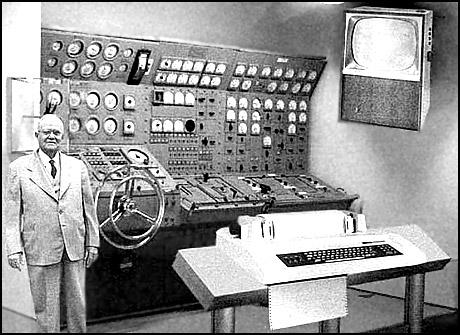
Recently, Mike Dixon, a close Lebanon friend, basketball one-on-one opponent, baseball teammate, and of several other connections sent me an email containing a photo purported to be a Popular Mechanics cover from the 1950’s. The photo showed a massive control board with many gadgets, dials, and meters. The email falsely claimed the photo was Rand Corporation’s idea of a home computer in the future 2004. A couple of my old Navy connections had sent the item to me previously, and i had checked it out to find out it was a hoax. The photo was actually a control panel for the propulsion plant of a nuclear submarine used for training prospective submarine officers. i informed Mike of this information. When he sent a not of appreciation, i provided him the following response:

When i first saw the photo and the claim from someone else a long time ago, i questioned it primarily because it did look more like a FRAM engineering plant’s main control board in the forward engine room but a bit more sophisticated. i then started checking it out and discovered the photo’s actual source.

In case you don’t recall, one of my Navy tours was as chief engineer or “CHENG” on the destroyer, USS Hollister (DD  788). FRAM’s were WWII vintage destroyers “modernized” (Fleet Rehabilitation and Modernization) in the 1950’s and early 60’s by taking off  the original superstructures and replacing them with lighter aluminum versions and new electronics and weapon packages that would add back the weight and then some. The aluminum superstructure created a ship better equipped for that era’s battle-at-sea environment, but the aluminum also induced bimetallic corrosion at the juncture of the new superstructure with the steel main deck. This was a serious problem by 1973 when i assumed my duties. This was the tour where Earl Major and i reconnected while attending destroyer school and with both my destroyer and his cruiser, the USS England (CG 22) being homeported in Long Beach.

When i arrived on board, the Hollister was forty-years old. The plant in those destroyers is still the most reliable ship propulsion system i ever experienced, especially for ships with the mission of war at sea. Duplication was everywhere and it was steam, steam, steam. Any electrical engineering equipment was backup or auxiliary. Those old greyhounds were small, fast, and durable. My vintage Hollister weighed in at 4200 tons and was 390 feet long and forty feet beam to beam. During one engineering full power trial, we built up the four boilers superheat and were still accelerating at 35 knots when we had to call off the dogs in order to make another commitment.  i still have no idea what speed she might have reached.

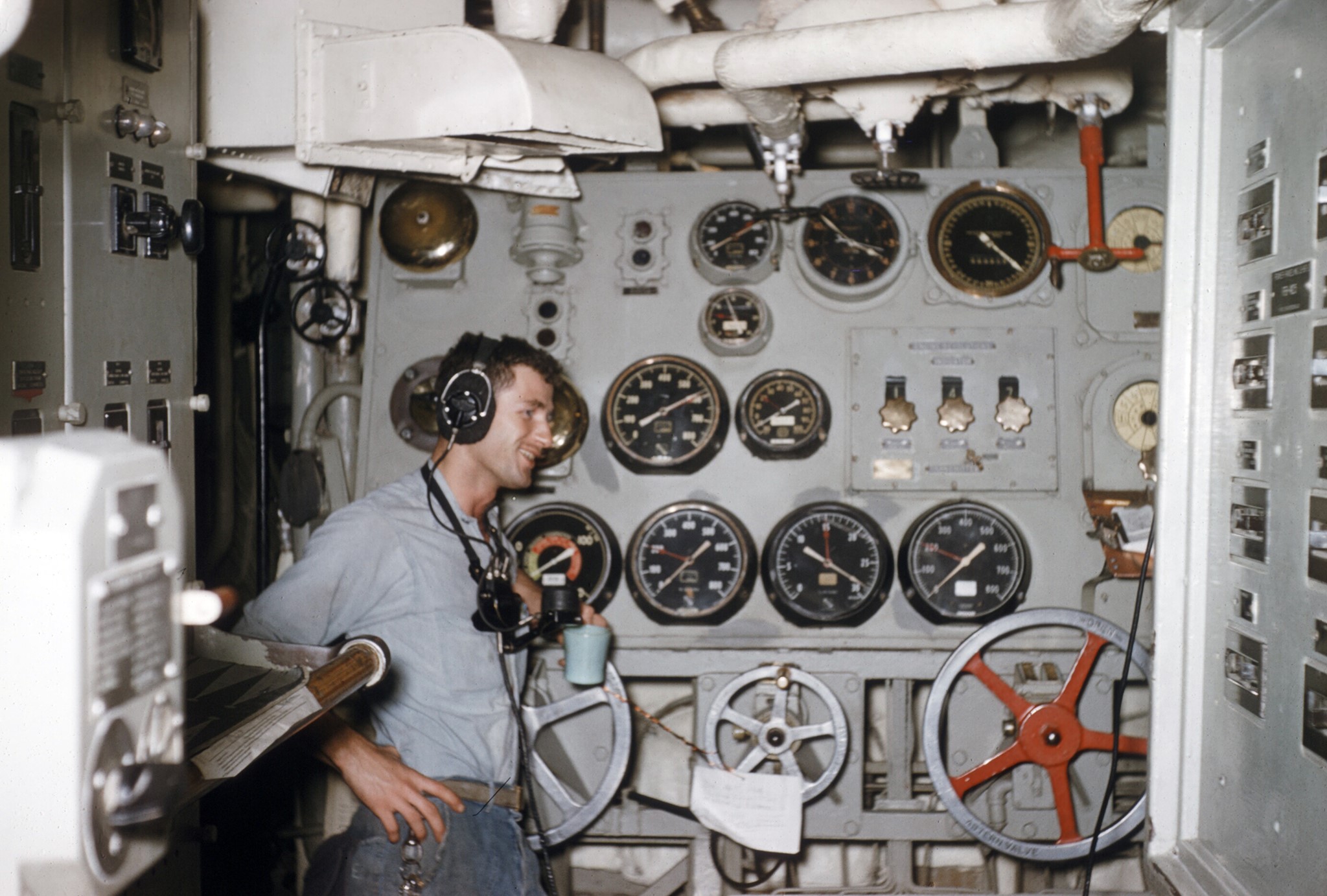
Main Control aboard USS H. R. Tucker, taken from Jesse Fox’s post in the Facebook group “U.S. Navy Gearing Class Destroyers.”

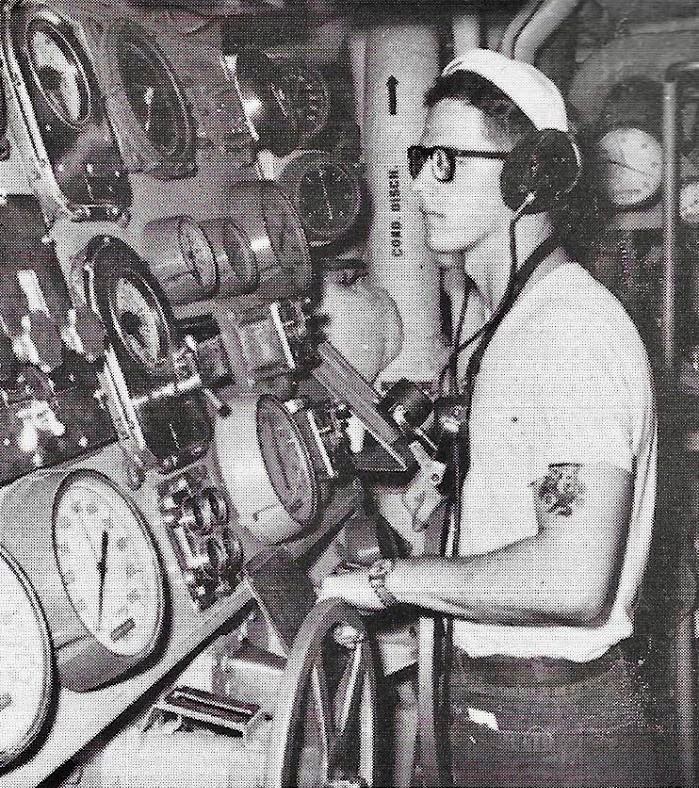
Main control and both the forward and after engine rooms were snarling, hissing, clanking, roaring webs of pipes and asbestos-lagged machinery, hotter than Hades and louder than the pits of a NASCAR racetrack or a flight deck during an A6 takeoff (and i know as i have been in all three places). The lower levels were mostly a swamp of pumps akin to a mechanical jungle. The entire engineering plant was quintessential Rube Goldberg. The heart was the main control board flats. We stood behind a wheel similar to the one in the hoax photograph as the machinist mates responded to the engine order telegraph from the bridge to funnel the appropriate amount of steam from the fire rooms through the turbines larger than a Ford Exhibition SUV to reach a finite RPM. When i climbed the ladder through the hatch to the main deck after general quarters or engineering drills, i  was flushed and hoarse, feeling like we had just harnessed an untamed stallion and ridden him through a fiery desert, then him dragging us through a steaming jungle pond.

Another photo of the main control board in the forward engine room, this one of the USS Carpenter (DD 825) taken from Jerry O Brien’s post in the “Gearing Class Destroyer” Facebook group.

Ship’s propulsion was not my favorite endeavor on warships. i loved standing watches on the bridge, conning the ship, feeling the pitch of the bow into the waves — a primary reason i eschewed carrier duty — navigating by the “seat of my pants,” piloting in coastal waters and the harbors. i loved the deck evolutions of alongside replenishment, the gun shoots with 5″ 38’s booming in my ears, putting the boats in the water, and all of the boatswainmate endeavors. i also loved the dark, blue-lit hole of sonar and the anti-submarine warfare (ASW) plot where we detected and tracked submarines, watching the scopes and the fire control tracking while listening to the high-pitched beeps of the sonar transmissions and return echoes.

(Sometimes i would go into ASW on the mid (midnight to four a.m.) or the morning (four to eight a.m.) watches after my own watch on the bridge and, while one watch stander monitored the sonar search another sonar technician (ST) and i would “talk” to whales on the underwater telephone nicknamed “Gertrude.” The whales would talk back.)

But engineering was an awesome thing to behold. The machinist mates and the boiler tenders were working men in the fullest sense, giving themselves to incredible hours of hard labor to keep their beloved monster steaming safely. i appreciated and respected their knowledge, their experience, and their work effort. Even though i remained an officer-of-the-deck (OOD) and weapons oriented, that tour in engineering still brings a sense of satisfaction.

In the spring of 1974, my father took a very unusual solo trip to Long Beach. My mother stayed in Lebanon. i took Daddy down to Pier 9 at the Long Beach Naval Station where the Hollister was berthed. i gave him a tour of the engineering spaces, my domain. We went to the forward and after fire rooms, each containing two boilers the size of small two-story buildings and their intriguing support equipment through three levels of forced draft blowers, fresh and feed water tanks and cable runs, which would out cable a TVA dam plant. We went to both engine rooms with propulsion shafts with diameters the width of a one lane road and every conceivable pump one could conjure as well as a distilling plant (we called them evaporators or “evaps”) that defied logic. We visited the welding shop, the machine shop, the damage control lockers, and damage control itself, a plotting and communication hub for any emergency. When we emerged and headed back to my Navy quarters in San Pedro, my father seemed contemplative.

This man was a pioneer in many ways in the automobile world. he was acknowledged as one of the best, if not the best automobile mechanic in Wilson County, having started to work on cars in the late 1920’s. He drove his first car, his older brother’s, in 1924 when he was ten around the block and stopped it by hitting the garage gate because his legs couldn’t reach the brake pedal. He bought a junk car from a Cumberland law student in 1932 or so for ten dollars. He completely rebuilt the engine and the drive train, then constructed a wood chassis. He drove that on dates with my mother (and others) for three years and then sold it for ten dollars. In  the sixties, he built a VW Beetle for my sister from two totaled wrecks, practically by himself including welding the good parts remaining from the two, doing all the engine work, upholstery, chassis, electrical. He knew more about the practical application of mechanics and engineering than anyone i have ever known, and at that stage of my Navy career, i had experienced college engineering propulsion professors and  the elite officer and enlisted engineering community. He garnered my greatest respect.

i, on the other hand, had fallen into the engineering job through progression. i had been a sports editor, a disc jockey, a sub chaser, and a deck hand. Engineering was something i was passing through.

As we drove across the Vincent Thomas Bridge from Long Beach to San Pedro, Daddy finally spoke, “Jim, I would have never considered you would ever be the head of such a mechanical wonder. I’m proud of you and just a bit amazed.”

To this day, i am convinced the wrong James Rye Jewell was the Chief Engineer of the USS Hollister.

Toothpick in a Bathtub

This began when i had one of the three best combinations of CO’s and XO’s i had in my Navy career of ten sea tours.

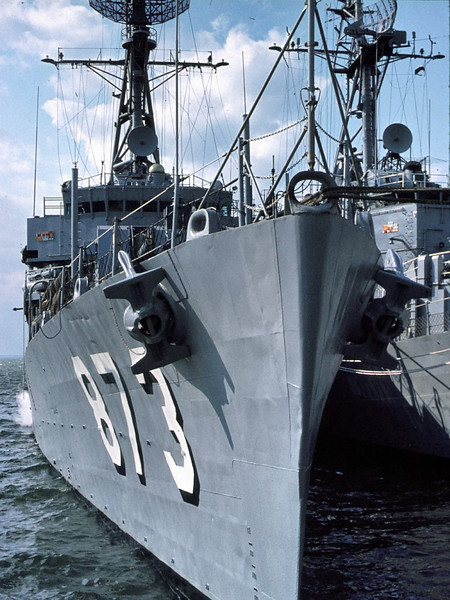
USS Hawkins (DD 873). 1968. Newport, Rhode Island.

USS Hawkins (DD 873), circa 1969

i don’t know why thought of this came into my head this first day of 2020. i mean, the regular two-year overhaul, scheduled to last six months began in September. Commander Max Lasell had just relieved as Captain and Louis Guimond remained as XO. i was still the First Lieutenant until the sitting ASW Officer completed his tour in early October, when i would relieve him. The ship steamed to the Boston Naval Shipyard, nee Charlestown Navy Yard (now long gone). i have about fifty sea stories of those six months. but there is one memory that sticks in my mind and replays over and over again.

The Hawk transited up the Mystic River to the main yard  to begin the  six-month overhaul. In late October, Hawkins left the yard and piloted to the Navy dry dock in  South Boston. The transit was one of my last days as the first lieutenant, subsequently becoming the Anti-Submarine Warfare (ASW) Officer. One of the bigger jobs in the overhaul was the upgrade of the sonar and ASW fire control systems, costing four million dollars in 1968, or just under $30 Million in today’s dollars. So after the ship was docked and the water was pumped out, i was one of the first to go to the floor  of the dock and study the underwater hull, now dry and sitting on the huge wood blocks.

i was awed by the size of the ship, especially the sonar dome which increased the ship’s draft by about ten feet. More impressive was the dock itself. It was dock #3. Reputedly, this dock was built to hold the RMS Queen Mary. At the top right of the  1946 photo below, the Queen Mary is in Drydock #3.

Queen Mary‘s length is 1,132 feet (She currently is in pier side on the mole pier in Long Beach open for tours with the staterooms  available for lodging) compared to Hawkins’ length of 391 feet. The British liner has a draft of 34 feet compared the Hawk‘s 14.5 feet (extended to over 20 feet with the sonar dome attached). Queen Mary has a beam of  147 feet while Hawkins was 40 feet wide.

The Hawkins rested on the massive wood blocks as we descended to the floor  of dry dock #3. Shipyard personnel escorted the captain, the executive officer, the chief engineer, and me to the floor of the dock as we checked out the screws, the various intakes and discharge valves and, for me, the sonar dome.

i was an ensign. i really didn’t do much more than gape at what i saw. My lasting impression of my destroyer sitting on those blocks in the dock built for the huge liner was “a toothpick in an empty bathtub.”