Category Archives: Sea Stories

Fairly self explanatory, from what I can remember that is.

A Tale of the Sea and Me (For Sam), Installment 17

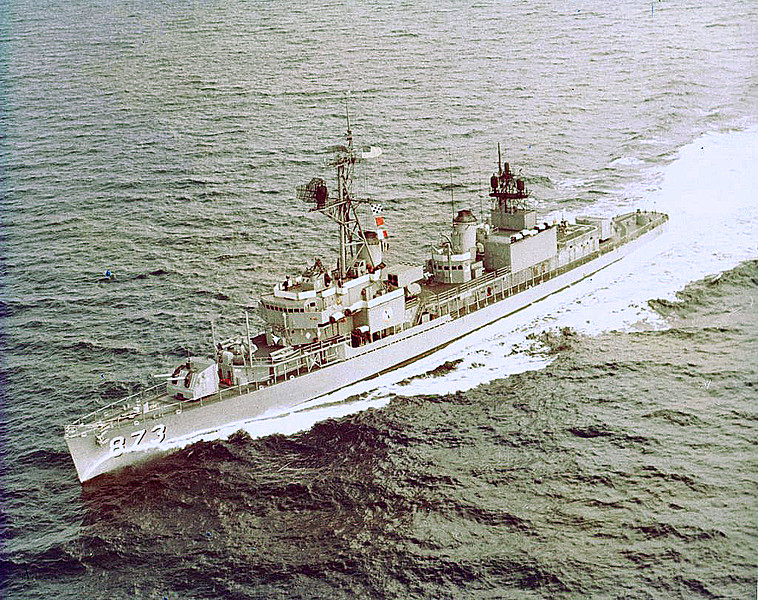
DASH was the acronym for Drone Anti-Submarine Helicopter. It was a pioneer in employing a drone in warfare. It carried a torpedo to deliver over a submarine’s positIon a a significant distance from the ship, unlike the torpedo tubes aboard the ship.

It was also when the expertise for effectively creating such a drone was in its infancy, a great idea just a bit too early. Hawkins was one of the few ships, the only one i knew of at the time, to not have lost a DASH during their flights. En route to Newport on our return, we flew the DASH several times successfully.

Other ships had some severe problems through no fault of their own. There was one that was launched and rather than respond to the air controllers signals just kept going up and up and up until it disappeared. The ship never knew what happened to it. Another had a successful flight until the DASH returned and hovered about fifty feet from the DASH deck. The controllers tried everything they could think of to get it back aboard but failed. When it ran out of fuel, they watched it sink into the ocean. There are numerous other stories of bizarre behavior of these drones resulting in losing them at sea.

As a result, sailors often sardonically called DASH “CRASH,” “SMASH,” or “SPLASH.” The two DASH helicopters on board Hawkins were offloaded when she went into the yards for overhaul in September 1968, and the program was cancelled in 1969 due to its expense and terrible record. However, the DASH hanger was a great place to show the crew’s movie at night, and the DASH flight deck provided a great place for hovering helicopters to conduct vertical replenishment (VERTREP) for transfer of supplies and personnel, not to mention a great place for steel deck picnics, and holiday routine sunning.

“{The Adventure of Remo Williams Continues”…

A Tale of the Sea and Me (For Sam) – Installment 16

Headed Home the First Time

Once clear of Gibraltar, the at sea routine kicked in with the entire ship. We had 20 days of transit back to Newport. We arrived back to our home port 15 May.

Although i had spent two months at sea on a destroyer in my midshipman training cruise, it was a completely new and fascinating experience as a junior, and i mean junior, officer.

i was a bit deflated when i was told i would be the First Lieutenant in charge First Division until the current ASW officer was transferred in late September. In retrospect, it was a good thing. i learned the aspect of destroyers that went back to sailing ships: deck seamanship. My first chief petty officer was BMC Jones, and no one could have introduced me better as to how the Navy on ships really work.

Lieutenant Steve Jones was the Weapons Officer and my boss as department head. He broke me in well. The other sailor who really became a friend was BM2 Carrier, the division Leading Petty Officer (LPO). He taught me almost as much as Chief Jones on how to be a division officer.

i was learning in my job, on my watches, division work, and how the wardroom works. It was a different world then, and i don ‘t think there is anything like it in the world today. It was old Navy.

* * *

The wardroom dining table was on the starboard side of the wardroom, which was on the main deck, two levels below the bridge. The table sat ten. For the three meals, the oncoming watch’s OOD sat to the left of the CO at the head of the table, his other watch standers, the Engineering of the Watch (EOOW), the CIC Watch Officer (CICWO) and the Junior Officer of the Deck (JOOD) followed. The lone exception was the Wardroom Mess Caterer, almost always the Supply Officer sat at the end of the table opposite from the CO at the head. i always assumed that was his position for taking the criticism of the Commanding Officer about the fare. The more senior officers, nearly always the department heads not going on watch, followed until it reached the setting to the right of the Captain. That was reserved for the executive officer. The other officers sat on the large couch that curved around the forward and port bulkheads of the wardroom. They would dine at the second seating along with the off going watch standers.

The table settings would make Emily Post proud. The china was white, the silverware was silver with a soup spoon, a teaspoon, and knife on the right, and the salad fork was on the left side of the setting with the dining fork on the inside. The dessert fork was above the plate. The table cloth was white, ironed with nary a wrinkle. Each officer had his own napkin ring. It was silver, or perhaps pewter. i find it hard to believe ours were silver. In many destroyer wardrooms, including the Hawkins, the napkin rings had been engraved with the initials or last name of the officer. The white napkins in the rings were collected and placed in the napkin drawer to be used for a day or two before the napkins were replaced and washed. The new folded napkins were at the table setting the next mess with the appropriate ring on top of the napkin.

At the time, Navy officers received a Basic Allowance for Sustenance (BAS). The intent was to to pay the officer’s contribution to the wardroom mess. If i remember correctly, mine was $48.00. This supplement to base pay was to pay for the monthly contribution to the wardroom mess. The monthly fee varied greatly. Some CO’s and their mess caterer, normally the supply officer were parsimonious and went cheap on filling the larder. Some preferred dining on the high end and damn the expense, often requiring the officers to pony up more than their BAS.

i think the Hawkins was somewhere in the middle. We ate well, but our fee was stayed within our BAS.

The fare was rather amazing…until we ran out of fresh stores. Eggs, bacon, cereal with milk, were standard choices, waffles, and pancakes were often in the choices and brunch for holiday routines was spectacular. This was of course before real eggs and fresh milk gave way to the powdered versions, which was in pretty short order.

The noon mess was something from the aforementioned Emily Post: soup was served first, followed by a salad, then the entree with vegetables, followed with dessert, all, of course, eaten with the appropriate utensil. A pre-meal prayer was given by the captain or someone he assigned randomly.

The evening mess was varied, often with sandwiches and soup.

The formality at the meals, especially the noon mess, was rigorous.

i confess, it made me feel important, different.

* * *

But to get back to sea stories, as i noted the oncoming watch’s OOD sat to the right of the captain. During one noon mess, the oncoming OOD was a really good guy. I believe his first name was Chris. He sat beside the mercurial screamer of a CO. During the meal, the conversation turned to topic of great interest to Chris. In making a point, he slammed his right hand down on the table. Unfortunately, his soup spoon was in the soup bowl when he slammed. His hand caught the spoon and flipped with a full soup spoon full of soup onto the captain’s face and khaki shirt.

The wardroom went totally quiet, awaiting for the captain to explode. He wiped his face and as much soup as he could off of his uniform and amazingly remained silent.

Chris, forgoing the remaining courses, excused himself and quickly left for the the bridge.

The time went quickly. On Wednesday, May 28, 1968, the USS Hawkins passed the Beavertail Light to port and Brenton Reef to starboard, the line between Inland and International Waters. She tied up around 0900 at the Newport Naval Base destroyer piers.

i was about to experience life in port of a Naval officer.

.

A Tale of the Sea and Me (For Sam), Installment 15

East Across the Pond

i really wanted to include the names of the people who contributed to my growth as a Navy officer in this post. However, there were a couple of people who aren’t depicted in a good light. i did not publicly name them in such a fashion and, at least for now, have left most folks unnamed.

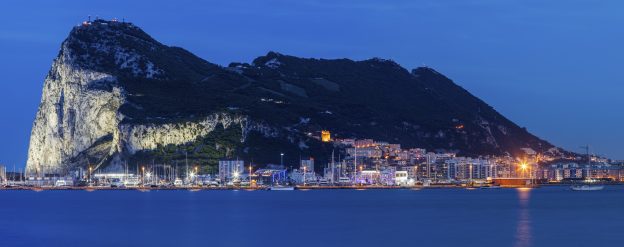
One of the most impressive sights i’ve seen in my life time occurred on the mid-watch the evening after the Hawkins had gotten underway from Málaga (the mid-watch was from 0000-0400). That, naturally, was the watch my section was assigned on my first night at sea on my first ship. The Bridge and Combat Information Center (CIC) were in four section watches. We passed through the Straits of Gibraltar around 0100. It was dark, but not dark enough to hide the massive Rock to the North, the Rock of Gibraltar (This image was copied from the “Spartan and Green Egg” website.)

i was blown away. My watch standing position was Junior Officer of the Deck, Underway, JOOD (UI). That is about a lowly of a watch position a Navy officer could have on the bridge of a Navy destroyer. i will never forget the rush i felt as we crossed the straits into the Atlantic Ocean and joined the other destroyers of Destroyer Squadron 24 for the transit across the “Pond” as we called it, and headed for our homeport in Newport, Rhode Island on a great circle route.

It may not sound like a good deal but standing the mid-watch was a good way to start your tour on a Fleet Rehabilitation and Modernization (FRAM) destroyer (These “FRAM cans” were modernized Fletcher, Gearing, and Sumners class destroyers that went through extensive upgrades in mission and armament including replacing large, if not all, steel sections of the ship’s superstructure above the main deck with aluminum that produced significant problems later).

Reason number one for a new ensign to enjoy the mid-watch was mid-rats or midnight rations. The oncoming mid-watch was awakened around 2310-2315 (11:10-11:15 p.m. for land lubbers), they would rise quickly and head for their respective messes. For my case, that was the wardroom. The stewards would prepare a super snack for the oncoming watch and the off-going watch after they had been relieved and struck below.

That watch had a few normal requirements like “shifting control” to after steering. This was done on almost every mid-watch to ensure the system was working and the watch standers in the small, cramped space above the rudders on the stern, could take control of the steering system.

After-steering as with many facets of a Fleet Rehabilitation and Modernization (FRAM) destroyers and their predecessors was devised before the FRAM upgrades to provide sustainability during an at sea conflict. Back up systems abounded in almost every aspect. If the electrical system was knocked out, most systems like the gun mounts could be fired manually. If a pump was hit in the engineering spaces, there was a manual or auxiliary steam backup. If a shaft, its fireroom or engine room were damaged and inoperable, the ship could still have propulsion from the other shaft. And if steering control at the bridge’s helm was rendered inoperable, the bridge could still steer the ship by shifting control to after steering.

In the case of after steering, the shift was made during the mid-watch but often other watches would shift control to after steering and let the watch standers there take orders from the conning officer and steer the ship.

Other than that, rarely did the tactical commander order any formation changes. During this transit, the squadron commander was the tactical commander. When steaming with a carrier, the admiral in charge of the “battle group” would order formation changes (except for the staff i was on much later in my career). So it was a relative quiet four hours. The first two hours of the morning watch (0400-0800) and the last two hours of the evening watch (2000-2400) were also pretty quiet. It was a great time to learn about being a Naval Officer and, certainly more enjoyable, hear real “no bullshit” sea stories.

The voyage to Newport was relatively serene with good seas all the way. i was introduced to the big, black rubber hood sitting over the radar repeater sitting next to the helm. During the day with light filling the pilot house, the hood allowed the watch standers to look at the dark green cathode ray tube with the white bar sweeping around, highlighting blips that most often were contacts. In the darkness of night, the hood was not necessary.

That repeater was a central character in one of the sea stories i was told on these watches.

The commanding officer was impressive and seemed to be a nice guy most of the time. He was a Naval Academy graduate and was selected for Captain before he was relieved the following August. He also was what officers and sailors called a “screamer.” For the uninitiated in the Navy world, a “screamer” was an officer who couldn’t control his temper and often would go ballistic, chewing out anyone who did not perform as he felt they should, or just go off on someone for no real reason.

The Damage Control Assistant who partook of one more drink (or more) in Málaga while i waited on the airport’s tarmac was a frequent target of the CO’s outbursts. i was told that on one night watch in rough seas, the DCA was the Officer of the Deck (OOD). The captain kicked him off the bridge in a screaming rage five times, only to call him back to the his watch. It was after the sixth time, the DCA/OOD was looking at that repeater to see if he could discern any weather anomalies and check for contacts that CIC might have missed.

Hung around the bridge were a number of battle lanterns. They were one of those backups for emergencies mentioned earlier. If power was lost, the battle lanterns were configured to detect the power loss and come on to provide emergency lighting. One of these battle lanterns was secured on the overhead directly over that repeater. As the DCA was staring intently as the scope, the captain begin another rant, cussing out the DCA for many supposed errors in hus ways. As the rants continued to ratchet up, the rough seas were building and the battle lantern was loosened by the bouncing from the waves. As the captain peered forward in an attempt to determine what the weather offered, his rant reached a crescendo. That is when the battle lantern broke loose and fell straight down, hitting the OOD/DCA on the top of the head, knocking him out.

As other watch standers went to the downfallen OOD to attend to his injury, the captain continued screaming at his officer without turning around. Finally, he turned and realized he had been yelling at a comatose Naval officer.

That was the sixth time the OOD left the bridge during one watch.

To be continued.

A Tale of the Sea and Me (For Sam), Installment 14

Across the Pond (the first time)

This is likely to be the shortest chapter in this book to be written. i have been writing on it for over a week when yesterday, i realized there was only one real “Sea Story” in all that i had written. There was a lot of personal history, which i have saved separately for my grandson

i left Key West, went to Atlanta, and then home to Lebanon, Tennessee before reporting to Charleston, South Carolina. i had no idea of what i was getting into. i didn’t have a great deal of guidance. i had service dress khaki, which i was wearing and still love in spite of it leaving the Navy in the 70’s some time; a complete set of Naval Officer uniforms; a cruise box; and a sea bag.

All i really knew was i had an airline ticket to Charleston, South Carolina where i should report to the Air Force Base, spend a night in the BOQ, and catch a flight to Rota, Spain the next day to await for a connecting flight to my first ship as a Naval Officer, the USS Hawkins (DD873). The cruise box was a 19x32x16 inch plywood box. The sea bag was a standard Navy duffel bag. They were crammed with my life.

My flight was on a Military Aircraft Command (MAC) transport to the Naval Base at Rota, Spain. Not yet accustom to military ways, i was assuming i would spend a night there and be flown to a Mediterranean port to meet my ship the next day. Nope. i sat in Rota while the Navy tried to figure out where my ship was.

i took a tour to Seville where i saw a rather poorly performed bullfight. i played golf daily at the dry, dusty course, and ate my breakfasts at the BOQ mess and the rest of my meals at the Officer’s Club.

It took two weeks for the Navy to figure out where my ship was located (it was way before GPS). i was notified by messages to the BOQ front desk, where i was berthed, my flight would be the next morning. Finally.

i caught an Air Force flight the next morning to the Aeropuerto de Málaga-Costa del Sol in Málaga, Spain, a flight under two-hours , arriving around 1000.

The crew offloaded about a ton of equipment and supplies onto the tarmac, covered it all with a cargo net and dumped me beside the pile. The crew signed some papers with members of the La Guardia, Spain’s security force who wore those strange hats that look like plastic with the square bills glued to the cap. Then, the plane took off.

There was no shade. It felt like it was nearing 100 degrees. i had no where to go. Thinking the Navy would pick me up soon, i sat in my service dress khaki and sweated.

i was pretty well drenched when my transportation arrived. The DCA had directed the hired truck to the airport, and he decided to hit Málaga one last time. His last drink(s) took about two hours while i sat with my sweat.

i had been excited about some liberty in Málaga. As the airport name suggests, it is part of the Costa del Sol, the Spanish equivalent of the French Riviera. The thought of hitting the night spots and going to the beach was intriguing. But as i sat down the shotgun seat of the van, the DCA informed me the ship would be getting underway for the States as soon as the cargo was loaded aboard.

My exciting time for my first experience in the Mediterranean was two weeks on base in Rota with a day in Seville, a short flight to Málaga, and the upcoming three-hour underway to the Atlantic.

i reported aboard the USS Hawkins (DD 873) , met the Executive Officer, CDR Louis Guimond, and my Weapons Department head, Steve Jones. i was escorted to my stateroom, the only one in forward officers country. i reported to the bridge and observed her get away from the pier.

And i was underway: a Navy ensign on my first ship, . i was totally unaware of what was before me.

The adventure continues.

A Tale of the Sea and Me (For Sam) – Installment 13

Key West, 1968

As we reached two months from commissioning, we had to fill out our preference cards. Our preferences were to request in priority what type of ship we wanted, what billet we wanted, and what was our home port preference, and add two other choices in each category.

After my experience on my third class midshipman cruise, i knew i wanted to be on a destroyer. After enjoying my time in Combat (CIC: Combat Information Center) and not finding my engineering stint very enjoyable on that cruise, i requested CIC Officer as my billet. And since i had an aunt and uncle in Saint Augustine, i wanted to have Mayport, Florida as homeport. i had relatives all up and down the east coast of Florida.

To my surprise, my orders aligned exactly: a destroyer in Mayport as CIC officer with two months of CIC school in Glynco, Georgia. i was delighted. But as with all things Navy, the day before i was to be commissioned, my orders were changed. i would now report to the USS Hawkins (DD 873); home ported right where i was, Newport, Rhode Island, to relieve the Anti-Submarine Officer after two months of ASW training in Key West, Florida.

I was disappointed, but ASW seemed interesting and i liked Newport. So after a month of leave, i went to Key West. A good friend in OCS also went there. Lanny Harer, a North Carolina boy was going to Basic Underwater Swimming school there en route to a diver in the Explosive Ordinance Disposal (EOD) Navy.

At the time, at least on the East Coast, newly commissioned officers on the path to becoming SEALS, EOD, or divers all went to the basic swimming training first. Lanny and i shared a stateroom in the BOQ. Lanny, a SEAL trainee, and i began to hit the high spots in Key West together.

Our favorite spot was Captain Tony’s, a bar off the main drag, although we of course hit Hemingway’s other watering hole, Sloppy Joe’s and a piano bar on the main drag were also our favorite. But Captain Tony’s was our favorite. It had dungeon like booths below street level, but we populated the bar. Captain Tony was later the mayor of Key West and a legendary figure, with a huge stuffed grouper mounted on the roof of his car.

* * *

We played a soccer match against a Dutch destroyer on a port visit. Back then, i was likely one of the few of us who had ever seen a soccer match (my high school , Castle Heights Military Academy, was a prep school and had a soccer team) and our contingent got hammered. Not only that, we were all so beat we had to retreat to Captain Tony’s for beer.

Then, we played a team from a British submarine in rugby. We didn’t know much about that game either, but one of the UDT guys had been a “Little All-American” halfback in college. So, we played it like football, and won handily.

* * *

My favorite past time came on Sundays. Four to six of us would head out around 0500. We would stop at a Cuban bakery and get a couple of loaves of their freshly baked bread for the cold cuts and fixings for sandwiches. From there, we would return to the base and board an MWR fishing boat. The boats had been harbor patrol boats used in WWII to defend US ports. They had been converted into deep sea fishing craft for about ten people. Sailors assign temporary additional duty (TAD) manned and maintained them. They were rigged with all the fishing gear necessary. There were two large ice chests, one on each side of the main weather deck. One held ice to keep the catch cold until we returned to port. The other held our sandwiches and beer, more than enough for a day of fishing with ten fisherman. We normally had about six.

The craft would take us out into the Caribbean Sea where we would fish for grouper. We usually caught three or for and an occasional barracuda.

* * *

It was a wonderful two months, and the ASW training readied me to track submarines and fire torpedoes and Anti-Submarine Rockets (ASROC). The one thing i still remember was the closing session right after our final exam. The instructors sat up our training room for a role play. The black and white square tile floor acted as a grid for a sea battle between a US destroyer and a Soviet nuclear submarine. The instructors had two sets beyond the grid. One was the bridge and the ASW plot of the destroyer. The other was the control room of the Soviet sub. * * *

The students could easily tell which was which because the actors of the Soviet officers were swilling fake vodka out of vodka bottle.

The situation became more tense. The US actors walked through the very tight procedures to get permission to fire a nuclear Anti-Submarine Rocket (ASROC). When it became clear the Soviets were about to fire their nuclear weapon, the US actors fired the ASROC.

That’s when the lights went on a movie began showing on the screen set up next to the makeshift stage. The clip showing was the only test firing of a nuclear ASROC. Then music began to play. It was the Beatle’s song “Yellow Submarine.” We loved it.

* * *

One recollection sticks in my mind. The gate guards at base entry points were all Marines, normally corporals or buck sergeants. Their signaling for a vehicle to pass through the gate was a thing of precision beauty. i was impressed.

* * *

Oh yes, i invited an Atlanta debutante down for a weekend. We later became engaged and married. It was short lived, and i put her in a terrible situation. i won’t go deeper on that except to say, we were young, and i was not only naive, but foolish, and i regret putting her in that situation. She divorced me six months later.

It was time to get down to being a Naval Officer on a ship.