All posts by Jim

The Commander, the Ensign, and the Flagpole

One more iteration. One more…okay, maybe two or so.

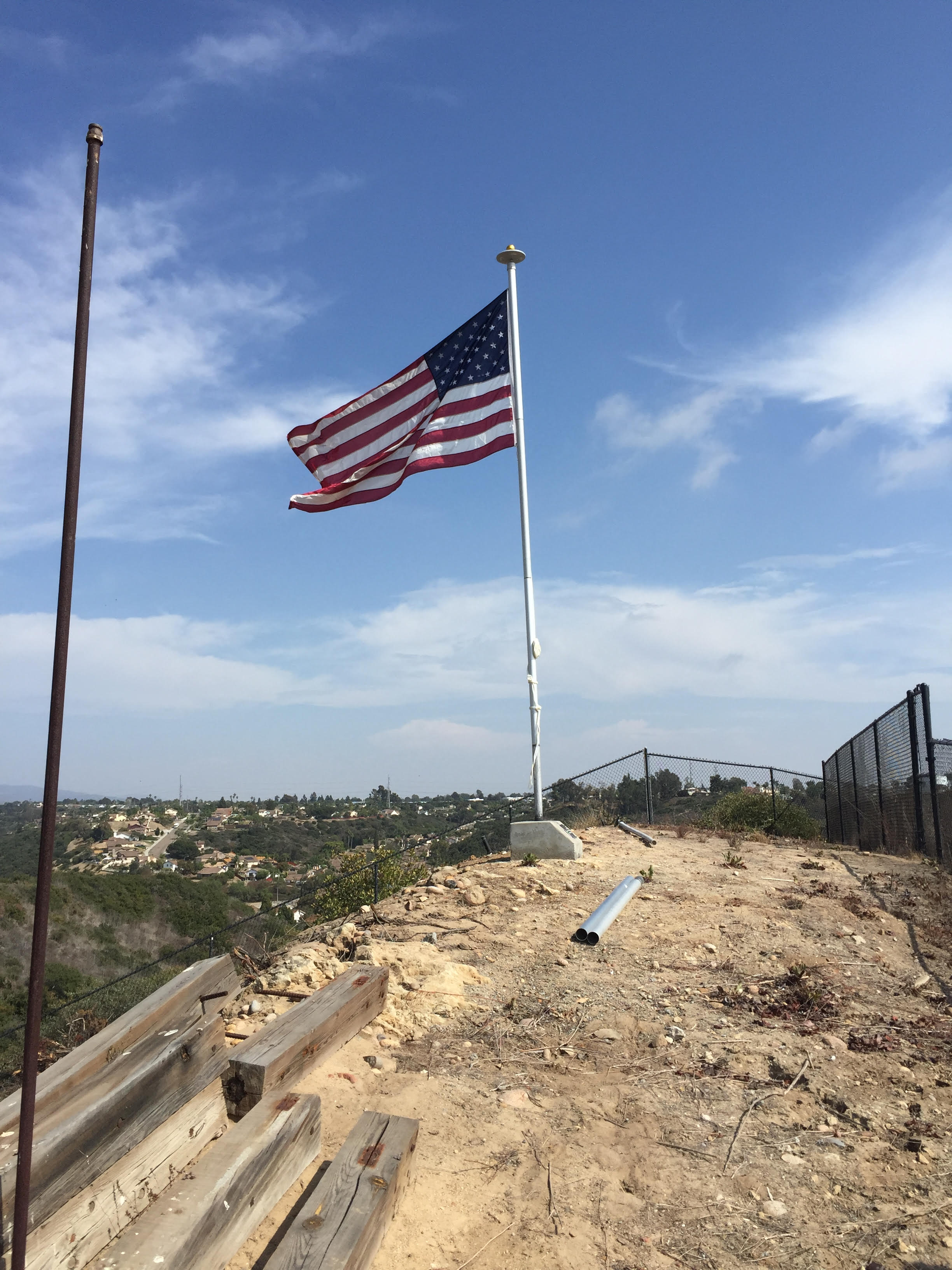
But it’s back up. Back in its place at the top of our slope.

Up. First time in six months. Yeh, it’s temporary. When Paul gets back from his venture, he’ll come over to redo the front yard (another story) and bring some steel pipe that will fit inside. We’ll add a section or two…or three if it doesn’t give Maureen a heart attack.

It’s been a saga.

About thirty years ago. i got this idea of an ensign on top of our slope for me to admire and the neighbors to see. No, no, no, not the Navy officer standing up there. Ensign is also a Navy term for our United States flag. i went and got some plumbing pipe and made a flagpole. It was about twenty feet high with a union half way up. Didn’t last long. Rusted. Union broke. Gave it up.

Then in 1999 when i had to put Cass, my all-time buddy to sleep, i decided to try again. Ordered a flag pole. Aluminum sections. i built a concrete base. Put the urn holding Cass’ ashes inside. Added a bakelite plaque. It’s still up there: “Cass, A Good Dog, 1985 – 1999, To his and our freedom.

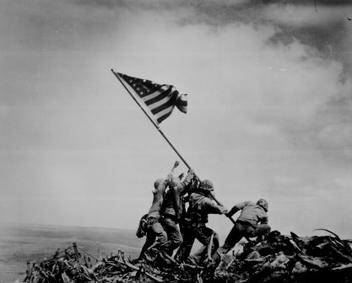
So up went the pole, 25 feet of it. Up went the ensign. It was no little thing either, eight by six. We could see it from about five miles away. So could a lot of other people. There was this guy who lived the bottom of our hill. i’ve written of him before. Jesse Thompson. He was a Pearl Harbor survivor. We had a number of them around here back then. After all, this is a Navy town. Jesse got a group of them together. Turned his home into a Pearl Harbor museum. The group met every Wednesday. He came up the hill one day when i was out, knocked on the door; told Sarah who he was, and asked her to thank me for my ensign. He said the group all agreed it reminded them of Mount Suribachi. That made me feel good, real good and proud.

In those days, i was good at maintaining protocol. Lena, our replacement for Cass, and i would go up every morning at 0800, raise the ensign, and observe colors. In the evening, we would go back up, lower the flag exactly at sunset, and observe colors again. It was a nice way to start and end the day. It was nice view. i even saw two green flashes during those sunsets. Lena enjoyed her walks.

My brother-in-law was temporarily living with us at the time. He kept the house while we went somewhere. He was watching the flag in a winter storm. He said it was beautiful holding stiff into the strong wind, bending the flagpole.

That’s when it broke the first time.

i got another section to replace the broken one and strengthened the pole. The winds can get strong coming off the ocean to the top of that hill. i bought a PVC pipe to fit inside the sections, cut it to the flagpole length and got some neighbors to help me put it up. Looked good.

A neighbor from down the hill came by and stopped when she saw me working in the front yard. She said she was a teacher and seeing my flag each morning on her way to work made her feel all was right with the world. She handed me fifty dollars, for maintenance she said. i tried to refuse, but she was insistent. i finally gave in.

Then the Santa Ana came. Fifty knot winds. The PVC wasn’t that strong, and once again, the flag pole toppled. Next. Paul suggested the thicker PVC. This one needed some muscle no longer available in seventy-year old men. Paul and his boys, with my feeble assistance, got it in place.

Until the winds this past winter. January.  Winter storm. i knew the pole could withstand the projected 40-knot winds. i checked it out. Beautiful sight it was, rippling against the wind, resistant, Suribachi-like. Maureen asked, “Aren’t you going to take the flag down?”

“Ensign,” i corrected her. “Nope, i said, “She’s doing fine.” “Don’t worry,” i said, “She’ll withstand forty knot winds.”

i went inside. The wind gusted to seventy: down went the pole with my ensign.

Six months, i waited. Now it’s up. And until Paul gets back, it will be a bit shorter.

But i don’t care. After all, it’s become a landmark in Bonita:

College Station, circa 1977

Escape. That’s what this is. i was trying to get into work. Budgets, book writing, sorting, organizing. That sort of thing. Gave it up when i came upon this one in a folder i had misfiled a long time ago. What the hell. Here it is.

College Station, circa 1977

a spring day whistles into the middle of Texas winter:
i gaze through the campus greenery
from the window of my antiseptic office
recalling a Newport winter several years ago
where sleet with biting cold predominated;
the hoary wind gnashing its way
off of Naragansett Bay
inside it was warm,
candles lit the upstairs apartment;
bare trees haunted from the yard
before Easton Bay
with disdain;
wine was poured,
long before i knew its worth,
to be sipped while the bay wind
beat the sleet against the windows.

where have all the smiles gone
which once accompanied the sleet, the wind, the cold
and
the wine?

i turn from the window
looking out at winter,
what we, back then in Newport,
would have called early summer;
the secretary reminds me to return a call;
i pause with the receiver in my hand
remembering the winter smiles
before returning to the business at hand.

Lessons from a POW

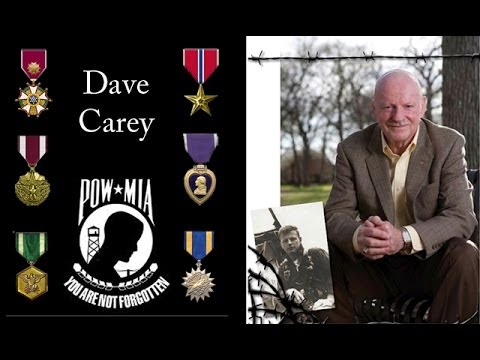
This was one of my very first columns for The Lebanon Democrat. It is special to me because the man i wrote about here is very special to me. i wrote it right after the bad San Diego wildfires in 2007. Dave remains a wonderful, actually amazing man, and i am proud to call him my friend. For some reason last night while watching the woeful San Diego Padres lose again, something Dave said to me popped into my brain. Something Dave said during our time together or wrote in his book keeps popping into my head. That’s a good thing. If i remember correctly, this pop up was how his North Vietnam interrogators kept wanting to know where they kept all the cows, pigs, and chickens to feed the crew on an aircraft carrier. Regardless, i wanted you, in case you missed it before, learn a little bit about an American hero. If you want to learn more about his story, his book, The Ways We Choose: Lessons For Life From a POW’s Experience is available on Amazon, Barnes and Noble, and i believe you can still get one from his website, www.DaveCarey.com. If all else fails, contact me. We will get you one if you want it.

SAN DIEGO, CALIFORNIA – This past Monday, I left the cleanup from the San Diego fires and flew to Lake Tahoe, Nevada. It was not an escape. It was work. I was co-facilitating a team building workshop for a California police department with my friend, Dave Carey.

Dave is not your ordinary business associate. On August 31, 1967, Dave Carey’s A-4 was shot out from under him over North Vietnam. He spent five and a half years as a Prisoner of War (POW), most of the time in the infamous “Hanoi Hilton.”

Dave and I met in 1985 at the Naval Amphibious School in Coronado. We worked together for just shy of a year as I transitioned into Dave’s position as the head of leadership training for the West Coast and Pacific Rim. Together, we help create a two-day workshop on leadership excellence for senior Navy officers.

Dave retired. Four years later in 1989, I followed suit. After my initial dive into my new job as Mister Mom, I soon started to look for ways to generate income in the quiet hours.

After some discussion, Dave and I agreed I would write a book about his POW experience, or more accurately, about his motivational speeches concerning his experience. After completing the draft, we decided it really should be written in first person. The original draft is on my office bookshelf.

Eight years later, Dave holed up for three weeks and completed The Ways We Choose: Lessons For Life From a POW’s Experience.

Part of my approach to writing was generated from conversations with Dave. He and I were driving to another workshop about fifteen years ago when I asked him about what outcome did he expect the audience to have when he gave a speech.

Dave said he had expectations initially, but discovered his listeners made their own connections. Early on, Dave had completed a luncheon speech when a huge Texan came up to him, put his big arm around Dave’s shoulder and drawled, “Can I talk with you, Dave? I understood every word you said today. The fact of the matter is, in this life, we are all going to get shot down, and some of us more than once.”

I don’t know about you, but I’ve managed to get shot down several times. Dave’s book and his ideas have been significant guides to me as I have wandered through living. The book not only applies to San Diego, Lake Tahoe, and Middle Tennessee; it worked in the Hanoi over 40 years ago.

Dave’s book revolves around a question he is most frequently asked, which is, “How did you do that? How did you and the other POW’s get through that?” He maintains they did that in a similar way to how we get through our daily process of life and work.

Dave’s assessment of how he and his fellow POW’s made it through boils down to five factors:

  • We did what we had to do
  • We did our best
  • We chose to grow
  • We kept our sense of humor
  • We kept the faith
    • In ourselves
    • In each other
    • In our country
    • In God.

His anecdotes relating to those factors are humorous, inspiring, and thought provoking. I have had the wonderful opportunity to discuss these things in depth with Dave.

So I check myself against his factors almost daily. They have even become part of the value statements for my consulting group.

I will not ruin the book by parroting it here. However, I am particularly fond of Dave’s pointing out how the POW’s trusted each one of them would do the best they could, would resist the severe interrogations to their limit; recognizing each of them had their own limit levels.

I now try to consider folks I work with are doing the best they can do. This puts a whole different shape to the way I work with these people. Fewer rocks are thrown; fewer lines are drawn in the sand; fewer chips are put on shoulders.

I would encourage everyone to read’s Dave’s book. Your connections should be yours, not mine, not Dave’s. I know folks in Middle Tennessee also get shot down every once in a while.

i should note here that bit about my consulting group is no longer extant. i write. i used to drive ships. i gave up consulting when i got tired of trying to make people do the right thing. i still follow Dave’s advice.

I Was a Sailor

Today’s Navy is a world apart from the Navy i served for twenty-two years. The change had begun as i was completing my active duty. Women were becoming part of seagoing world. Computers were becoming more and more critical to getting the job done. Gas turbine plants were replacing the old classic steam engines. i expressed my feelings in a poem included in these posts before and was part of my book, A Pocket of Resistance: Selected Poems. i will not judge which Navy is better or worse. They are just different, that’s all. But i sure liked going to sea in the old Navy. i am posting this in a group called “US Navy Gearing Class Destroyers.” Old sailors. i hope they enjoy it.

I Was a Sailor

I was a sailor
when the boatswainmates
swept down and triced up;
the decks were spotless;
first division stood
at the ready on the forecastle to
cast away all lines;
the sleek greyhound visaged lady
got underway,
no tugs,
no bow thrusters
like they, the pansies are required to use
today;
no sir:
we ruled the seas
standing proud in quarters standing out,
no manning the rails for show,
we did it like it was supposed to be;
the bow cut through the channel like
it owned the sea,
the trough slid up the side
only feet under the gunwale;
the stern wash was white with foam:
we were underway,
rocking and rolling.

I was a sailor
back when being a sailor
was tantamount to being a man;
there weren’t no great number
of automatic controls back then,
not one hell of a lot of video games or graphics to read:
you turned the valves and the steam hissed;
you cleaned the boiler plates on the lower level
with the blowers blasting air in your face
for relief from the hot wet heat;
inserting the plates and firing it up
hoping it wouldn’t smoke white
and
blow your ass
off the naval station
to kingdom come;
the boilers would rumble,
groan and croak,
spew their smoke out the stack,
build up steam
until there weren’t no smoke
and
the boiler tenders
down in the bowels
knew they would be
getting underway
soon.
we lined up the feed pumps;
kicked off the auxiliaries,
went on ship’s power,
dropping our umbilical cords from the pier
like the doctor cuts the cord
on the newborn:
separating us from mother earth,
sending us to the bounding main;
when we turned the nozzles of steam
onto the turbines of the main engine,
watching the tree trunk sized shaft
turning slowly;
the engine room wheezed and coughed:
made us feel like we
were in a jungle of sweltering pumps and motors
while the distilling plants gurgled with
Rube Goldberg smugness,
making you wonder if
they would really make
good water
again.

I was a sailor
back when we manned the big guns,
not standing apart, aloof, with computer controls
in the air conditioned spaces
but inside those big guns,
metal death traps where
we stood alongside the breech
when the firing shook our brains, our guts, our souls
and
we loved the thrill of it all;
the brass kicked out the aft end;
the hot case man with his asbestos gloves
smacked them out onto the rolling deck:
no automatic, manless machine of death
back then.

I was a sailor
back when we didn’t know
what the hell politically correct meant,
back when they meant
|what they said when they said,
“if the navy wanted you to have a wife,
they would have issued you one.”
Navy was a way of life,
living on board, locker in a club
just outside the main gate
with civvies,
so
you could go down to sailor town,
drink beer and cheap whiskey,
enough to make the woman look
pretty enough to pay
for the night so
you could get back in time
for quarters at 0700
unless there was a fight.

I was a sailor back then
when men were men
and
sailors were sailors
and
then was then.

Way “off the wall”

The item below appeared in yesterday’s (July 10, 2018) edition of the San Diego Union Tribune. It was included in the daily sidebar, “Off the Wall,” which contains interesting and humorous tidbits and a sports trivia quiz.

This particular item was so wrong, so bad on so many levels it caused me to laugh so hard i snorted my breakfast cup of coffee.

i hope you are not offended and also find it funny as hell:

Off the wall

Touching tribute

After a young New Orleans man was killed, his grieving family chose to remember him doing what he loved: sitting in front of a TV with his beloved Boston Celtics on the screen.

The body of 18-year-old Renard Matthews , who died from a gunshot wound to the head on June 25, was dressed in a Celtics jersey at a Sunday wake at the Charbonnet Labat Glapion Funeral Home in the Treme neighborhood. WDSU-TV reported that his body was positioned in a chair and he had a video game controller in his lap. His favorite snacks were positioned on a nearby table and the floor.

The 18-year-old Matthews will be buried today.