All posts by Jim

Just a Bit of a Vacuum

Last night, Maureen and i settled into our usual routine of watching the Padres on TV, or at least Maureen watches to somewhere around the seventh inning when she heads for the bedroom to read before sleep. You see, the anxiety she suffers in close games is difficult.

This old sportswriter has a built in inability to leave a game before the ending. As Yogi said, “It ain’t over until it’s over.” A quote attributed to Dan Cook, a San Antonio sports announcer, but i like to think it was invented by Danny Murtaugh, the manager of the Pittsburgh Pirates in the 50s and 60s was “It ain’t over ’til the fat lady sings”. Those quotes and scorekeeping imbued in me to stick around. So i did.

Friday, i watched the Padres leading the Arizona Diamondbacks, 7-2, into the 9th, only to suffer a grand slam and two-run homer to fall behind 8-7. Then, in the bottom of the 9th begins with Jurickson Profar, an all-star, tie it with a home run, and then Manny Machado hitting a walk-off (he didn’t walk, he trotted) home run to win the game 10-8. Last night, i watched them lose in the “ghost runner” 10th inning, 7-5.
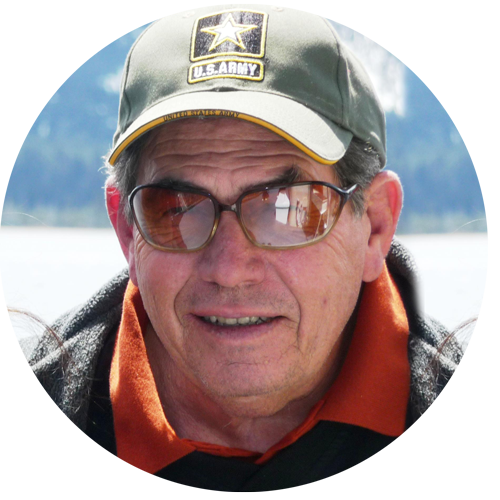
Throughout both games, i felt a vacuum. Jim Hileman and i shared Padre season tickets to Padre home games. Jim, like the preponderance of folks my age, has lost interest, not just the Padres but most professional sports — Jim still follows his Pittsburgh Steelers with a passion. The last guy around here who discussed Padre baseball with me was Marty Linville.

Marty was the subject of my short tribute Friday when he crossed the bridge. i kept feeling this vacuum of not being able to call or text him about a particular play or a particular call.

When Jim and i shared those tickets and Jim, Maureen, or Sarah couldn’t go, Marty was the guy with whom i most shared our tickets. We would sit and kibbitz over our beer and hot dogs for the entire game.

In the hospital room Friday, Rod Stark noted that he and Marty had been close friends for 40 years when Marty reported to the Naval Amphibious School Coronado in the Naval Gunfire department in 1984. i reported to the leadership department nine months later. That’s 39 years of a relationship with that man.

We drank together like the old sailor and soldier we were. We played golf together. We played softball together. We traveled on golf trips together. We dined with our wives together. We shared friends together.

i wrote to my daughter Blythe that i’m sure i will not ever again pick up a golf club, drink a gin and tonic, or have a martini without feeling like something was missing.

Something will be missing: sharing those things with Marty.

Ahh, stories about Marty will abound here in the future. He was a warrior. He was my friend.

Soldier Brave

It is difficult for me as i write this.

There is this Soldier Brave who just lost his last battle. For this battle, he did not volunteer. He is a true warrior who defended our country, our constitution, our flag. Major James Martin “Marty” Linville, USA, retired, has defended you, me, and our country well. He passed away this morning.

The foes in his last battle were the afflictions to which he was exposed in defense of us.

i will undoubtedly write more, much more about this incredible man. But for now, i will take in a deep breath and try, try to behave and think in a manner i believe Marty would wish me to think and behave.

Along with his wife Linda, who was holding him, and his daughter Michelle, who was stroking her mother’s back in support, i was with him when Michelle had just put her phone to Marty’s ear, and his son Michael, over a thousand miles away, told him of his love for his father. When Michael concluded, Marty took his last breath.

He was a warrior, one with whom i played golf for thirty-nine years. He is one of my closest friends.

Rest in peace, Soldier Brave. You’ve earned it.

Dub

Mister Babb, the manager, introduced me to the two permanent workers at the city’s Cedar Grove Cemetery: “Dub” and “Mister Bill.” No last names.

I have written about all three men and the cemetery in my Lebanon Democrat columns and posts here.

Dub intrigued me and earned my respect as a hardworking, good man. This is about what he and Mister Bill did for a living as well as what my summer job entailed through three summers of high school.

He and Mister Bill put me to work as the primary mower of the grounds and trimmer of the cemetery stones. Then, we got to our real job. Digging graves.

My first grave digging came about a week into going to work there. Mister Babb had told us exactly where as we put up our tools one afternoon.

The next morning, we the gathered the tools from the stone structure with multiple uses. It was where we met that first morning. It was where the mowers and tools were stored. It was the refuge in bad weather although i don’t recall ever using it, maybe once, even in thunderstorms (i was young and impervious…and not all that bright. I was a bit queasy when i first learned that bodies in their caskets were stored there in the winter when the temperatures rendered the ground too hard to dig the graves, delayed until the warmer weather allowed the grave to be dug). We didn’t use back hoes back then.

We went to the grave site and Mister Babb, whose home was on the city property where the current cemetery office now stands. He pointed to the plot which Mister Bill and Dub griped about because it was clear by the name where the grave was to be.

The old man left. With Mister Bill giving us more direction than we needed, Dub and i took the old 2×6 lumber strips and outlined the length and width of the grave, 2½ feet wide and 8 feet long. I was relieved a bit when Mister Bill, confirmed by Dub, informed me the graves at Cedar Grove were only dug to four feet deep due to the water level being too high to go down to six feet.

We laid out the 2×6 worn, wood planks, dark gray from use, age, and moisture. The long ones marked the sides of the grave to be; the short ones marked the ends. We took straight bladed shovels and dug next to the woods for the first cut. The first pass of digging took up all of the sod and was deposited on the side of the grave away from where mourners might gather.

Then we began to dig in earnest.

Dub was usually the lead on the digging. He would take the pickaxe and loosen the dirt a foot or so deep from one end to half way. Then either Mister Bill or i would take over and work from the other end with the pick. The third person would shovel out the dirt onto the sod on one side of the grave. Then, we would start the process over again: loosen the dirt with the pick and then shovel it out until we reached 4 1/2 feet. Once finished digging, we smoothed out the floor and sides of the grave, cleaned around the grave, adding any loose dirt to our pile and then covering the pile with a green fabric.

i have told many stories and will tell more about my three summers as a grave digger. But this is for Dub.

i really didn’t know him other than at work. He always had on bib jeans and a tee shirt with a worn sports coat over them. He wore brogans and a fedora as equally worn as the sports coat. This attire was standard throughout the year, hot, humid, Tennessee summers included. He did shed the sports coat when digging the graves but that was it.

It seemed to me, he was always smiling, one that just made you feel like you were his friend. Occasionally, when something a bit odd happened, or one of us did something askew, i detected the smile becoming wry, with a slight shaking of his head beneath the fedora.

When i left my summer job of grave digging to go to college, the three of us said goodbye in an orderly fashion. i never saw Dub or Mister Bill. Mister Bill’s son contacted me a number of years when i wrote a column about my grave digging. i don’t know how to find out what happened to him, complicated because i only knew him as “Dub,” Not to mention it was 1958, 66 years ago.

There are a huge number of people whom i’ve lost track who i would like to sit down and talk about who we were and what happened afterwards.

Dub is high on my list.

A Tale of the Sea and Me: Three Good Moments in My Last Months on the Luce

In December 1972, we returned to Newport after the storm to top all storms i experienced in my time at sea. My wife was waiting on the pier. We spent some time in Tennessee and i saw my five-month old daughter Blythe, who i had not seen in four months. The Christmas in Paris, Texas with Kathie’s parents. Then back to the ship.

Shortly after we returned, the Navy informed me, i needed to become a regular line officer, which included being accepted and attending the Navy’s Destroyer School department head course. i sweated for about a month as i had committed to a life at sea and didn’t know how i would get back into sportswriting if i failed. Finally, i received word i had been accepted to Destroyer School, and i would become an officer of the line, regular Navy.

The next evolution was in February when we would have an NWAI — i know, i know, you are supposed to use the full title first followed by the acronym in parentheses, but the Nuclear Weapons Acceptance Inspection was the mother of all inspections at the time with a joint service team out of New Mexico conducting the inspection. i thought introducing it as “NWAI” was appropriate (and quite honestly, i could have mixed up my acronyms on this one).

February in Newport, Rhode Island. It was cold. We quickly learned our sister ship, the USS Farragut (DLG 6) had failed the inspection the previous week, supposedly when their new system, a more modern loading system for the Anti-Submarine Rocket had closed the loading doors on the missile before it could be loaded. Although we had the original Rube Goldberg loading system, it still gave us cause for more concern.

The two-day inspection began on a Tuesday morning. At reveille, my ASROC gunner’s mates, sonar technicians, and torpedo men hit the weather decks with shovels and brooms. Our weather decks, where the most important part of the inspection would take place, were covered in a several inches of ice. They broke it up, shoveled it up, and swept the ice over the side.

When the inspection party arrived. We met them on the quarterdeck. As the Air Force who was inspecting the ASW system was introduced to me, i handed him a complete cold weackather gear package. i hope it didn’t impact his decisions. i don’t think it did. But we passed with flying tcolors, and he was very appreciative.

Then, there was this highlight of my Navy career.

Later that spring, probably in April, steaming in the operating areas off of Newport, Rhode Island, my father saw why I went to sea. The U.S.S. Luce (DLG 7), was undergoing a major inspection. My Commanding Officer learned of my father visiting and invited him to ride during our underway day.

As a lieutenant, I was the sea detail officer of the deck. My father was by my side as I had the “conn” while the ship stood out of Narragansett Bay. As soon as we reached the operating area, we went to 25 knots for rudder tests, rapidly shifting the rudder to max angles both ways. The commanding officer and I went into a frantic dance, running in opposite directions across the bridge to hang over each wing checking for small craft in the dramatic turns.

After the rudder tests, I took my father into the bowels of the ship to our anti-submarine warfare spaces. My father stood behind me as I directed prosecution of a submarine contact. In the darkened spaces with sonar pings resounding, he watched as we tracked the sub on our fire control screen and simulated firing a torpedo.

After lunch, we set general quarters and ran through engineering drills. Finally, we transited back to Newport.

With mooring complete, the captain gave my father a ship’s plaque. My wife and mother were waiting on the pier when we debarked from the ship’s quarterdeck. As we walked the brow to the pier, my father said to me, “Son, I now understand why you would want to make this a career.”

That, to me, was one of the most rewarding moments of my life.

Finally, later in the spring, Kathie and i held a party. i think it may have been a “hail and well” party as i was detaching and reporting to Destroyer School. My close friend from Lebanon, Earl Major, was attending the same class and he came to the party. He and my CO, CDR Butts were talking. My captain told Earl i was one of the best OOD’s he had ever had but every time i took the watch in the Med, it seemed like i drew ships to close calls.

The Luce was one of my best tours, albeit short. Commander Richard Butts was one of the best commanding officers and Ted Fenno was one of the two top XO’s on my ships along side Louis Guimond.

She was a good ship, and CDR Butts was an incredible Navy officer.

Hickory Ridge: A Memory

the first time the boy was on the Hickory Ridge farm
he doesn’t remember:
he was a babe in the war that didn’t end all wars.
the boy does remember the old farmer man
his pear shaped, white haired, hard-worn, sweet wife;
he remembers
the old farmer man rousting him
from the duck-down bed before daybreak,
when he would watch
the old farmer man standing in the new bathroom,
added on to the tinned roofed farmhouse
after they got indoor plumbing
where the old man stood before the cracked mirror
with the metal sink with a hand pumped spigot
to draw the well water for the morning ritual:
the old man soaked and washed his face,
then took the badger hair shaving brush
to lather up his face with the mug of shaving soap,
opening the razor blade out of the handle,
stropping it on the leather strap
hanging from the hook on the wall,
then cocking the blade while
pulling up his chin to stroke the razor blade
up and down until his face skin
was as smooth as a baby’s bottom;
after the boy jumped into his jeans,
they headed for the southeast pasture
where the old farmer man, leaning on the top fence line,
cupped his hands around his mouth and yelled “sooey, sooey;”
the boy wondered why, since the hogs
were in a sty about three-quarters on the other side
of the farm, near the barn;
then a cow appeared over the hill,
then another, and another
until the half-dozen or so had collected at the fence;
the old farmer man opened the gate,
walking in with the boy beside him;
as dawn was breaking, the two led the cows
to the barn, while along the way,
the boy watched the old farmer lady
in the chicken coop, collecting eggs
in her white muslin apron
as they continued to the barn
into the stalls with feeder troughs in the front;


the old farmer man pulled out
two, small, three-legged stools from their niche,
along with two metal buckets,
handing one of each to the boy, who,
watching the master,
would stroke the cow’s teats
producing a trickle while the farmer man
filled his bucket and then again from a couple of more cows
before they poured the milk into
the tin milk churns and the old man screwed on the tops
to take back to the farmhouse where several would be put
on the roadside for the diary to pick up and homogenize;
one was saved for their larder.

the boy and the old farmer walked about twenty yards from the barn
to the pig sty where a hog and two sows
roiled in the mud;
they slopped the pigs;
the boy wondered why this last act,
slopping the pigs rolling in the mud
stinking to high heaven
was so satisfying him later in life.

the old farmer and the boy walked
back on the beaten path to the gate from the fields,
passed the mound of the fruit cellar
to the screened-in back porch
where white muslin covered the immediate victuals
for the next day or two
including the butter churn,
which the old farmer’s wife would fill
with the milk from the one of the milk cans
to pound the plunger again and again
until she could scoop the butter on top
with her ladle;
she had her butter,
as well as the old farmer’s buttermilk for breakfast;
the three sat down for breakfast
at the wood table with six caned-seat chair,
all painted white just like the wood-walled kitchen;
she served up the fried eggs, over-easy,
with bacon and grits with biscuits,
butter and blackberry jam
she had canned in the spring;
the old farmer drank buttermilk
concluding with coffee;

the old farmer went to the front porch
to sit in the rocking chair
where the boy would climb into his lap,
feel the scratchiness of the old cardigan on his cheek
as the old farmer rocked and smoked his pipe.
there are times now, the boy,
older than the farmer ever reached,
wishes he could have kept on rocking there
forever…