All posts by Jim

Hurley’s

There were no photos on the internet that i could find — of course, there are ton of things on the internet i can’t find: i remain technically challenged. In fact, there was no mention of Hurley’s at all.

Looking at a Google map, i believe it was on Brewer Street, off of Thames Street. The Tennis Hall of Fame was on the other side of Thames. There was a grocery store on the opposite side of Brewer, if that was the name of the small street, almost an alley.

And there was Hurley’s. In Navy Officer Candidate School, it was Quebec Company’s go to place, or at least a certain group of Quebec Company, actually three of Quebec Company’s OC’s, Lanny Harer, George “Doc” Jarden, and moi.

Lanny was a big guy from North Carolina and UNC who went EOD. He and i went from OCS to Key West where the two of us shared a room in the BOQ.  Lanny went through basic underwater swim school while i was in Anti-Submarine Officer School. We had a ball but lost track of each other after Key West.

Doc was the hippie’s gift to Navy Officerdom out of Philadelphia and Duke. He showed up on Friday, September 15, 1967 with his head already shaved, which pissed off the first class OC’s who were our DI’s (drill instructors) as well as the barbers in charge of embarrassing us by shaving our heads (except for Doc’s). Doc was not only my barracks roommate on the fourth deck of King Hall, our service numbers were only two numbers apart (Doc’s 726236, mine 726238 — service numbers had not yet been replaced by SSN’s, which is now a taboo thing because we are so advanced and so are small mean people who like to cheat people rather than make a real living — Doc’s father was CO of a top secret, innovative minesweeper out of Charleston, South, Carolina (which fortunately was never deployed, another story). Doc’s orders were to the USS Guam (LPH 9), homeported in Norfolk. My first ship, the USS Hawkins (DD 873) moved her homeport from Newport to Norfolk in July 1969. We hooked up again which resulted in several other stories to tell.

We lost track when i headed west, so west it’s called East, Southeast Asia to be specific. But a grunch of years ago, we reconnected. Doc was in NYC with a converted barn for a home on Long Island. He had wandered around Bali for a couple of years and ended up as a television writer and producer.

We again lost touch. This morning, however, i did a couple of internet searches and found Doc had moved to Wilmington, North Carolina and, although i did not find Lanny, i found this younger guy named Lanny Harer in Raleigh, who just has to be his son. Attempts to reconnect will follow.

But this, after that typically long-winded explanation about who we were, is supposed to be about the three of us and Hurley’s. After Saturday’s Pass in Revue and personnel inspection, the OC’s got liberty from around noon until taps and then again on Sunday until 1700. Big deal. We made the best of it.

We tried the Viking where they had loud bands and a bunch of young folks dancing but the women seemed to prefer the civvy-clad guys compared to the guys in the goofy looking OC uniforms.

We ended up at Hurley’s.

Outside, Hurley’s was not impressive, just another building. Inside it was tables, a small dance floor, and a bar with a stage back of it. On Saturdays, the music was mostly up tempo jazz with some popular stuff mixed in. We would hit Hurley’s early. It was the Northeast version of Mexican Village in Coronado where women could meet Navy officers and sailors. Lanny met a girl from Fall River and they got a thing going. Today, when i see “Officer and a Gentleman” is on some television channel, i think of Lanny.

But before the girl, we would drink and listen to the music. On the way back to the barracks where we always, always arrived just before liberty expired, we would stop at Dunkin’ Donuts. There we would get a dozen jelly-filled buns.

Being somewhat less than pristine, we would report aboard the barracks and then go hide in a stairwell. Some poor smuck OC had pulled duty and had to conduct a security check of the barracks every hour. We would hide in the remotest ladder well on the deck above the smuck’s route. When he looked in the ladder well, we would pelt him with the sugar coated, glazed donuts, and run before he could see who it was. Of course, he would get back to the quarterdeck and have to explain how he was covered in powered sugar, jelly, and shards of pastry.

Then Lanny met this girl. They hit it off. Lanny asked her to meet him the next Saturday. i mean this was serious stuff. She said she would love to meet him again, but she had a girlfriend who came with her from Fall River and Lanny must provide someone to accompany her, a double date, if they were to continue to meet.

Lanny, Doc, and i put our collective heads together and came up with a plan. The friend was not particularly good looking. i got elected to be her “date” but with a twist. We decided to explain i was from the German Navy on a new program to swap officer candidates and i could only speak German. Doc, we claimed, was my interpreter.

This was somewhat difficult to pull off since Doc nor i could speak a word of German. We spent about two hours in Hurley’s that Saturday evening with my producing guttural syllables i thought might sound like German and Doc explaining to my date what i was saying while Doc and his unsuspecting girlfriend listened. My German and Doc’s interpretation became more and more absurd with each pursuant cocktail. The three of us  spent most of the two hours suppressing our laughs until Doc informed the group he had to take me back to the barracks because i had to call my family in Germany (time difference, we explained).

Then there was Sunday afternoons at Hurley’s. i know Doc or Lanny accompanied me, sometimes both, but it seems i always went to Hurley’s on Sunday afternoons. i would sit at the bar for the entire jazz jam session. The regular band and quite a few other musicians would show up and play some great music. My favorite song to which they jammed remains one of my favorite songs of all time, perhaps because of my Sunday’s at Hurley’s. They had this woman in the band, the singer, who nailed “My Satin Doll.”

i would sit at the bar, twirling the ice in my bourbon on the rocks, and feel lonely when they would perform a ten-minute or more set of “My Satin Doll.” i was romantic. i was alone. i was sad. But it was good because “My Satin Doll” was consoling.

Strangely, it made me feel good.

Hurley’s is gone now.

The three amigos are spread out. i don’t know if Lanny’s girlfriend’s friend really bought my German act. i don’t eat jelly filled buns.

But i still listen to “My Satin Doll” and remember.
Tribute to an Old Man

Tomorrow, there’s this old guy who is going to have a birthday.

i know because he’s six months and one day younger than me. Old. i mean old.

We have been been more than friends for fifty-six years. In some ways, this is rather odd. In other ways, such a friendship is entirely predictable.

i, as you should know, am from a small town called Lebanon in Middle Tennessee. My parents and their families didn’t have a lot of money, but always got along okay. In fact they were very secure in their life. Out of Castle Heights Military Academy, i was lucky enough to get a Navy scholarship to Vanderbilt. That’s where i met this old guy.

He was from a big city. i mean, it was a big, big city. New York. 95th and Park Avenue. His father was a successful and very good doctor. His mother was a banjo playing starlet. They had three boys. This old guy was in the middle. He started at Vanderbilt the same time i did.

Then we had to go through Kappa Sigma pledge period together. Whatever one might think of the Greek fraternity and sorority system, one must accept a pledge period can bind a bunch of young men or young women together for life, just like it did for twenty-four of us. Then there was this Navy thing. The old guy enrolled in NROTC because he was interested in the Navy, or rather was or became a scholar about all kinds of ships. He was intrigued with them. Still is. For some strange reason, we got hooked up as a pair making a model of a 5″ 38 twin gun mount, the kind that was on destroyers. i don’t think it was really very good, but it got us by.

Somewhere along this time, some connections came out. The old guy’s parents were originally from Rockwood, Tennessee. My family spent a number of weekends in Rockwood in this wandering Victorian home up on the hill. It belonged to my uncle’s mother. My uncle’s father, the Presbyterian minister, had passed away before our family rendezvous’ in Rockwood began. i never met any of the old man’s family on these trips.

But the connections just kept on coming. Sports. Both the old man and i loved watching sports of any kind. Music. We both loved music, particularly bluegrass. White socks. Yes, white socks. That’s what these two, one from the country, one from the big city wore proudly when they matriculated only to find out white socks were definitely not cool.

Parents. We didn’t know this for a long, long time, but sometime in the late 40’s, early 50’s, the old man’s father was doing some doctoring stuff in Nashville and decided to go to Rockwood before heading for NYC. His car broke down in the early evening right outside Lebanon, Tennessee. So the  good doctor went to the only open auto shop, which was where my father was closing up. My father fixed the doctor’s car in two or three hours. The two talked a lot. When the doctor paid the bill and left, he gave my father a ten dollar tip, in silver dollars. i have them now. At the time, no one knew the old man and i would end up spending a lot of time together.

We probably should have lost track of each other. After all, he was in Europe, Singapore, Hong Kong, San Francisco, D.C., and New Jersey (ugh). i was all over the map and all over the ocean. Then we ended up out here on the left coast. We reconnected. We still liked the same things. Our wives got along famously. It was karma.

i could go on about the old man. He’s pretty special. He’s done some amazing things in his life, but remains low key. His sense of humor is just about perfect.

Oh yeh, i should mention the old man is Alan Hicks. He’ll  be seventy-four tomorrow.

He ain’t too bad. In fact, he’s one of my best all time friends forever.

And i was just kidding about the old man stuff.

Happy Birthday, Alan…and thanks for being my brother.

Oh yeh, his brother Jim ain’t bad either except for the hummingbird thing.

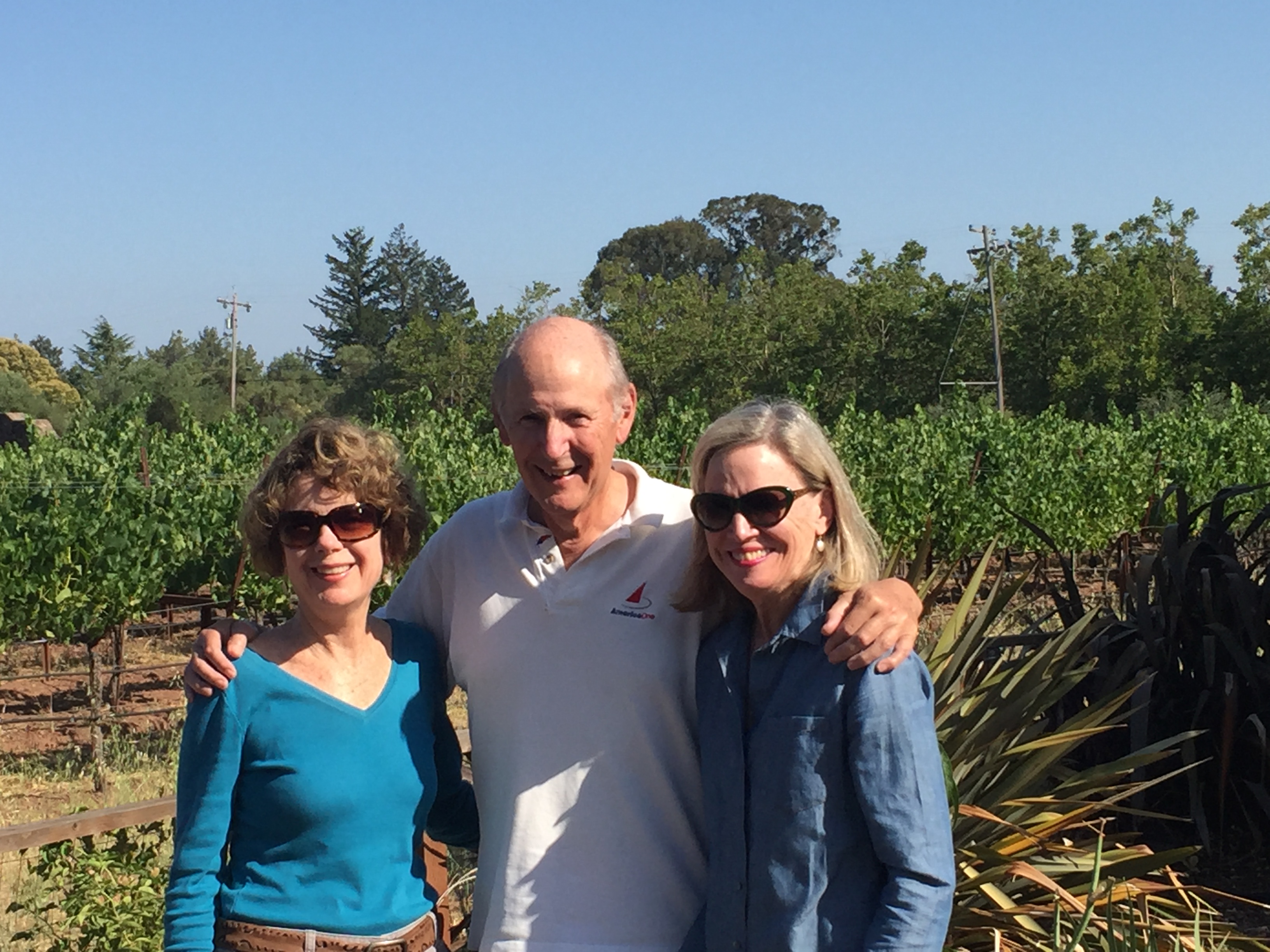
Alan Hicks with two beautiful women, Maureen and Maren in the HIcks’ Sonoma home, 2016.

The Commander, the Ensign, and the Flagpole

One more iteration. One more…okay, maybe two or so.

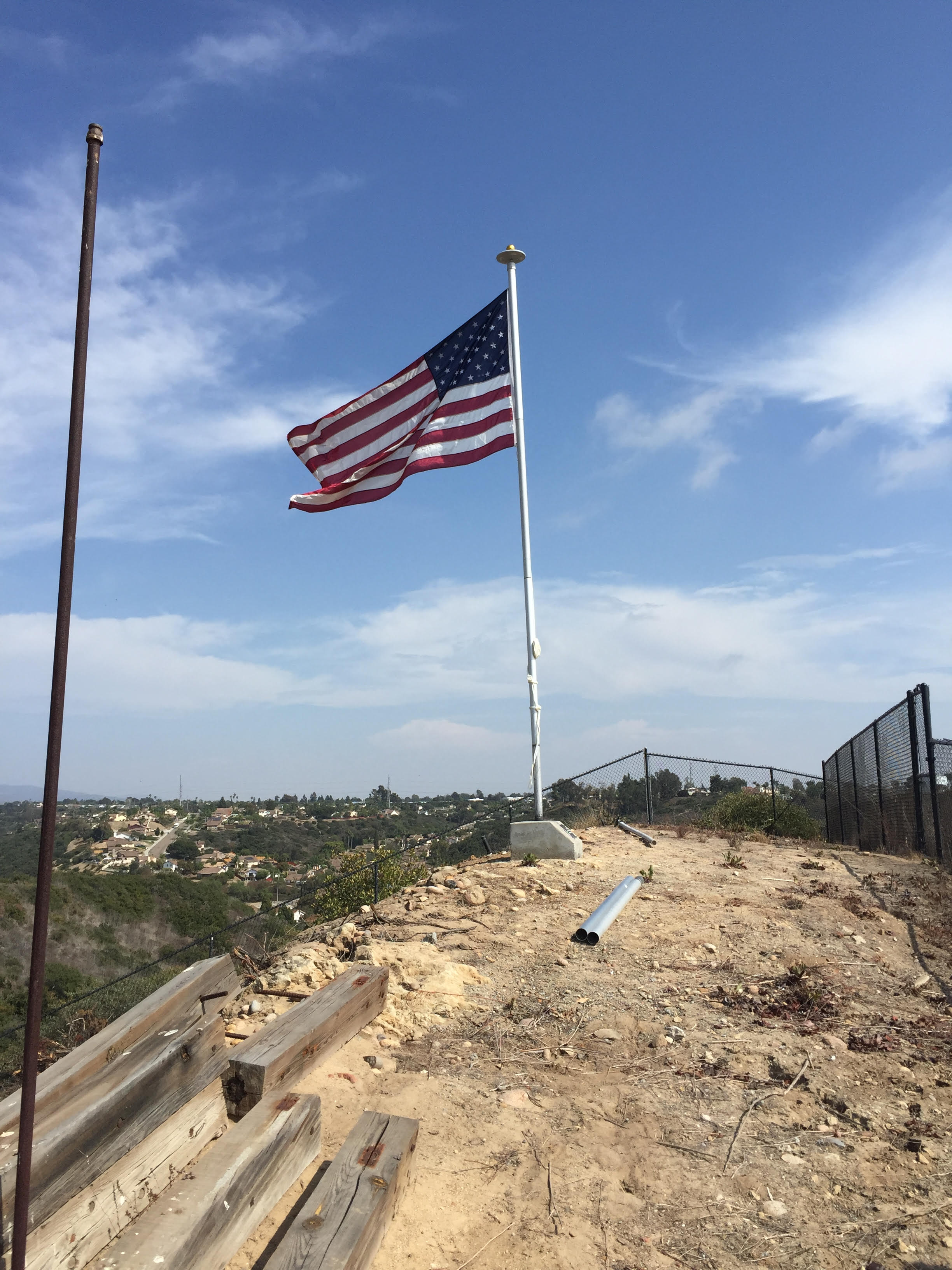
But it’s back up. Back in its place at the top of our slope.

Up. First time in six months. Yeh, it’s temporary. When Paul gets back from his venture, he’ll come over to redo the front yard (another story) and bring some steel pipe that will fit inside. We’ll add a section or two…or three if it doesn’t give Maureen a heart attack.

It’s been a saga.

About thirty years ago. i got this idea of an ensign on top of our slope for me to admire and the neighbors to see. No, no, no, not the Navy officer standing up there. Ensign is also a Navy term for our United States flag. i went and got some plumbing pipe and made a flagpole. It was about twenty feet high with a union half way up. Didn’t last long. Rusted. Union broke. Gave it up.

Then in 1999 when i had to put Cass, my all-time buddy to sleep, i decided to try again. Ordered a flag pole. Aluminum sections. i built a concrete base. Put the urn holding Cass’ ashes inside. Added a bakelite plaque. It’s still up there: “Cass, A Good Dog, 1985 – 1999, To his and our freedom.

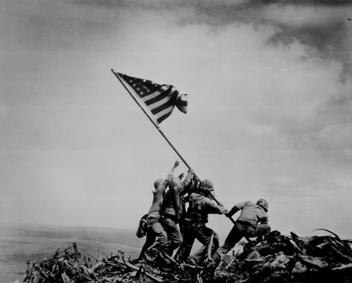
So up went the pole, 25 feet of it. Up went the ensign. It was no little thing either, eight by six. We could see it from about five miles away. So could a lot of other people. There was this guy who lived the bottom of our hill. i’ve written of him before. Jesse Thompson. He was a Pearl Harbor survivor. We had a number of them around here back then. After all, this is a Navy town. Jesse got a group of them together. Turned his home into a Pearl Harbor museum. The group met every Wednesday. He came up the hill one day when i was out, knocked on the door; told Sarah who he was, and asked her to thank me for my ensign. He said the group all agreed it reminded them of Mount Suribachi. That made me feel good, real good and proud.

In those days, i was good at maintaining protocol. Lena, our replacement for Cass, and i would go up every morning at 0800, raise the ensign, and observe colors. In the evening, we would go back up, lower the flag exactly at sunset, and observe colors again. It was a nice way to start and end the day. It was nice view. i even saw two green flashes during those sunsets. Lena enjoyed her walks.

My brother-in-law was temporarily living with us at the time. He kept the house while we went somewhere. He was watching the flag in a winter storm. He said it was beautiful holding stiff into the strong wind, bending the flagpole.

That’s when it broke the first time.

i got another section to replace the broken one and strengthened the pole. The winds can get strong coming off the ocean to the top of that hill. i bought a PVC pipe to fit inside the sections, cut it to the flagpole length and got some neighbors to help me put it up. Looked good.

A neighbor from down the hill came by and stopped when she saw me working in the front yard. She said she was a teacher and seeing my flag each morning on her way to work made her feel all was right with the world. She handed me fifty dollars, for maintenance she said. i tried to refuse, but she was insistent. i finally gave in.

Then the Santa Ana came. Fifty knot winds. The PVC wasn’t that strong, and once again, the flag pole toppled. Next. Paul suggested the thicker PVC. This one needed some muscle no longer available in seventy-year old men. Paul and his boys, with my feeble assistance, got it in place.

Until the winds this past winter. January.  Winter storm. i knew the pole could withstand the projected 40-knot winds. i checked it out. Beautiful sight it was, rippling against the wind, resistant, Suribachi-like. Maureen asked, “Aren’t you going to take the flag down?”

“Ensign,” i corrected her. “Nope, i said, “She’s doing fine.” “Don’t worry,” i said, “She’ll withstand forty knot winds.”

i went inside. The wind gusted to seventy: down went the pole with my ensign.

Six months, i waited. Now it’s up. And until Paul gets back, it will be a bit shorter.

But i don’t care. After all, it’s become a landmark in Bonita:

College Station, circa 1977

Escape. That’s what this is. i was trying to get into work. Budgets, book writing, sorting, organizing. That sort of thing. Gave it up when i came upon this one in a folder i had misfiled a long time ago. What the hell. Here it is.

College Station, circa 1977

a spring day whistles into the middle of Texas winter:
i gaze through the campus greenery
from the window of my antiseptic office
recalling a Newport winter several years ago
where sleet with biting cold predominated;
the hoary wind gnashing its way
off of Naragansett Bay
inside it was warm,
candles lit the upstairs apartment;
bare trees haunted from the yard
before Easton Bay
with disdain;
wine was poured,
long before i knew its worth,
to be sipped while the bay wind
beat the sleet against the windows.

where have all the smiles gone
which once accompanied the sleet, the wind, the cold
and
the wine?

i turn from the window
looking out at winter,
what we, back then in Newport,
would have called early summer;
the secretary reminds me to return a call;
i pause with the receiver in my hand
remembering the winter smiles
before returning to the business at hand.

Lessons from a POW

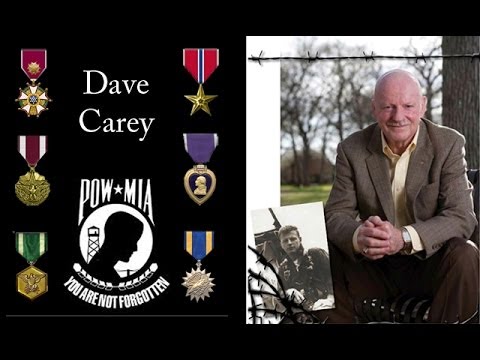
This was one of my very first columns for The Lebanon Democrat. It is special to me because the man i wrote about here is very special to me. i wrote it right after the bad San Diego wildfires in 2007. Dave remains a wonderful, actually amazing man, and i am proud to call him my friend. For some reason last night while watching the woeful San Diego Padres lose again, something Dave said to me popped into my brain. Something Dave said during our time together or wrote in his book keeps popping into my head. That’s a good thing. If i remember correctly, this pop up was how his North Vietnam interrogators kept wanting to know where they kept all the cows, pigs, and chickens to feed the crew on an aircraft carrier. Regardless, i wanted you, in case you missed it before, learn a little bit about an American hero. If you want to learn more about his story, his book, The Ways We Choose: Lessons For Life From a POW’s Experience is available on Amazon, Barnes and Noble, and i believe you can still get one from his website, www.DaveCarey.com. If all else fails, contact me. We will get you one if you want it.

SAN DIEGO, CALIFORNIA – This past Monday, I left the cleanup from the San Diego fires and flew to Lake Tahoe, Nevada. It was not an escape. It was work. I was co-facilitating a team building workshop for a California police department with my friend, Dave Carey.

Dave is not your ordinary business associate. On August 31, 1967, Dave Carey’s A-4 was shot out from under him over North Vietnam. He spent five and a half years as a Prisoner of War (POW), most of the time in the infamous “Hanoi Hilton.”

Dave and I met in 1985 at the Naval Amphibious School in Coronado. We worked together for just shy of a year as I transitioned into Dave’s position as the head of leadership training for the West Coast and Pacific Rim. Together, we help create a two-day workshop on leadership excellence for senior Navy officers.

Dave retired. Four years later in 1989, I followed suit. After my initial dive into my new job as Mister Mom, I soon started to look for ways to generate income in the quiet hours.

After some discussion, Dave and I agreed I would write a book about his POW experience, or more accurately, about his motivational speeches concerning his experience. After completing the draft, we decided it really should be written in first person. The original draft is on my office bookshelf.

Eight years later, Dave holed up for three weeks and completed The Ways We Choose: Lessons For Life From a POW’s Experience.

Part of my approach to writing was generated from conversations with Dave. He and I were driving to another workshop about fifteen years ago when I asked him about what outcome did he expect the audience to have when he gave a speech.

Dave said he had expectations initially, but discovered his listeners made their own connections. Early on, Dave had completed a luncheon speech when a huge Texan came up to him, put his big arm around Dave’s shoulder and drawled, “Can I talk with you, Dave? I understood every word you said today. The fact of the matter is, in this life, we are all going to get shot down, and some of us more than once.”

I don’t know about you, but I’ve managed to get shot down several times. Dave’s book and his ideas have been significant guides to me as I have wandered through living. The book not only applies to San Diego, Lake Tahoe, and Middle Tennessee; it worked in the Hanoi over 40 years ago.

Dave’s book revolves around a question he is most frequently asked, which is, “How did you do that? How did you and the other POW’s get through that?” He maintains they did that in a similar way to how we get through our daily process of life and work.

Dave’s assessment of how he and his fellow POW’s made it through boils down to five factors:

  • We did what we had to do
  • We did our best
  • We chose to grow
  • We kept our sense of humor
  • We kept the faith
    • In ourselves
    • In each other
    • In our country
    • In God.

His anecdotes relating to those factors are humorous, inspiring, and thought provoking. I have had the wonderful opportunity to discuss these things in depth with Dave.

So I check myself against his factors almost daily. They have even become part of the value statements for my consulting group.

I will not ruin the book by parroting it here. However, I am particularly fond of Dave’s pointing out how the POW’s trusted each one of them would do the best they could, would resist the severe interrogations to their limit; recognizing each of them had their own limit levels.

I now try to consider folks I work with are doing the best they can do. This puts a whole different shape to the way I work with these people. Fewer rocks are thrown; fewer lines are drawn in the sand; fewer chips are put on shoulders.

I would encourage everyone to read’s Dave’s book. Your connections should be yours, not mine, not Dave’s. I know folks in Middle Tennessee also get shot down every once in a while.

i should note here that bit about my consulting group is no longer extant. i write. i used to drive ships. i gave up consulting when i got tired of trying to make people do the right thing. i still follow Dave’s advice.