Category Archives: A Pocket of Resistance

A potpourri of posts on a variety of topics, in other words, what’s currently on my mind.

A Legend Gone

His services are tomorrow.

They will be held in a church in Chattanooga, his hometown and one of my favorite places on earth.

Many folks who are my friends will be there. i will not. It’s just too far away, one of the penalties i pay for my choice of home in the Southwest corner. It’s a wonderful place out here, just too far away from my origin at times.

The folks who do make it there will be saying goodbye to a legend. i will say goodbye to my friend, the legend, Charles Oren Hon, III, in my own way far away.

i have enough legendary tales about Charlie Hon to fill a book, and i’m sure i know only a minuscule number of those tales. “Escapades” does not adequately describe Charlie’s adventures and misadventures, a couple of the latter having me involved. It’s not time to bring those tales out of my memory. That will be for later.

It is time for me to honor a legend.

Charlie was a success, a contributor. i cannot say enough about how he and his beautiful and wonderful wife Ann Eliot Hon have made me feel like i belong.

Most of all, Charlie was one of the best life-long friends a man could hope to have. i was lucky to have spent enough time with him for us to call each other friends, actually much more than that.

i will go up on my hill tomorrow, probably midday, and take a beer. i will look out on the vista of the California hills of high desert, the blue sparkle of the bay, the gray of the Navy ships berthed pier side on the Naval base, the deep blue of the deep Pacific, think about the land of Chattanooga he and i both love, and i will toast Charlie with that beer. i will remember him and that chuckle that would envelop me in the good things about this world.

And i will scrape away all of the stories and the legend, and give him my highest complement. For Charlie, like my father, was a good man.


103

It seems almost impossible.

He would have been 103 today.

It feels like he and i were working on a project yesterday.

Last year, i honored him with a photo of him and his wife in front of their new home in 1943.

i included a poem i wrote about him. He liked it. i intend to do that every year as long as possible to honor him.

Happy Birthday, Daddy.

Jimmy Jewell with his son, Joe, two of my four best friends (his wife Estelle and daughter Martha are the other two) in 2009.

Hands, circa 2009

When most folks meet him,
they notice steel blue eyes and agility;
his gaze, gait and movements
belie the ninety-five years;
but
those folks should look at his hands:
those hands could make Durer cry
with their history and the tales they tell.

His strength always was supple
beyond what was suggested from his slight build.
His hands are the delivery point of that strength.
His hands are not slight:
His hands are firm and thick and solid –
a handshake of destruction if he so desired, but
he has used them to repair the cars and our hearts;

His hands are marked by years of labor with
tire irons, jacks, wrenches, sledges, micrometers on
carburetors, axles, brake drums, distributors
(long before mechanics hooked up computers,
deciphering the monitor to replace “units”
for more money in an hour than he made in a month
when he started in ’34 before computers and units).
His hands pitched tents,
made the bulldozers run
in war
in the steaming, screaming sweat of
Bouganville, New Guinea, the Philippines.

His hands have nicks and scratches
turned into scars with
the passage of time:
a map of history, the human kind.

Veins and arteries stand out
on the back of his hands,
pumping life itself into his hands
and beyond;
the tales of grease and oil and grime,
cleaned by gasoline and goop and lava soap
are etched in his hands;

they are hands of labor,
hands of hard times,
hands of hope,
hands of kindness, caring, and love:
oh love, love, love, crazy love.

His hands speak of him with pride.
His hands belong
to the smartest man I know
who has lived life to the maximum,
but in balance, in control, in understanding,
gaining respect and love
far beyond those who claim smartness
for the money they earned
while he and his hands own smartness
like a well-kept plot of land
because he always has understood
what was really important
in the long run:
smarter than any man I know
with hands that tell the story
so well.

A Sports Story

Although this is second hand information, i believe it to be true. i think i discussed it with the main character, Kenny Gibbs, but it was a long time ago, and my memory can play tricks on me. However, Kenny, if you read this, this is my story, and i’m sticking to it,

It was March 1965. i had become an integral part of The Nashville Banner’s sports department after beginning the previous September as an office boy and very cub reporter.

Waxo Green, or Dudley Green if you prefer the more formal, told me this story on a Monday after a most incredible weekend. Waxo covered Vanderbilt sports and golf. He was an old time sports reporter straight out of a Damon Runyon short story. His desk in the large room was directly across the door from Fred Russell’s office. He had just completed covering the NCAA Regional Basketball Tournament at the University of Kentucky Memorial Gymnasium (long before Rupp Arena replaced it) in Lexington, Kentucky. It was the state of the art basketball arena, seating a what was then a whopping 13,000.

Fred Russell was there likely in a premier seat. Waxo and the Banner sports photographer (sadly, i cannot remember his name as i write as he was a good guy and had taken me under his wing) were posted at the scorer’s table for all four games.

i was there also. i was there because i solved a dilemma. Obviously, this was long before we could send photos by email and social media. The dilemma was how to get the photographer’s photos to the Banner in Nashville before it went to print. There was some leeway because the Banner  was Nashville’s afternoon newspaper, but there was no way to get the photos back to the office before the deadline…except for driving the 180 miles immediately after the game.

Kenny Gibbs is third from the right on the back row.

In a brilliant move, i volunteered. i drove a 1959 Vauxhall sedan i had purloined from my sister. It was not a mechanical marvel except it would get me where i needed to go…most of the time. But most importantly, it would provide me a ticket to what i considered the biggest sporting event of my life (it still ranks way up there). i had been friends with most of the members of the team. People would laugh when they saw me walk across campus with our All-American center, Clyde Lee. John Ed Miller, the point guard, and Bob “Snake” Grace, the power forward, and i took architectural drawing together. Keith Thomas, the shooting guard, and i had spent some good times together. i considered myself friends with the entire team.

But i was closest to Kenny Gibbs and Jerry Southwood. Both were fraternity brothers. Jerry was the point guard behind John Ed, and Kenny was the center behind Clyde. The next year, they were both stars. Both were great guys and remain that way. i don’t see either of them enough. They were an integral part of one of the best teams in Vanderbilt history. They had won the SEC championship (there were no conference tournaments back then: college athletics was not quite as money hungry back at that time), a rare feat, which included winning both games against Kentucky, then as now a perennial national basketball force.

After the Vanderbilt tournament games, i picked up the negatives from the photographer and headed south for roughly four hours including getting to the car and out of the parking lot. For the semi-finals (There were only four teams from the field of 16, less than a quarter of the teams in the tournament today), the task was relatively easy as the Commodores beat DePaul in overtime, and it was relatively early in the evening. i got back to the Banner’s office around 1:00 in the morning, dropped off the negatives, and slept for about six hours before checking in with the managing sports editor, Bill Roberts and then driving back to Lexington.

Saturday was the big day. And i mean big. On Friday, at the Vandy-DePaul halftime i had wandered from my seat on the opposite side of gym from the scorer’s table to arrange for the negatives hand off with the photographer and say a few words with Waxo. i started back to my seat with the teams came out to warm up. As i turned to walk back up the stairs and over to my seat, i discovered the Michigan team,  awaiting to play in the second game, had come out to see the teams, one of which they would play in the finals. Michigan was ranked number two in the nation behind John Wooden’s UCLA Bruins. When i turned, i found myself looking into the belt buckle of Cazzie Russell, the Wolverine’s star forward. Flanking him and just as imposing were his two main supporters, Oliver Darden and Bill Buntin. i slithered through the troika of basketball hugeness and headed for my seat.

My instructions for the end of the game were to ignore the craziness of the game’s conclusion, head straight for the end of the scorer’s table, get the negatives, skedaddle for the exit, and shoot toward Nashville as fast as that little malfunctioning Vauxhall would carry me.

It was an incredible game. It seesawed back and forth and Vandy had a two-point lead with less than two minutes to go. John Ed brought the ball down the court, stopped and in a move he used frequently, took a stutter step but not moving his anchor foot. The ref called walking. It was not. The team invited me to see the replay with them, something unavailable to the general television audience in those days, on Sunday night at the WSM studios, and we ran the footage again and again, pointing at the TV monitor and shouting, “you didn’t walk, you didn’t walk.” We all knew it but now we had proof. Michigan scored two goals and the Commodores lost 87-85.

Michigan lost to UCLA in the NCAA championship game, and i still believe with all my heart, Vandy matched up much better against the Bruins and Gale Goodrich, and might have won the championship that year if it hadn’t been for that blown call. Of course, it’s the right of a fan to revise history.

Although disappointed, i did not forget my mission, headed to the scorer’s table, picked up the envelope with the negatives, and headed for Nashville, cussing all the way. i arrived after 3:00 am. Made it.

But the Monday recollections with Waxo Green made it even better. About half-way through the second half after Clyde had picked up a foul, Coach Roy Skinner had put in Kenny to give Clyde a rest. On the first play after substituting, Kenny fought and claimed a defensive rebound off that huge Michigan threesome. On the next shot at the other end, they all went up, and Kenny came down in a heap, writhing on the floor and grabbing his head in anguish. The trainers and coach came in and Kenny was helped to the bench. The pain was temporary.

But when Waxo asked Kenny after the game about what happened, Kenny replied, “That damn Darden kneed me in the crouch.”

“In the crouch?” Waxo reacted, “But you were holding your head head?”

Kenny wisely responded, “Well, i was damn sure not going to grab my balls in front of 13,000 people and a nationwide TV audience.”

As i said, that’s my story, and i’m sticking to it.

The Flag and the Anthem: One Perspective

i try to stay away from political posts. i have found reactions from all political positions twist my meanings and don’t really think about what i am trying to convey. My posts seem to create more hate and discontent, not less as i intended. Not worth it. As i have attested many times, i have friends on both ends of the political spectrum, and i don’t wish to offend them by writing something they will misinterpret through their political filters.

i don’t consider this a political post.

i remain amazed at the vitriol spewed by the manufactured hatred because one guy, a once good but not particularly great NFL quarterback kneeled during the national anthem and the raising of the United States Flag before the beginning of a football game.

People have drawn their lines in the sand, taken up their weapons, and are throwing their rocks in all directions. For goodness sake, professional football players are taking political stances and people are paying attention. Professional football players should be heeded by what they do on the football field, not after, before, or in-between when they are off the field, not even all of those stupid little actions they take to promote themselves (not the team) after making a good play. If they want to make a gesture, quit the high-paying game and join the military. We could use you in combat.

Now, we have those who do not consider any gestures other than their own reacting, taking sides, and blowing smoke, most without a clue.

Have at it. i’ll sit this one out.

But that’s an aside.

My concern is i just don’t understand.

Colin Kaepernick and everyone else who has taken up arms on either side have freedom of speech and the right to protest. All of you have that right because this country does not pay allegiance to any person, any king, queen, emperor, dictator, or even the government itself, including the president. And that right was created by an idea: the idea we could have equality, independence and freedom as individuals, not because of our skin color, our religion, our political party, the culture of our heritages, or our economics, but because we are human beings with certain inalienable rights (does that last phrase sound familiar?).

We are all subject to those inalienable rights because of that idea, that attempt by men who were flawed, just like all of us, to create independence from oppression almost 250 years ago, and in doing so, came up with the idea that they were subservient to the idea of independence and equality, not the other way around.

There are many ideas about what a “perfect” government should be.” And all ideas since the beginning of time reflect Mose Allison’s observation in his song “Mercy:” “Everybody’s crying justice, just as long as they get theirs first.” Except one government. This one. And it too is flawed in that it relies on humans to effect it, and humans seem to forget the original idea and fight against anything they perceive is not in their best interest and damn the interests of everyone else. And our humans have been screwing up ever since this government, based on this wonderful idea of equality, was founded.

Two things we honor and swear to in recognizing our flag and the national anthem represents that idea. The anthem, after the first stanza, is also flawed because it was written by a human. It is words, and it can and has been interpreted in many ways.

Every Friday morning when i am on the golf course at Naval Air Station, North Island (and have been for almost all Fridays since 1991) sometime around the fourth through sixth holes, i and my long time golfing partners and military retirees, hear the bugle’s “Call to Colors,” or “First Call,” and go on alert while continuing to hit our golf balls. Then five minutes later, we stop at the bugle call of “To the Color,”or “Colors” as we have come to call it. We turn toward a flag location we cannot see, take off our hats, stand at attention, put our right hand on our heart, and remain that way through the playing of the anthem and until the bugle call “Retreat” tells us to conclude our honors to…not the military, not the government, but to the idea.

The flag, or the Ensign as we in the Navy call it, has more significance to me: no words, an idea of independence, solidarity of the states to pursue equality of all men (including women) represented by a piece of cloth blowing in the wind.

It is the idea we defended for the major portion of our lives. Many of us died for that idea. We defended the idea of freedom of speech. We swore to defend that idea. So all of you folks with your noble concerns about inequality, oppression, abuse, when you do not honor the flag or the anthem are not properly showing your resistance to equality, to independence, but you are, in fact, making your symbolic gesture suggesting the idea of equality and independence for all, against the very things representing the idea.

i also don’t agree with those who are so bitterly opposed to those who choose to dishonor our flag and anthem, symbols of the very idea they are trying to express. That is the right of the protestors. There are many points of equality or inequality we need to address and make right, again for all human beings, or at least make the attempt, which in our current state is impossible because of the refusal to discuss rationally rather than taking the stance of us-against-them, the mentality which is raging in our country right now.

i don’t ask any of you change. You aren’t going to change regardless of what i write or say.

All i ask is you intelligently think about what i have written and decide what is right. What is the right thing to do? Think about what that flag and that anthem represents: the idea of freedom. We have the only government in the world based on that idea of inalienable rights for all, and we, all of us, are too intolerant to act on that idea.

Think about it.

A Magic Place: For Sam

i had written the real “Climbing My Mountain” last night. i decided it was too deep, too dark, too me to put it out there, at least for now and a long time forward. i also noticed i was writing way too much about me, the old man. i get maudlin, sappy, or worse, angry. It ain’t really me. It’s just me groveling around in my dark recesses, especially during what i might consider dark times.

But i can choose. Dark or light. Good vibes or bad. i choose light and good vibes. It’s just sometimes it takes me a while to get there. When younger with the world and success and worry about being secure when i got old pressing on me, dark was often with me, a driver to get moving. But i am at the older stage now, and secure. Maybe not as secure as i would like to be, but old enough to realize i can handle it, regardless of what happens for the rest of this crazy, insane, beautiful (at least, to me) life of mine. So i wrote this for Sam, an adjunct to the autobiography i’m writing only for him, which i am likely to never finish since i started not quite two years ago and thus far have reached the end of grammar school (Bet they don’t call it that now). Sam, this is for you.

This morning, i took a shower after a run and walk, which would have embarrassed me ten years ago. Automatically, i reach for the third hand towel, a rag essentially, to do the deed i detest, the dictate from my bride of thirty-four years: squeegee the shower when you are finished. For forty years, i never squeegeed a shower. Until Maureen and i moved into our first home together. Been squeegeeing ever since.

As i was squeegeeing (that’s one hell of a word isn’t it: “squeegeeing”?), my age sort of hit me in the face again, thinking, of all things, about squeegeeing. i thought about my pre-squeegeeing days, and considered what folks nowadays might think of me now and back then.

My daughters and my son-in-law probably consider me old and eccentric, nice old man but a little screwy and not necessarily someone they should heed. i’m a little batty they might say. Of course, they are correct on that count. My grandson Sam would think i’m prehistoric. If i’m lucky, he might think i came from a magic place far, far away and a long, long time ago.

i did.

i came from a place where i was isolated from the world going bad. You said, “Please,” “Thank you,” “i’m sorry.” And you better have meant what you said or retribution would swiftly follow, like in my case a pinch somewhere it hurt.”

My magic place was for children, only we didn’t know it. After all, we were told, “Children should be seen and not heard.” And if we talked loudly or silly in public, we would disappear with a parent into some corner. Rear end whelps were the usual result. Now, the parents say, “Isn’t that cute?”

But we had freedom. So did our parents in many ways. i often wondered what the hell locks were for. We never locked our cars, never. We never locked our homes either, except my father would lock the doors before he went to bed and unlock them when he arose. That’s it.

We played. Boy, did we play. Outside. All the time except for school. In the summer and during Christmas vacation (we actually called it that: “Christmas Vacation.” It sounds sort of right. i mean that’s what we had it for; and i’m pretty damn sure it wasn’t a government holiday; just the schools shut down for a couple of weeks, sort of like they did it because it was the right thing to do; the grownups and their businesses just kept on truckin’ right up through Christmas Eve. In fact, i don’t think there were any Christmas ads or stores stocking Christmas gifts and decorations until after Thanksgiving. We wrote our letters to Santa, and he magically showed up, left our presents requested, ate the cookie and drank the boiled custard we gave him, and somehow got that sleigh filled with more than a semi trailer could hold off the roof courtesy of eight tiny (but very strong) reindeer without us ever seeing him regardless of how hard we tried to stay up and catch him.

Anyway, during those winter two weeks and three months of summer, we woke, ate breakfast as a family, and were outside in about ten minutes. We did have to dress , have our morning constitutionals although we didn’t know what a constitutional was until later, much later, wash our faces, and, of course, brush our teeth. Ten minutes. Tops.

Then, after being admonished in the winter to put on our coats and hats, which we did dutifully, and not go too far (some undefinable limit only a parent would know) in the summer, we were outside to play. Until dinner (in the South, i’m not sure i used the term lunch except for school. After all, i had a lunch box). That was maybe a half-hour ordeal (unless of course dinner was a peanut butter and jelly or banana sandwich: then it wasn’t an ordeal), we were back outside until, yep, you guessed it, supper (“dinner” was midday except for highfaluting folks or Yankees) . In the summer, we were back at it after we washed and dried the dishes. Outside. The hell with the mosquitoes. We were catching those lightning bugs (some misguided souls called them fireflies) and putting them in a mason jar with holes punched in the lid with Mother’s icepick.

Also in the summer, we wore the minimum. Boys: underwear and shorts. Girls: underwear, shorts, and a halter top. That’s it. The hell with bee stings on the feet. In fact, bee stings were damn near an initiation requirement.

We would put blankets in the shade underneath the front yard Chinese maple, our rendezvous place. But we were seldom in the shade. Tan was good. i don’t think i ever saw sunscreen other than an umbrella for old ladies until i was about…oh say, forty. Oh, women had tanning lotion. Baby oil and other concoctions to get a deeper tan. But not for us, even at the swimming pool.

And then we were gone. All over the neighborhood. Almost every home had one to five kids. Those that didn’t were considered weird, a place to avoid. We roamed.

We had a hole in the back fence where we could go play with the kids on Pennsylvania Annex and was later the shortcut for us and almost every kid within five miles. We could run through the sheets and laundry hung out to dry because we didn’t have a dryer.

But we better not get caught. If we did, we would be ordered inside, where Mother would pull down that well-worn paddle originally with a ball and rubber band attached by a staple, and we would get it. That, of course, was for minor infractions. For the big ones, like not coming home for one of those aforementioned meals or being late for bedtime, could be serious. And telling a whopper, or hitting someone who didn’t deserve it, well, that meant the old paddle was used to an extensive extent, and then, even worse, we were told in a menacing tone to wait until Daddy got home. A fate worse than death. And when he got home, he would sit down on a chair and direct me to go find a “good” switch on a bush outside and bring it in. And i would fetch the smallest twig i could find i thought might pass muster, and it wouldn’t. So Daddy would get angry when he had just been only severe, and tell me to get another one, and i learned (after about four or five of these experiences: i was a slow learner) to get a proper “switch.” Because if i didn’t, he would get angrier, and pull off his belt. Regardless, sometime after this hopeless negotiation on my part, i would be brought to bending over his knees after my pants or shorts had been lowered to a most embarrassing position, and my father, in what is a most accurate description of what happened, “wear me out.”

i am still amazed that when they said i was getting this diabolical punishment because they loved me i believed them completely. Still do. i was not so much in belief when they would often note it was going to hurt them more than it hurt me. Now that i’m older, i understand a little bit, but i still ain’t buying it.

And in June, we would catch June bugs. Of course. And we would tie a string around the June bugs leg and let it fly around our heads in never-ending circles. And we never even considered it might be cruel from the June bug’s perspective.

And we ate watermelon long before some agronomist or some such figured out how to make them “seedless.” Man, slobbering through a wedge of watermelon and spitting the seeds out was part of the joy and deliciousness of eating watermelon. Outside only.

But that was topped by homemade peach ice cream. The folks would invite all the kin over and dig the old wooden bucket with a crank handle on top out of some recess in the basement and bring it outside. Then they would put the canister filled with the magic elixir into the bucket filled with ice then surround it with dry ice and then cover all but the crank with blankets and we (one to three of the children, aka me) would crank the crank until we couldn’t crank anymore and one of the menfolk would take over until the ice cream in the canister was…well, ice cream. We would pull out bowls right there in the back yard and some expert would extract the ice cream from the canister into the bowls and the grownups would sit in the lawn chairs and the children would sit on the grass ingesting the best tasting stuff in the world, homemade peach ice cream.Consumed. Right there. On the spot. All of it. Gone. It was a mess to clean up but worth it.

We would walk to school and back by ourselves every day unless it rained or snowed when mother (Daddy was long gone to work before we left for school) would take us in the car. In the afternoons, we usually would congregate into a herd of first to six graders and walk together with young’uns peeling off when we reached their homes on the route.

At school recess (two a day, mid-morning, mid-afternoon to swing on swings and take them to the sky because you were a sissy if you didn’t get them parallel to the ground where they would slack and slam you back as you returned on the never ending arc,  or propelling the old metal merry-go-round to what we considered the speed of sound or just under the limit (most of the time) to a speed where we could jump on the bed without holding on to the handle and propelling ourselves out with possible grievous injury to ourselves and all nearby, or playing kickball on the diamond made a diamond by the constant running around the paths to bases formed from articles of clothing or softball at the diamond on the end of the playground which had a tree behind the backstop where someone — i don’t think it was actually him, for it was from relatively new knife cuts and he had died at the Alamo about six score years before i saw and worshipped the carving as a religious icon — had carved a terse, scrawling note: “D. Crockett, kilt a bear under this tree, March 1810.”

Walking home and especially at the above school recess, there was some things going on which today would be cause for twenty years behind bars or exorcism or public degradation, or some media outlet calling you out as despicable. There were fights, at least among the boys, and there was bullying and the bully got his upstart from the kids, like “sticks and stones may break my bones, but words will never hurt you” or “i’m gonna tell,” which was something akin to a death knell if you were a kid. Snitchers were the lowest form pre-prepubescent munchkins. The remarkable thing was we fixed it ourselves.

In fact, the whole town, this magic place, fixed themselves. Except for Doc Lowe (and others) of course. We would go in to the hospital, a whopping mile and a half all the way across town, and Charles T. Lowe, MD, would check me out, or we would go to his house two blocks away, or he would come over to ours with his little black leather bag and check me out. Nearly always, he would pat me on the head, have me pull down my britches (does anyone call them “britches” anymore? and if so, do they know what it means?) and lean over his knee (fearfully reminiscent those moments where my father would say “this hurts me more than you.”) and stick what i believed to be a footlong needle into my backside and shoot the juice they called penicillin into the most tender muscles of my poor but valiant rear end. i don’t recall any specialists, although they could have been hiding somewhere. All illness and varying damages due to child collisions: one doc. Brought me into this world, saw me through childhood, a most difficult task, taking out my tonsils at six and then ten. Yes, twice. Meant i got ice cream twice. But that either was awful smelling. It was a toss-up.

And i don’t remember counselors. Of any type. They may have been there, and probably were abundant in Nashville, but not in Lebanon, thirty miles and about 123 farms down the road east.

And decisions about school extracurricular activities? There were three sports. Football, basketball, and baseball. That’s it. Except up at Castle Heights where they were way more sophisticated and offered a panoply of athletic pursuits. But by that time, my other religious experience besides church on good Sundays was the other blessed trinity: Football in the fall. Basketball in the winter. Baseball in the spring and summer. Fall, it all began again.

And when it rained, we played with wood scraps, from Uncle Snook’s work as a builder with his brother Ben, on the small screened in back porch or we played canasta until infinity with the old RCA Victrola record player blaring 78 RPM records such as Dennis  Day singing for Disney and relating the story of “Johnny Appleseed” or Phil Harris singing “That’s What I Like About the South” over and over and over.

And i would walk down West Main to the library into the old stately house turned book haven and wander through the shelves and pick out books, mostly about American heroes painted with a halo, because none did wrong in these books, and i would read two or three in a week and walk back down West Main and turn them in before they were overdue, of which the date for that terrible deed occurring stamped on the card in the small folder glued to the back of the cover, and if i failed and had to pay a penny for each day i sinned, out would come Mother’s wood paddle off the refrigerator one more time.

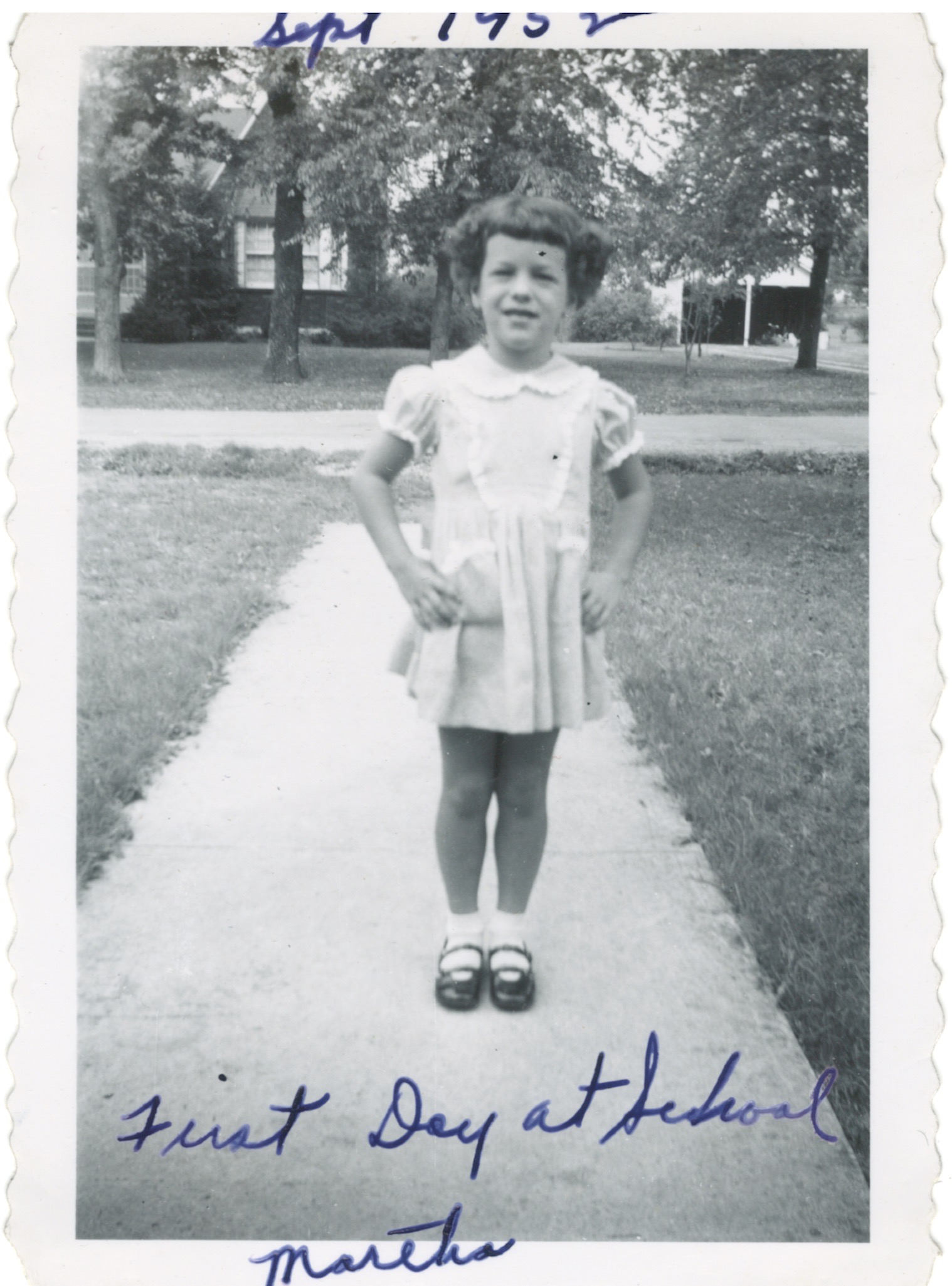
Then in 1952 came television when Roberta Padgett invited me across the field after school  so we could watch on her brand new twelve-inch screen black and white television, the latest thing. After Kate Smith sang “America, the Beautiful,” we could watch “Howdy Doody” and Ruffin Ready introduced Roy or Gene in their oater of the day. All before i would be sent home for supper.

And low and behold in 1954, an earthquake occurred at 127 Castle Heights Avenue when our father brought home our own television. It sat in a place of glory in the corner of living room next to the interior hall. The focus of the room changed and we would sit or lie on the floor, the latter with our chins resting on our hands while we could watch magic. In addition to the addictions i had acquired at Roberta’s, we would watch Milton Berle in “The Texaco Hour,” “Ted Mack’s Amateur Hour,” “Red Skeleton,” and “Martha Raye.” Saturday mornings were child heaven with the “Sealtest Big Top,” the “Andy’s Show” hosted by Andy Devine and his squeaky voice with Froggy and Midnight and Buster Brown and his dog, Tige, who lived in a shoe, both of them, and then “Little Beaver,” “Red Ryder,” and “Sky King,” and “Lassie.” And we were, we undoubtedly knew, in heaven.

Magic place.

And they kept me away all that other bad stuff. Jim Crow, the segregatrion from other people with darker skins besides a babysitter, housekeeper named Vicey  Shavers, and the garbage man named Jake Hughes who came every Tuesday and parked his wagon with truck tires for wheels, reeking with smell, and pulled by his old mule, and he would walk to the back of the house and pick up the tin garbage can and tote it to the wagon, and hoist it up and empty the contents into the aromatic wagon bed, and return the can to its rightful place in the backyard far enough away so the aroma before next Tuesday would not waft into the house because we didn’t have air conditioning and the windows were open in the summer. And Jake, wonderful soul that he was, amassed a small fortune i am told. Good for him.

My magic place was isolated. It had a dark side i never really saw, and it was “Brigadoon,” only an ocean and a state and old bunch of world and time removed.

It was magic.

It was home, the likes of which i don’t think we will ever see again.