All posts by Jim

The Beginning of a Love of the Sea, part III

About a month and a half ago, i began trilogy of posts about acquiring my love of the sea.

i posted the first two stories of my third class midshipman cruise aboard the USS Lloyd Thomas (DD  764).  Then i rested. Those first two posts centered around how i became insulated against sea sickness. Neither the chief petty officer faking blowing lunch with his mixture of crushed graham crackers and milk in a barf bag nor the tricks of the sailors in rough seas could induce seasickness. My resistance allowed me to never have a problem with seasickness again, not even through the roughest seas, for the rest of my time at sea. Those events gave me a one up on being a mariner.

My real love of the sea was precipitated later in that eight-week cruise. We had been to Sydney, Nova Scotia, Bermuda, and were headed back to Newport in late July somewhere in the middle Atlantic. i had spent my time in deck, operations, and was about three weeks into my five-week stint in engineering.

Engineering was on a four-section watch rotation and did not dog the 18-20 — the dog watches were 16-18 and 18-20, splitting the evening mess and allowing three section watches to rotate through different watches each day; a four section watch would rotate watches without splitting the dog watches into two. The midshipmen were in three sections. i began my engineering tour with the morning watch (0400-0800). Consequently, i stood the morning watch, then put in the 0800-1600 work day immediately followed by the 1600-2000 watches. For five weeks plus, i had a 16-hour workday.

Being young and having no sense at all, i went to the evening movie, shown for the enlisted in the DASH (Drone Anti-Submarine Helicopter) hanger aft on the 01 level. Every night. No sense. That gave me about five hours of sleep each day. No sense.

This particular night, the crew’s movie was “The Quiet Man.” i had never seen it, and was entertained and moved by the story. Perhaps that influenced what happened next. The thirty or forty crew members filed out of the hangar deck and headed to their berthing before taps. For a reason long forgotten, i delayed and trailed the exit. i was walking forward across the torpedo deck on the 01 level before heading down the ladder. i was alone. i stopped.

The night was a perfect summer night at sea. The ship was steaming with standard running lights allowing the stars to give off their full glory in the heavens. There was a full moon. It was almost perfectly abeam on the port side. i walked to the life lines and paused.

The Thomas was steaming at 15 knots on a windless night. The roar from the stacks passed over my head and was barely noticeable, but i could hear the swish of the bow waves passing down the port side. The reflection of the moon produced a path of sparkling white from the horizon directly to where i stood.

It likely was no more than a minute or two i stood there. It seemed then, and it seems now it could have been eternity. It was as if the goddess of the sea took her hand from the moon’s path and reached up and grabbed me. There was something deep in my gut, deep in my soul touched by that lady, the sea. She called me. i felt her then. i feel her now.

Oh, i tried to ignore her and the feelings down deep. i spent my obligatory three years after a chequered path to becoming an officer and got out with the intent of being a sports journalist. i only returned because of the financial responsibility of having a wife with a daughter on the way. The need for security. But the feeling from that night on the port side of the Lloyd Thomas never left me.

i spent almost 15 years on sea duty. There were many obligations for a Navy officer, what they eventually marketed as a “Surface Warfare Officer.” Those obligations often distracted from communication with the sea, but the sea never let go, never let go.

i have loved the sea in all of her moods: the calm of the doldrums, the lapping white caps of deep blue at first light, the heat of the water reflecting on a hot summer day in calm seas, the rage of a storm with waves breaking green water on the portholes of the bridge 75-feet from the waterline. And an infinite number of nights with the stars so plentiful, they seemed to run together and the full moon tracing its path to the port side of my ships. And grabbing me deep inside.

If i could go back to sea and drive ships, i would. But technology passing me by and age would not allow such a personal whim.

But the sea. Ahh, the sea goddess. i still love her.


Prologue

One of my trepidations in publishing this “book” in a series of posts is doing so without an editor. i profess i am not a good editor. Captain Francis J. Boyle has reviewed the earlier chapters and found numerous errors of  mine, and i hope to have him review the remaining chapters before i publish them here. But i know i need a professional editor before this is published in book form. i apologize for any errors which i have not corrected.

Prologue

This is a story of what happened quite a while ago. It is told from the perspective of the executive officer of the USS Yosemite (AD 19) when she was the first U.S. Navy ship to spend extended out of port time at sea with women as part of the ship’s complement.

I was that executive officer. I reported aboard 0830, Thursday, August 11, 1983. This is my story.

This tale is limited to Yosemite’s deployment when she departed her home port of Mayport (Jacksonville), Florida, September 9, 1983 until she returned, April 26, 1984. I have used my daily notes from calendars and spiral notebooks I kept at the time, invaluable input from shipmates during that tour, the ship’s logs, the daily “Plan of the Day” information sheets, letters between LT Noreen Leahy and her new husband LTJG Jim Leahy and the summaries of LTJG Emily Baker’s (now Emily Black) letters to her parents as well as those between my brand new wife Maureen and myself. I have relied extensively on recall of these and other officers: LTGJ Linda Schlesinger (retired as a captain), LT Sharon Carrasco (now Sharon Friendly), LT Frank Kerrigan, and especially Captain Francis J. Boyle, the commanding officer, in addition to sailors who are members of the Facebook group “USS Yosemite (A.D-19) I.O. cruise 83-84.”

You might say this is my written record of oral history.

It was an important time for the Navy.

Women and the Navy

Women have long been a part of U.S. Navy history. But the move toward equality and full opportunity for women in all facets of our Navy began after I was commissioned in 1968. The Navy and the world was changing.

In 1972 the pilot program for assignment of officer and enlisted women to ships was initiated on board USS Sanctuary (AH-17).

In 1976, eighty-one women became midshipmen at the United States Naval Academy.

In 1978 Congress approved a change to Title 10 USC Section 6015 to permit the Navy to assign women to sea duty billets on support and noncombatant ships. The Surface Warfare community was opened to women that year as well. In 1979, the first woman obtained her Surface Warfare Officer (SWO) qualification.

In 1979, officer and enlisted women began to be assigned to Navy ships. The ships were mostly tenders or repair ships, which had limited time at sea. Also in 1979, Ensign Deborah A. Loewer who had been at the top of her class at the Navy’s Surface Warfare Officer School after receiving her commission from Officer Candidate School (OCS) in Newport, R.I. was one of the first women to report aboard the USS Yosemite (AD 19). She later earned her two stars and served as Vice Commander, Military Sealift Command.

In 1980, fifty-four female midshipmen in that first class graduated and were commissioned from the Naval Academy.

During this initial integration of women into sea duty, tenders began deploying to Diego Garcia, the British territory in the Chagos atoll chain almost smack in the middle of the Indian Ocean. The concept was for the capital ships to come into Diego Garcia’s lagoon where the anchored tenders would provide maintenance, repair, and other services. This put women on ships really going to sea, not on ships sitting in port on a stateside Navy base, but going places where Navy women on ships had not previously gone.

The Yosemite’s Adventure

After my reporting aboard, Yosemite transited the Atlantic Ocean, the Mediterranean Sea, the Suez Canal, the Red Sea, and the Indian Ocean, arriving and anchoring in Diego Garcia, “The Footprint of Freedom” in October.

Captain Francis J. Boyle, Yosemite’s commanding officer recommended to the chain of command she transit north to Masirah, Oman to be closer to ships in Battle Group Alfa. After ten days in Diego Garcia, the recommendation was approved, and Yosemite was sent north, anchoring off the island of Masirah, Oman where ships of the USS Ranger (CVN 61) Battle Group would come alongside and receive the equivalent of a two-week restricted availability in four days.

The women of the crew and the wardroom performed extremely well. Their contributions made the deployment and my two-year tour a success. The Yosemite received a letter of commendation as a member of Battle Group Alfa (the Ranger) Battle Group, something rare if not unique for a repair ship. She was also named the most outstanding repair facility, ship or shore of any kind, in the U.S. Atlantic Fleet. This is the success story of the Yosemite for which both the men and women sailors and officers should be credited.

Some Thoughts on my Memoir

The story is also about how this executive officer dealt with the tour as “number two” in my penultimate Navy assignment and my last operational tour.

A number of enlisted personnel also gave me input, a valuable look from a much different angle. Their recollections of the deployment, which I collected gave me roughly three-quarters through the first draft, gave me pause. Their recounting required me to consider, as Bob Seger sang in “Against the Wind,” “what to leave in and what to leave out.” For those who are not familiar with Navy ships, they may not be familiar with the difference between an officer and an enlisted perspective.

I was not blind or so innocent to believe nothing was going on between men and women on board. I knew how sailors could figure out how to make anything happen if they wanted something to happen. I also knew they were much more cavalier about adhering to regulations than officers.

Executive officers are four levels about what is happening on the deck plates: department heads, division officers, chiefs, and leading petty officers are between them and the sailors on those deck plates. The XO’s focus is on the ship’s mission, her daily operation running smoothly, coordinating the operation of each of the departments and special staff, and most of all ensuring he or she reflects the demands, the desires of the commanding officer, even the way the XO projects his or her image to support the CO at all times. So even though I suspected there was fraternization occurring, it was not easily detected , and I could not have stopped it without taken draconian actions.

My Story

What happened in the 225 days, just shy of eight months, happened thirty-five years ago as I write. The recollections of all of those who have provided inputs to this story have been distorted by the passage of time. This includes mine. Our recollections from three decades ago did not always agree. I evaluated our inputs with my notes and my own recollections to determine to the best of my ability what actually happened.

This old salt was surprised with what ensued after I reported aboard. What I experienced convinced me there is a right way and wrong way to bring about change.

The women aboard Yosemite during my time as executive officer proved fully capable of handling duties at sea. During this period when the program was under negative scrutiny from the senior bureaucracy of the Navy and the vast majority of male officers and sailors, the women enthusiastically went to work. There were problems just like there were problems when Navy ships only had men on board, just different problems. Ignoring all of the political maneuvering from those who wanted women to have the right to go to sea and those who were dead set against such a policy, Yosemite men and women rose to the challenge and proved it could be done. Successfully.

The tour also was when my final attempt to be selected for command at sea. My final career goal did not reach fruition. Yet, my tour aboard Yosemite as her executive officer was one of the most rewarding of the eleven tours I had during my twenty-two years of service.

This is my story as best I remember it, or to paraphrase my longtime friend and shipmate JD Waits from our USS Okinawa (LPH-3) tours:

“This is my story, and I’m sticking to it.

“Murphy’s Law”

From my “Murphy’s Law” desk calendar archives thanks to Aunt Evelyn, Uncle Pipey, and cousin Nancy:

Parker’s Rule for Parliamentary Procedure: A motion to adjourn is always in order.

Goofy guy’s addition to  Parker’s Rule for Parliamentary Procedure: Apparently our two houses of government have completely ignored this Rule…but then, they’ve ignored many others as well.

Some Thoughts Before Getting Underway

i have been either working on or thinking about working on this book for about thirty-five years. One of my biggest obstacles has been wanting to make it perfect, true, reality. But it can’t be perfect, true, reality. This is my perception of that deployment, a view as Yosemite’s Executive Officer, and as i explained in the prologue: this is my story and i’m sticking to it.

i realized there were different perspectives after meeting Chris Hyde a couple of months ago at a cigar smoke shop here in San Diego. Chris was somewhat of a pioneer himself. He was DS2 Hyde for our deployment, data systems tech working in the Supply Department, S6 Division, the leading edge of introducing computers into the daily life on ships at sea. The communications and weapons systems had incorporated computers on new combatants but ship’s business was being introduced to computers through the Supply system. Chris gave me his recollections of the deployment, which was a different perspective from mine. In the back of my mind, i knew of these different perceptions. A sailor is a sailor, one of the most incredible folks to have ever existed. An officer comes from a different angle than a sailor. Of course there were different perceptions.

i wrestled with those differences for a couple of months, but finally resolved my difficulties with the different perceptions, the resolution of which will be discussed later. i just began writing again when i, with the counsel of Martina Clarke, came up with the idea of presenting the book on my website.

Although i’ve wrestled with writing the book, the working title came to me shortly after i left the Yosemite in late April 1985. i think it’s a keeper. Below is a screen shot (thanks, Sarah) of my working copy of the book cover would/will look like:

One guy who was a critical part to making the department a success was the First Lieutenant. George Sitton was a Boatswain LDO Lieutenant Commander. He was an old salt, the epitome of the old Navy on the deck plates. He also became a good friend. We kept in touch long after we left the ship. George passed away in 2006 in Tyler, Texas at age 59, way too early. George and i shared deck, boat, crane, and amphibious stories from our time at sea, especially on the West Coast. We knew many mutual shipmates from the past in deck departments and Boat Master Units.

i thought it was only proper to dedicate this book to George. Below is a screen shot of the dedication page:

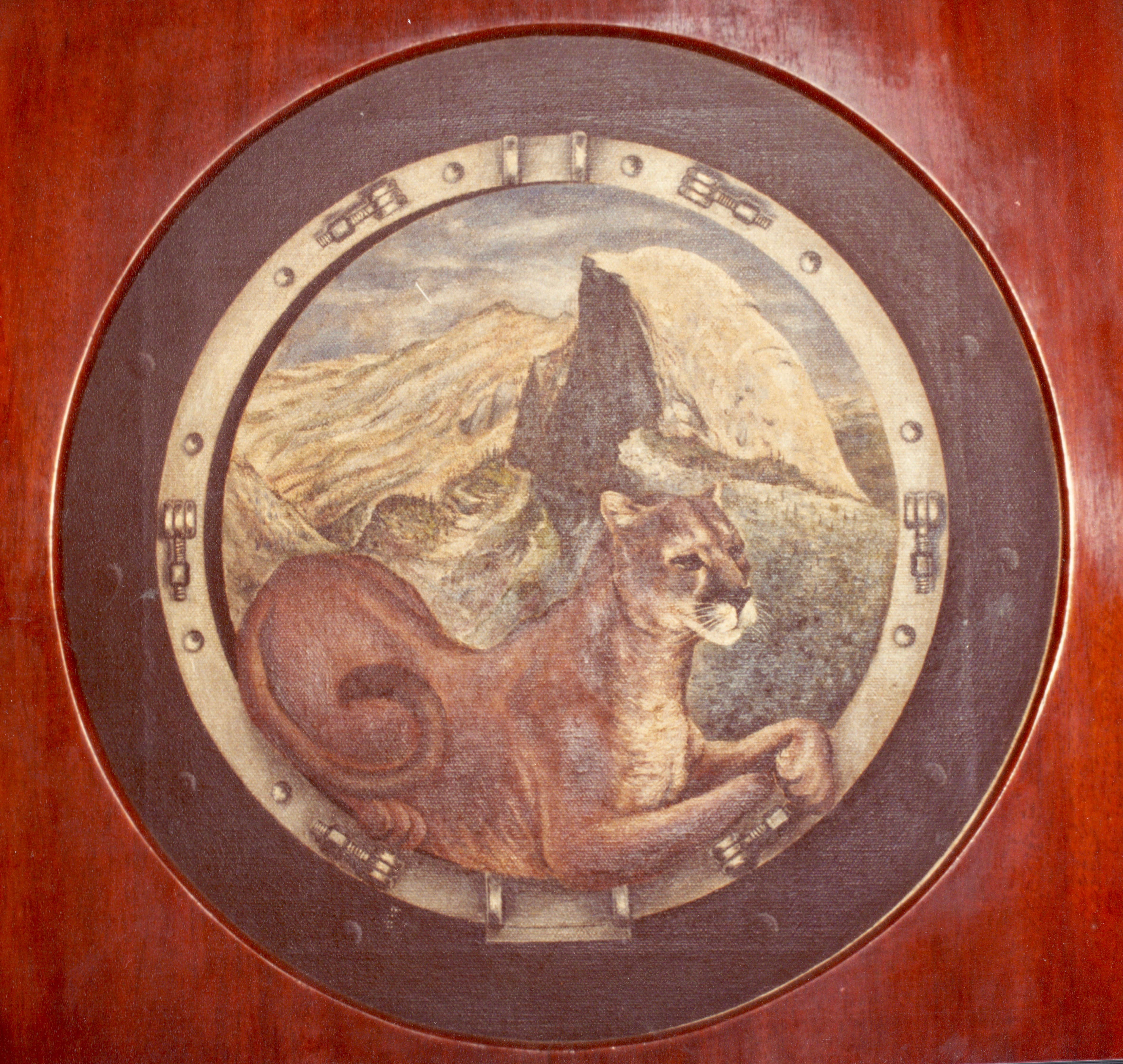
And somewhere in the book, i was going to include the below. It is a scan of a photograph copy of Yosemite’s seal/logo. The seal is majestic, a scene of Yosemite National Park. It is fitting for “The Busy Lady.”


Steel Decks and Glass Ceilings, Introduction

i have been commenting here on numerous occasions about writing a book. Perhaps i was bragging, or attempting to motivate myself. In truth, i was staring at the elephant wondering how to eat it. Not quite half way through, i got hung up for a number of different reasons.

i have wanted to tell this story because i believe it might be a turning point for some people, might make them think a little bit differently, better, than what they have considered in the past. i am not a campaigner. Never have been. i don’t even consider myself as someone who thinks he is right. i simply don’t know a lot of things. Many people seem to believe their beliefs are infallible — when you think about that, people believing their beliefs are infallible, such reasoning seems illogical, at least to me — but not me. i may not be logical, but i don’t believe i’m infallible either.

So i wanted to tell this story. i saw something work well for all concerned in a contentious, political situation because it was kept simple: Our captain was the guiding light doing it the “Navy way,” the right way. i think it’s a good story about the right way to approach contentious, political situations.

More importantly, i wish to leave a legacy for my grandson if he cares to read it. There are numerous reasons why, most expressed here before, so i will leave it at that.

Then, i considered another way to make this story available. Then, i forgot about it. But fortunately, i have Martina Clarke, an Irish lass and a wonderful counselor who is insightful and keeps me thinking. This past week, she suggested i write the story as posts. i think it will work. i mean, after all, i am comfortable with print journalism.  I have been involved with newspaper writing for twenty something years, almost as much time as i spent in the Navy.

Beginning within the next week or two, i will be posting my experience of being the executive officer of the USS Yosemite (AD 19) during her 1983-1984 eight-month deployment to the Indian Ocean. i guess if Charles Dickens could do it with David Copperfield, Great Expectations, and A Tale of Two Cities, i can do this one.

i will be posting my story under the category reflecting the name of the intended book: Steel Decks and Glass Ceilings: An Executive Officer’s Memoir. It is my story about the destroyer tender’s  deployment, the first Navy ship to spend extended time at sea time with women as part of ship’s complement (excluding hospital ships).

i hope you find it interesting.

Stand by to get underway.