In March 1982. i was the Weapons Officer of the USS Okinawa (LPH 3) home ported in San Diego. The Weapons Officer billet was titled “First Lieutenant” on other amphibious helicopter carriers. Regardless, it meant i was charge in pretty much everything not aviation, engineering, operations, or supply related.
One of those responsibilities was being in charge of the quarterdeck where all visitors entered the ship. From previous regimes, we had a large red torah that spanned the entrance into the helicopter deck below the flight deck. It was impressive, but Captain Dave Rogers called me to his cabin one afternoon. “Jim, I want our quarterdeck to be the best quarterdeck on the base. I want it to be the most impressive and known to be the best by everyone home ported here.”
I, of course, replied, “Aye, Aye, Sir!”
i discussed how we could make the quarterdeck renowned across the waterfront with my division officers and Boatswain Warrant Officer 4 (CWO4) Ellis. The Bosun had a bit of a beer gut. He was married to a wonderful Filipino woman who created a lovely macramé lanyard for the boatswain pipe the bosun gave me when i was transferred. She was about 4’8″ and almost that wide. Great lady, just a bit wide.
My team came up with the idea of a sitting area next to the quarterdeck. At the time, when guests or visitors came aboard, they had to wait for the watch to contact whomever they were there to see. That sailor or officer would have to come to the quarterdeck to escort the visitor. Often, the time it took to get to the quarterdeck was lengthy. The visitor had to stand around in a very industrial setting until his escort arrived.
So we decided we could create a sitting area with panels, some chairs, maybe a sofa, and hang framed photographs about the Oki on the walls. That way, the visitor wouldn’t have to stand around in the working bay of the helicopter deck. Great idea.
We had to decide where and how to get panels. Since the Bosun and his first class were going to make a supply run Friday, the next day, i asked them to check out panels while they were on their run. Liberty call was early and the Bosun and his first class left around 1300. They were dressed in their standard liberty civies. The Bosun had on Levis with a blue tee shirt with his thick black hair combed back as much as it could to resemble a ducktail. His first class had on his biker’s jeans, white tee shirt with a leather jacket and a silver chain dangling down from the jeans. He had straw blond hair also combed back and the gap of a missing tooth was the final touch. They left for their mission.
Around 1800, i had a bunch of paperwork to work through and continued after liberty call. The bosun came into the office with several boxes of toilet paper (i never understood why he didn’t get it through supply).
“i didn’t think you would be coming back to the ship, Bosun,” i remarked.
“Well, i didn’t want to keep this stuff at home over the weekend,” he replied.
“Did you find any panels?”
“Well sir, we went to Dixieline (a local lumber and home center). They didn’t have them, but they told us to go to Parron-Hall.”
“Parron-Hall?” i puzzled.
“Yes sir. They’re an office furniture place downtown across from the county admin building. We went there, but that place was way too classy for us. They had desks in the showroom worth more than my house.
“So, you are gonna have to go down there and see about them panels.”
Aww, come on, Bosun, i have a lot on my plate.”
“No sir, you are gonna have to go down there. It’s on Ash Street.”
Then he added, ” You know sir, the woman who waited on us was really pretty. i noticed she didn’t have a ring on her finger. i’m pretty sure she’s single.
“And she’s way too skinny for me.”
Epilogue
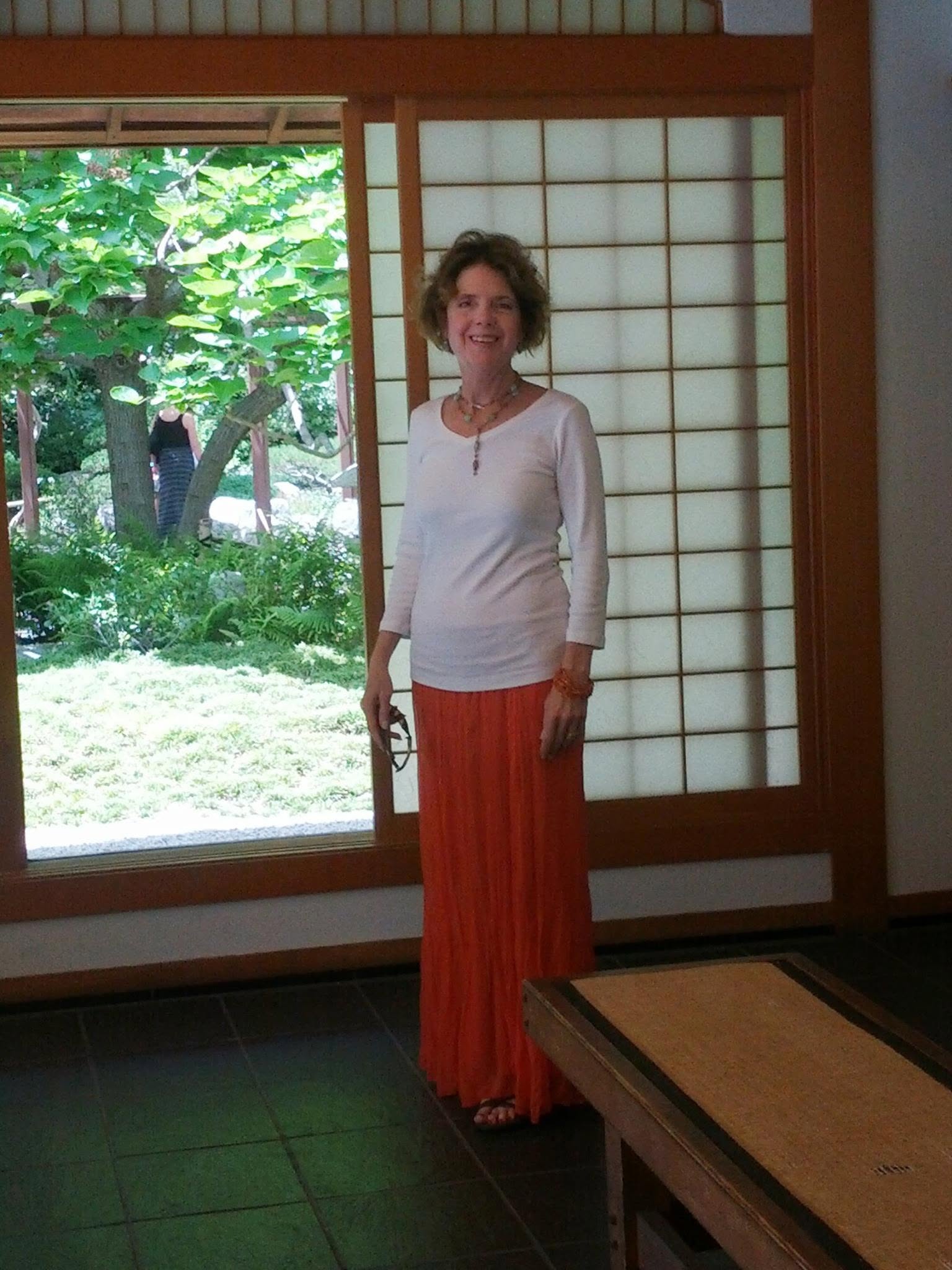
Midday on the next Monday, i drove down to Parron-Hall Office Materials. i asked the receptionist to see the person who had given her business card to Bosun. i stood at the entrance to the showroom. Maureen came walking across the show room with the sun shining in the window behind her (think Glenn Close in “The Natural,” only prettier). She claims i had my piss cutter on my head. That, of course, is not correct: i am a country boy from Lebanon, Tennessee raised correctly by my parents, Army ROTC at Castle Heights, a Naval career, and, by the way, an officer and a gentleman. My hat was off.
We had numerous discussions about the panels, which required about four or five “business” lunches over the five or six weeks for the panels to arrive. When the deal was done, i asked for that date to see John Lee Hooker at the Belly Up Tavern and added a request to see Doc Watson at the venue on the following Monday. We attended several events over the summer including sailing with JD in the “Fly a Kite” race where we became (or at least JD became) a legend. We went out to dinner too many times to count.
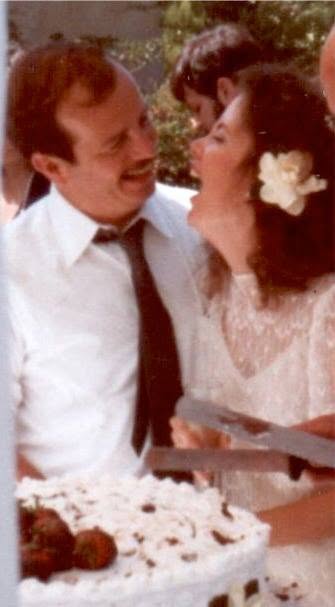
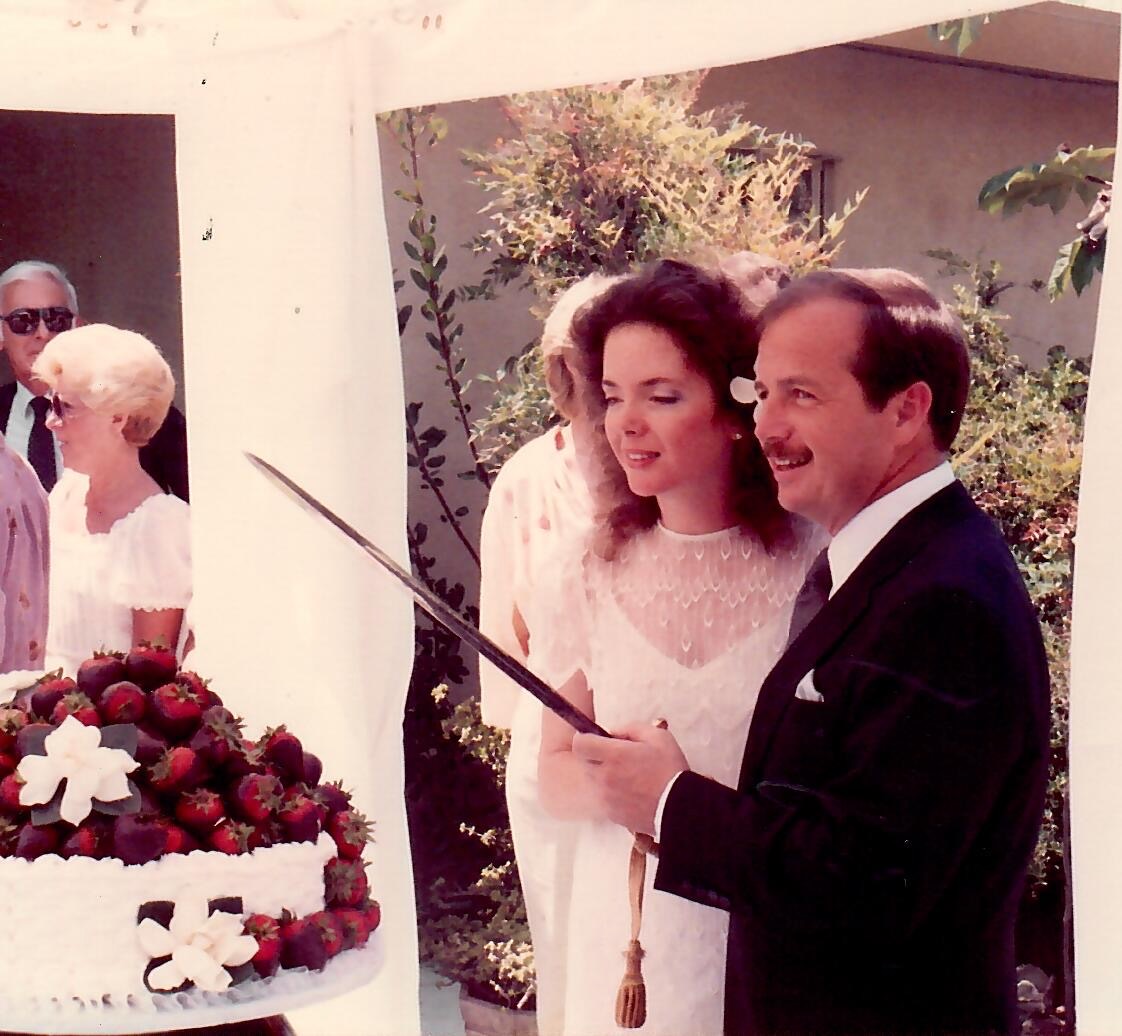
Then, on July 30, 1983, we were married in her father’s backyard.