All posts by Jim

A Pocket of Resistance: Water Hours…No, Not the Ones at Sea

This post is an avoidance strategy.

My printer went out last Tuesday. i could have made a fix on the old all-in-one, but it was time. So i wrestled with it for three days, did the Jewell version of quality assessment, and bought a new all-in-one printer, disregarding all of my research.

Since Thursday, the old printer is uninstalled and in the garage. The new printer is sitting on my desk with all of the cables unattached. i vowed to do it right: read all of the manuals and electronic instructions first, then follow them step-by-step, ensuring the wireless connections work, and on, and on, and on.

i don’t think i would be electronically, computer, or web challenged if i studied the procedures and the functions. But frankly, i don’t like spending my time learning all of the things to make things work to let me write and communicate. i spend more time on what makes it work than working on what i intended. It’s a lot like going out in the garage to do some home task and finding i need to do three or four other things first, and go get a tool i once had but don’t now.

Just flat don’t like that sort of thing.

So writing this is an avoidance strategy to keep from getting into the printer thing i know will take be at least two days and about a gallon and a half of frustration.

But this wasn’t supposed to be my avoidance. This was supposed to be about an idea that popped into my mind while watering spots on our front lawn this morning.

And that too is another story, especially about water in the Southwest corner.

You see water in the Southwest corner is mostly not from the Southwest corner. It comes from snow packs in the Sierras and down, down, down to the Colorado River, the one in Colorado, not in Texas, through the loam rich soil of the truck farms in Arizona and California to the east.

When it gets dry here — Duh: after all, this is high desert meant to support the four hundred Kumeyaay who lived on pinyan nuts here long ago, not the four million souls who have moved here to rely on Colorado River water and snow pack. Duh — the overlords pass down their judgment and their authority to the water authorities who declare the dear residents to kill the grass, which didn’t belong here in the first place. Reminds me of all the eastern folks who moved to Arizona because the climate and the vegetation was really good for all sorts of problems, especially allergies. So all of the folks get there and what do they do? They plant all the things from back home that produced allergies and other ills. Now the highly occupied areas of Arizona have allergy problems. Duh.

Regardless, our lawn damn near died. You see, my wife, the wonderful, incredible, responsible, loving Maureen Renee Boggs Jewell is a water Nazi. She was known to stop while driving to work to knock on a neighbor’s door at 7:00 a.m. and tell them they needed to turn off their lawn sprinklers because it was raining. So when the water authorities (hah!)  put out water hours for the good citizens, especially those with lawns, the water Nazi went overboard. No water. Lawn damn near died.

But the dreaded drought ended, sort of, as i predicted, and now the water authority and everyone else is worried the water will allow things to grow, which will become fire hazards in the next dry spell. Go figure.

The water Nazi maintained the rigid water hours and the lawn continued to die. So bad. i talked of turning our lawn into decomposed granite with boulders and pots of plants. But the lawn Nazi is also the money Nazi and didn’t want to spend the money to convert the lawn to decomposed granite (like my son-in-law, one Jason Gander, did to a small area behind his gate in Austin which looks really nice).

So i am working to save our front lawn. i rise early as usual, grind the coffee beans and start the coffee maker, set the breakfast table, and then as dawn suffuses light into the gray of morning,  i uncoil the hose off its hanger on the side of the garage, pull it across the driveway, and begin my spot watering of the driest parts of the lawn.

Somewhere in the middle of this small task, i thought of…no, connected with my father. Some of my earliest memories of him were him watering plants in our yard at 127 Castle Heights Avenue. He would get home in the late afternoon, early evening from fixing cars, grime in his fingernails and on his work clothes. His sleeves rolled up, he would take the hose and hit the needed plants and lawn spots until he was sure they had been given their proper sustenance.

Later, he had a sizable garden plot on the first tier from the road at the “lake cabin,” with tomatoes and other things always better than the store bought produce. He would go out several times a week to weed and water the small plot, waiting for the ripening.

Before they moved down the road to a more accommodating home for my mother who could no longer ascend or descend stairs without pain, without danger, he had planted a smaller patch he cordoned off from the rest of the yard with two by six boards. He would stand there in the morning and then later in the evening with the hose in his right hand measuring the effectiveness of the nozzle spray, ensuring his flowers and tomatoes (yep, tomatoes again) had enough but not too much water.

And once moved into the “adult condo” community, he found enough sculpted areas of dirt and pots to plant flowers, which he watered daily and in the summer twice daily.

i admired his constancy, his responsibility, his knowledge, his precision. But i saw no joy, no peace in this practice he practiced for as long as i could remember. It was admirable, but i didn’t have the patience. i liked these automatic, timed watering systems spraying unknowingly over the grass and plants.

Then, this morning in the gray break of morning, standing two thousand miles away from his watering, i recognized a peace, a simple joy coming to me. It was quiet, enjoyable, non-specific: just standing there with the water flowing from the nozzle on the bare, dry, and yellowed spots to become green again, regardless of the craziness of a green lawn and water hours in the high desert not meant for such landscaping.

There are many things my father taught me. i only recall about four letters he wrote when i was far away. We talked a lot, but only on maybe three occasions he gave me instruction. Yet he taught me continuously, and it always led to what my good friend Peter Thomas calls “doing the right thing.”

As i stood there this morning with my calmness, my peace in performing my task, i realized he still is teaching me.

And later, the printer has been installed properly.
A Pocket of Resistance: The Hawk, a real one, and me

I should be asleep. i will arise in four or five hours to do what i used to do in ten minutes except it now takes almost two hours to leave the house. Our first tee time is 0700 and Navy security is screwing up again, so i must leave earlier than usual. 0515 should be a good time.

i will go the back way probably: down the 54 freeway, but exiting south on I-5, not North. Going North means traversing the Coronado-Bay bridge and with security not opening the carrier or ocean gates because security wants to take an early day off for the Labor Day weekend, the bridge will be hammered from all the civilians and Navy personnel who don’t get the early day off trying to get in the main gate only.

Stupid drives me crazy.

And then my lone remaining passion in sports has smacked me in the head…again. Vandy looked like…well, they looked like Vandy: almost good but not good enough. Another long season looms.

So i sit here, not quite ready to hit the rack, but needing to do just that.

And i scanned my documents on the computer. And i found the below. i think it fits my mood:

hawk, on the fourth

hawk, soaring above
the periphery of southern California
civilization on the Fourth,
majestic in his flying hunt.

so hey, mister hawk,
are you seeking
a field mouse or rabbit or my cat,
which now also stalks your canyons and laderas,
which are what the mexicans call hills
only a few miles south of this high desert
turned green by the water
pumped in from arizona?

hey, hawk, are you also
turning to scavenging garbage
like the coyotes
at the bottom of the gorge below my house,
and
like the crows
who share your street lamp perches?
or
do you only occasionally feed
off the dead rabbits
just a bit too late crossing
the newly asphalted road
leading up the hill?

i marvel at our audacity
to infringe on your domain, mister hawk,
as i walk with the dog over your range
before returning to my house behind the hill
where the farm house,
the lone structure within miles of here
for many years
but now surrounded by the tract homes,
the lone house with truck hulks,
rusting pieces of metal and machinery
lying about
on the few remaining houseless acres
not yet leveled
by the graders of the development men.

Notes from the Southwest Corner: an addendum to “A Pleasant Walk Through History”

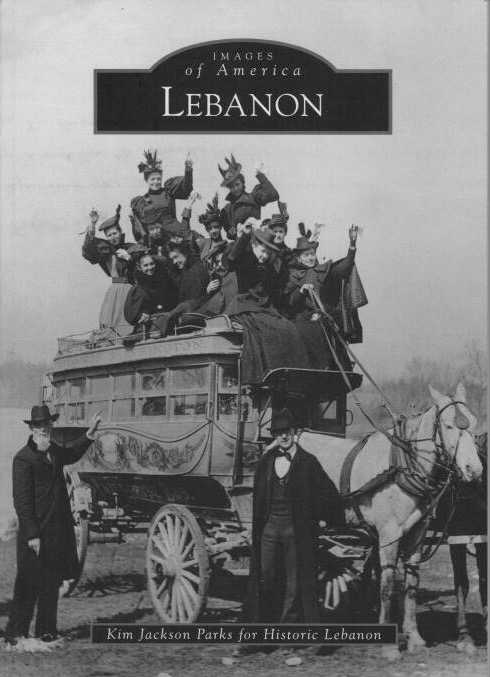
lebanon-bookThis photo of the book cover accompanied the column in the paper addition of the paper (hmm…i have to think about that statement).

As per my usual modus operendi, i didn’t go back and check and therefore didn’t include the other books on that shelf: No Longer Hangs the Fluted Shade: Random Observations in Verse, Paul Wooten’s poetry book; Castle Heights Military Academy 100th Anniversary  Alumni Directory;  Grand Ole Saturday Nights, Margaret Britton Vaughn; Discovering Tennessee, Mary U. Rothrock; Dropped Stitches in Tennessee History, John Allison; Tennessee: The Volunteer State, Mary French Caldwell; Landmarks  of Tennessee History, edited by William T. Alderson and Robert M. McBride; Remembering Wilson County, published by Wilson County Bank & Trust; and Haunting Memories: Echoes and Images of Tennessee’s Past, photos by Christine P. Patterson and text by Wilma Dykeman.

And although William Faulkner was as Mississippi as Mississippi can be, his works bring me back to home. Faulkner’s County: Yoknapatawpha, a photographic essay of Jackson, Mississippi and the surrounding area accompanied by quotes from Faulkner’s novels evoke feelings, real powerful feelings, and i include the book in my list.

i have found the information about the books and their authors, editors, and publishers are almost as interesting as the books themselves.

i keep trying to imagine Major Wooten bending over his desk, writing his poetry by hand in his classroom (wasn’t it in the McFadden basement, Heightsmen of my time?) after the cadets had gone to short order drill on the drill field; the track team had rendezvoused on what is now known as Stroud Gwynn Field and will soon become history so Wilson County Bank and Trust can build a headquarters building (sometimes progress isn’t) and played Jimmy Reed’s album of blues over the press box speaker system, the baseball team had ambled down to the diamond on hill street east of the drill field to smack out hits and field grounders and lazy fly balls. And then i try to picture the erstwhile major taking them home and clacking out the poems on his typewriter into the late evening.

Lillian, his wife, compiled and edited them. i have a copy signed by Lillian, dated the year the book was published, 1994. i ‘m sure my mother and father bought the book for me. Lillian wrote, “Jim, Enjoy a chat with Mr. Wooten through this book of verse.”

i have had chats with the Major on numerous occasions.

His poetry is more poetic than mine. His is classic poetry. And it rhymes. It is thoughtful, deep, light, meaningful, humorous, and most of all, it touches my soul. Yet it seems we both have had this passion for writing, not necessarily for others to read, but something that drives us from within to put things down on paper, except now it’s on this infernal computer screen. Of course, it is pleasing to know people read what i write and like it. i’m sure Major Wooten felt the same when his works were published.

There are times when i chastise myself for missing him. He was always there on the hilltop in his Army greens, but i never had him for class. i think we would have connected. i remember him as being a nice man who seemed professional, a teacher. i had already started to write poems, mostly as an outlet and all pretty bad. i have never rhymed very much and keep trying to categorize what i write because “poetry” seems like an exaggerated compliment. But Paul Wooten’s verses are poetry, pure poetry.

In the introduction, Lillian writes when April rolls in, she will honor his request to “Look out the window once, for me.”

And in April, i will look out the window, pull No Longer Hangs the Fluted Shade down from the bookshelf and have another chat with the major.


A Pocket of Resistance: JD, a Very, Very Funny Fellow

For those who might have missed my time with JD, we met for the first time on board USS Okinawa in transit from Perth to Sydney, Australia in 1981. After returning from deployment, JD moved into my apartment on Coronado for several months. Then he moved to what was then the Oakwood apartments about eight blocks from me. We sailed on his sailboat and ended up, with the help of Blythe selecting, in a condo in the Coronado Cays. Maureen and i were maid of honor and best man at his and Mary Lou’s wedding in April 1983 before we married that summer.

The four of us have remained fast friends through about ten moves and living about 1200 miles from each other.

JD is the funniest, most inventive guy, i have ever known. i don’t watch comedians live or on television because JD is funnier.

For example, as i was going through stuff to organize or toss this afternoon, i ran across an invitation to his and Mary Lou’s home in 1992. As JD said, “It’s a double-wide in Lakeside.” The home was so well done, i occasionally think about doing it myself. Of course, Maureen would leave, but kill me before she went. After all, Mary Lou had to ward off a mother o’possum in her bathroom with a hair dryer.

Still i think you might enjoy JD’s humor.

First page:

jd-invite

Second page:

jd-invite-2

The man is a genius. The party was great.

A Pocket of Resistance: On a Sea Far Away

Late yesterday afternoon, i found something that brought back memories, and i can get caught up with my memories. i was in the middle of about a dozen projects of various ilk and running close to the edge. i needed a break.

In my continuing quest to leave no mess behind, i again turned to my photographs. i ran across an event at sea i had experienced on a regular basis.  It was an evolution that faded from frequent practice but is now a regular event again. Reduced liberty ports is the reason in this new age of the Navy.

The photos didn’t quite capture the breathtaking awe of such an evolution, but i could visualize the event in my mind. i was not the conning officer and being the the “supplying ship,” it was not as challenging, but the photos do capture the spirit of such a maneuver.

The year was 1983. The place was the Indian Ocean in between Diego Garcia and Masirah, Oman. i was executive officer on the U.S.S. Yosemite (AD 19).  We held our pre-underway hi-line brief and readied for the evolution. After gaining communication and radar contact with the U.S.S. Gallery (FFG 26), a lookout spied her on the horizon, and we maneuvered for the rendezvous. Captain Frank Boyle, Yosemite’s commanding officer and a man who had Navy blue running in his veins, contemplated the upcoming event in the captain’s chair on the port bridge wing.

frank_boyle

The bridge team gathered and this goofy guy in the sweater checking his watch, the XO, discussed the situation with the captain.

bridge_team-onlookers

The Gallery, an Oliver Hazard Perry class guided missile frigate began it’s approach.

uss_gallery 1

We raised the day shapes for “restricted maneuverability,” a ball, a triangle, and another ball (the second ball is not visible in the photograph and the triangle’s shape is not evident).

restricted_maneuverability

Gallery moved forward into position on our starboard side.

gallery_approach

Once alongside in position, we could see her bridge.

gallery_bridge

We began passing lines to linehandlers on the Gallery’s forecastle next to her missile launcher.

unrep-gallery_linehandlers

The lines were passed.

gallery-hi-line

Our linehandling detail was prepared.

yosemite_linehandlers 1

We performed the required hi-line safety check of passing a test “dummy” in the boatswain’s chair. Personnel transfers by a boatswain’s chair required linehandlers rather than power winches.

hi-line-dummy_test

Later on the sail north to Masirah, we hi-lined two of our female officers, LT Sharon Carrasco and LTJG Emily Baker to the U.S.S. Lynde McCormick (DDG 8), a temporary “cross deck” so the women could experience life aboard a combatant. This was in the initial stages of the “Women at Sea” program. Most senior male Navy officers were not in favor of putting women on ships, and we were reprimanded for this transfer. Navy brass did not want good press on the program. They wanted to kill it.

In “UNREP” evolutions, it is much more fun (or scary) to be the ship coming alongside. It requires skill and experience, as well as a feel for the ship, the winds, and the sea, to maintain the proper distance and alignment from the ship on a steady course and speed, the latter nearly always twelve knots.

During previous UNREPS on maneuvering ship when i had the conn (driving the ship with instructions to the helmsman {rudder control} and lee helmsman {shaft revolution orders to the engineroom}), i quickly learned main control (the engineroom) would only laugh at a one revolution (a turn) change in speed. So when the ship was moving very slowly ahead in our relative position and i knew we needed just a slight reduction, i would order “drop three turns,” then “add two” turns” to get the one turn.

Staying alongside was made tougher, especially in rougher seas by the “Bernoulli Effect.” When the ships were alongside, only 120 feet apart ideally, the pressure created caused a drop of water level between the two ships of several feet. This drop created a force pulling the ships together. Conning was doubly difficult during UNREPs. i have included a photo from the web to give a good representation of the seas during an UNREP.

030908-N-0x¤030908-N-0119G-001 Atlantic Ocean (Sept. 8, 2003) -- The Military Sealift Command ship, USNS Supply (T-AOE 6) steams alongside USS Enterprise (CVN 65) while conducting an early morning replenishment at sea (RAS). Enterprise is underway in the Atlantic Ocean for her Comprehensive Training Unit Exercise (COMPTUEX) and upcoming scheduled deployment. U.S. Navy photo by Photographer's Mate Airman Ro

(The Navy’s UNREP photo was taken by Photographer’s Mate Airman Rob Gaston, USN  and can be found at  http://www.msc.navy.mil/sealift/2003/November/images/Supplyroughseas.jpg)

My first hi-line experience was when they used “double boatswain’s chairs” capable of carrying two personnel at once. i was in the last lift of 21 midshipmen returning to the U.S.S. Lloyd Thomas (DD 764) after spending a day aboard the U.S.S. Intrepid (CVS 11) in 1963. The linehandlers aboard the Thomas were exhausted after pulling the other transfers across. They wore out when i was about thirty feet from reaching the ship. i dangled there above the roaring sea for what felt like hours but probably was not more than a minute or two. i was relieved when the linehandlers regained some strength and pulled me aboard.

The Navy banned the use of the double chair reportedly when two admirals were dunked in the Mediterranean during a hi-line transfer shortly after my experience.

My funniest hi-line experience came in the late 1970’s. Amphibious squadron staff officers were cross-decked from the helicopter carrier flagship to an LPD for a day of inspections. The senior officer, not very well liked by many on the helicopter carrier, made sure he was the first to hi-line back. When his chair was midway through the transfer, ships rolled toward each other and the hi-line suddenly went slack. The commander was dunked into the water. As the ships rolled back away from each other, the boatswain chair shot back up and bounced up and down. Line handler tiredness was given as the reason for the dunking.

i loved hi-line evolutions.