All posts by Jim

A Few Good Men…and i’m Not Referring to Marines

Sean Dietrich’s “Sean of the South” post today stirred up memories. i read it right before breakfast. Usually it’s a bit earlier when i read Sean’s emailed post. Had i read it then, i probably would have just nodded my head with understanding and deleted it. i made a vow i wouldn’t repost Sean’s posts unless they struck a major, major chord. This one struck a chord as i read the Sunday paper during Maureen’s superb eggs, toast, and fruit (it’s been a while since i made it to the commissary down at the 32nd Street Naval Station and we’re out of Tennessee Pride country sausage).  As i finished up with coffee and the comics, i thought about Sean’s post some more.

He hit that chord because i wrote of a good man once, about four and one-half years ago. i consider “a good man” one of the highest praises a man could get. Acting, behaving, and even thinking in a manner to warrant being called a good man is one of my two major goals left in life. Doing the right thing (thank you, Peter Thomas for articulating this one) is the other.

i explained why my primary reason for pursuing being a “good man”  in my Lebanon Democrat “Notes from the Southwest Corner” that four and a half years ago. For those who might have missed it, i have pasted it below.

The link to Sean’s column is http://seandietrich.com/respects/

Respects

Good man gone

By now, most of you know my father, Jimmy Jewell, passed away last Tuesday (August 14, 2014), 46 days shy of his 99th birthday.

This newspaper and its competition carried articles about him and as well as his obligatory obituary. He would have been embarrassed by all of this fuss over him. He shied away from publicity.

Jimmy Jewell’s near century of living is interwoven with the history of this city and this county. His history has been fairly well documented in many of my previous columns.

But I do not wish to discuss his history or how it has been interwoven with the city. I wish to honor him for what I think he treasured most: being a good man.

♦     ♦     ♦

In the early 1960s, I first heard of Jimmy Jewell being described as a “good man” when a Seabee buddy of his, Elmer Hauser, from World War II traveled from Arizona to see Daddy. Elmer and his wife Minnie went to dinner with us at Dr. Lowe’s second Plaza Motel on North Cumberland. There Elmer leaned over to me and said, “You know your father was the best liked man in our battalion (the Navy’s 75th Construction Battalion). He didn’t drink so he would give his beer and liquor rations to his friends. Everybody wanted to be his friend.”

Elmer chuckled and then explained to me confidentially, “But the reason he was so well liked was not the rations. He was liked because he was a good man.”

♦     ♦     ♦

In July as we prepared to move Jimmy Jewell from UMC to his new but short-termed home of Elmcroft Senior Living in early July, I went to see my mother in their new digs. A man on a motorized wheel chair met me half way down the long hall.

“Are you Jimmy Jewell’s boy?” he asked, ignoring the fact I resemble my 69 years.

“Yes, I’m Jim, his older son.”

“I thought so. “I’m Basel Tyree. Can’t wait to see him,” he continued, “I’ve known him since the late 40s. He worked on my cars. He is a good man.”

We talked some more and in one humorous exchange, I laughed. “When you laugh, you sounded just like him,” Basel observed said.

“Best compliment I’ve ever received,” I replied.

Archie King, also on a motorized wheelchair had met me earlier with eagerness to see my father. When we met the next time, he told a story of when his car had been rear-ended in the early 1950s.

“The insurance company was only going to pay for the bumper and the dents to the trunk, but the frame was bent. I didn’t know what to do,” Archie related.

“I told Jimmy about it,” he continued, “Jimmy took the phone, called the insurance agent and said ‘I’m Mr. King’s attorney, and we are going to sue your company if you don’t pay for fixing that frame.’

“They paid. There’s no telling how much money Jimmy saved me,” Archie concluded and then added:

“He’s a good man.”

♦     ♦     ♦

After my father passed away, several folks like Tilford Elkins and John Cook also used “a good man” to describe Jimmy Jewell. I decided to cite them and others in this column. But before the Sellars Funeral Home visitation was over Saturday, I could not keep up with the names of those who used the term, I had also lost count.

That pretty well describes how Jimmy Jewell has been perceived in this town. I think it was his greatest trait.

It occurred to me there are other Lebanon men who have earned or are earning the “good man” description. Perhaps my perception is somewhat flawed, but I recall thinking of many Lebanon men of my father’s generation being “good men.” I believe it was not a false perception. The men of that generation valued the trust and caring of others over physical possessions or power. They did not draw lines in the sand unless it really mattered. They tried to make things work for everyone.

It seems our culture now leans toward self-protection, greed, and self-aggrandizement more so than in those times. There were a lot of good men back then, but they are dwindling quickly.

Jimmy Jewell was one of the best of those good men.
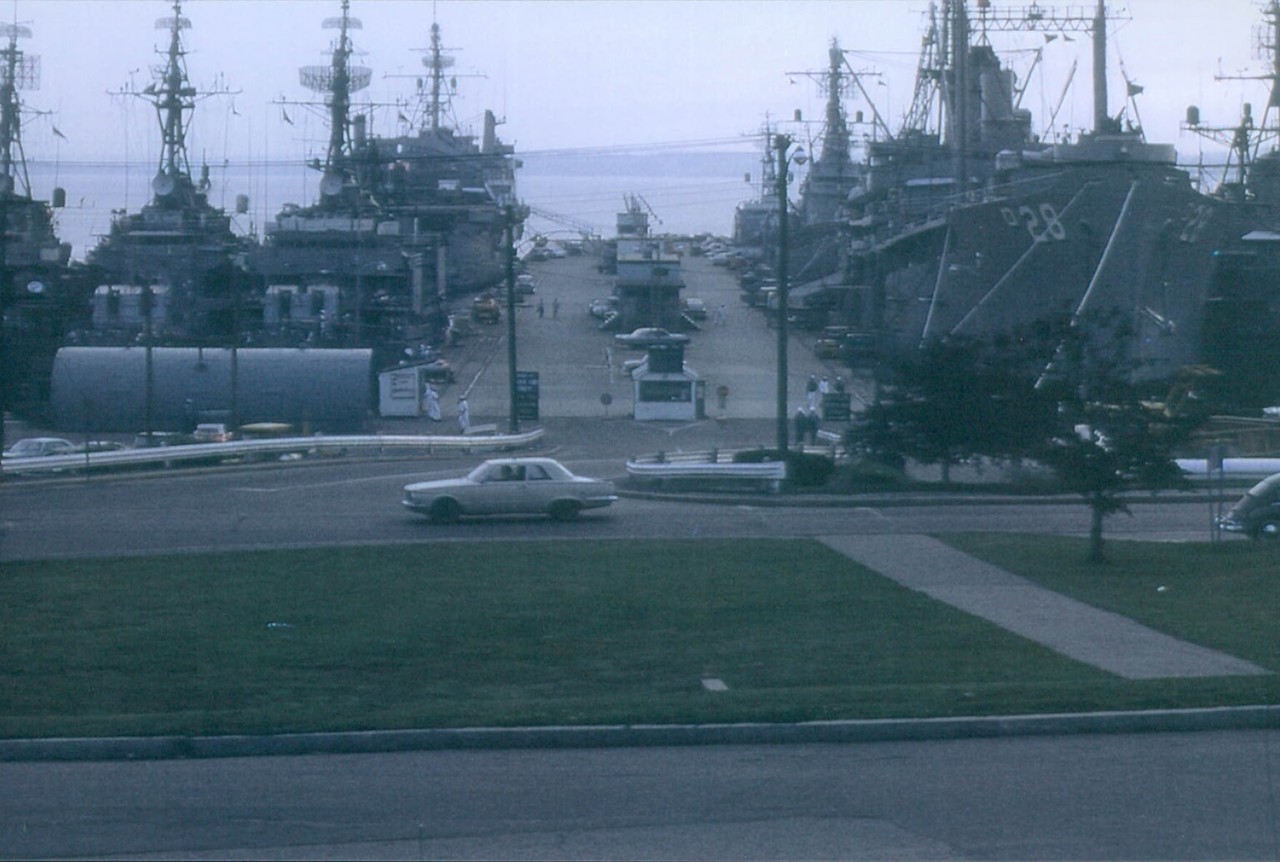
Another Lesson for an Ensign: The Paint Locker, circa 1968

Before chiefs taught me a thing or two or two thousand, i was a very, very green ensign.

Destroyer-Submarine Piers in Newport, Rhode Island where i learned about the paint locker, circa 1968. Photo provided by RD2 Norm O’Neal. Thanks, Norm.

As an ensign, i stood duty in three sections. The qualifications for standing the OOD, Officer Of the Deck, watch in port, was not too stringent. You had to be a junior officer, chief, or very good first class petty officer. And breathe. i would add “chew gum” but that was deemed inappropriate on the good ship Hawkins or any other Navy ship at the time. i may have stood an under-instruction watch, but i don’t remember it.

i don’t remember standing many of those earlier watches, not even the first dog one particular duty day in the summer of 1968. But i most definitely remember the next watch.

It was the mid-watch. About half-way through around 0200, a third-class petty officer came back from liberty. He was lit. After saluting, he began to rant and rave and chewing me out in particular. i was not quite sure what to do. My petty officer of the watch (POOW) recognized my dilemma and called the duty Master-at-Arms.

As i was trying to tell the boozy sailor he was on report, the master-at-arms showed up on the quarterdeck. He was a first class gunner’s mate. Unfortunately, as it is in many of my recollections, i don’t remember his name. i do remember he looked like an NFL tight end. He wore his chambray shirt sleeves folded up above his elbows to show up his rather impressive biceps, even with a couple of tattoos disguising the ripples. He had a tight crew cut under his dixie cup (“hat” for land lubbers), which of course, was pushed back from his forehead. A Pell Mell dangled from his lips.

“Don’t worry, sir,” he said to me, “I’ll take care of this guy.”

Then, he grabbed the sailor by the arm, leading him off the quarterdeck and forward, telling him, “Come on son, we’re gonna have a little talk down in the paint locker.”

The paint locker was part of the boatswain’s locker on a Gearing-class destroyer. It was all the way forward on the first platform (a partial deck below the main deck), small and dark. i did not know it at the time, but it was also the location of some non-NJP discipline.

When i asked the POOW why the master-at-arms was taking the drunken sailor to the paint locker, he just said, “To help sober him up,” and then he chuckled.

i learned the next morning at quarters what the POOW really meant. The sailor who had been “sobered up” passed me as we headed for our different division musters. He looked not quite like he had been put through a meat grinder, but it was close. His face was black and blue and one eye was swollen. i don’t think he ever gave an OOD any trouble after that.

The master-at-arms had applied some discipline. Back then, that wasn’t such a bad thing. Today, all hell would have broken loose and all of us would have been plastered all over the major networks for being slightly cross-threaded with political correctness. But this type of justice kept a lot of sailors from going to captain’s mast or worse, and it straightened many of them right up.

i learned a lot.

It probably wouldn’t work today: too many sea lawyers.

A Story of Chiefs

The Navy was an education for me. In many ways.

The Navy was different back then. i think they continue the traditions, but those traditions, like chiefs initiations and over-the-line rituals are watered down. Political correctness, you understand. The divisions between ranks have been muddled. This may or may not be a bad thing. i am not wise enough or knowledgable enough to determine, but it is different.

And i liked the way it was.

When i was in the Navy, the lower enlisted were the work force, and boy, did they work. In fact, they were incredible workers. There are very few people in this country today who could even fathom putting in the hours at work those sailors did.

The third and second class petty officers were a transition. They too did hard labor, but their expertise and knowledge in their fields (ratings) began to give them more say in the way ships operated.

First class petty officers were escaping most of the hard labor, but they still got involved. “Leading Petty Officer” speaks of their new role in leadership.

Then there were the chiefs. Lifers. Loving the Navy. Thinking they knew as much as the old man. Some did. But as with all things, there were some really good ones and there were some who were…oh, to be nice, they weren’t quite as effective.

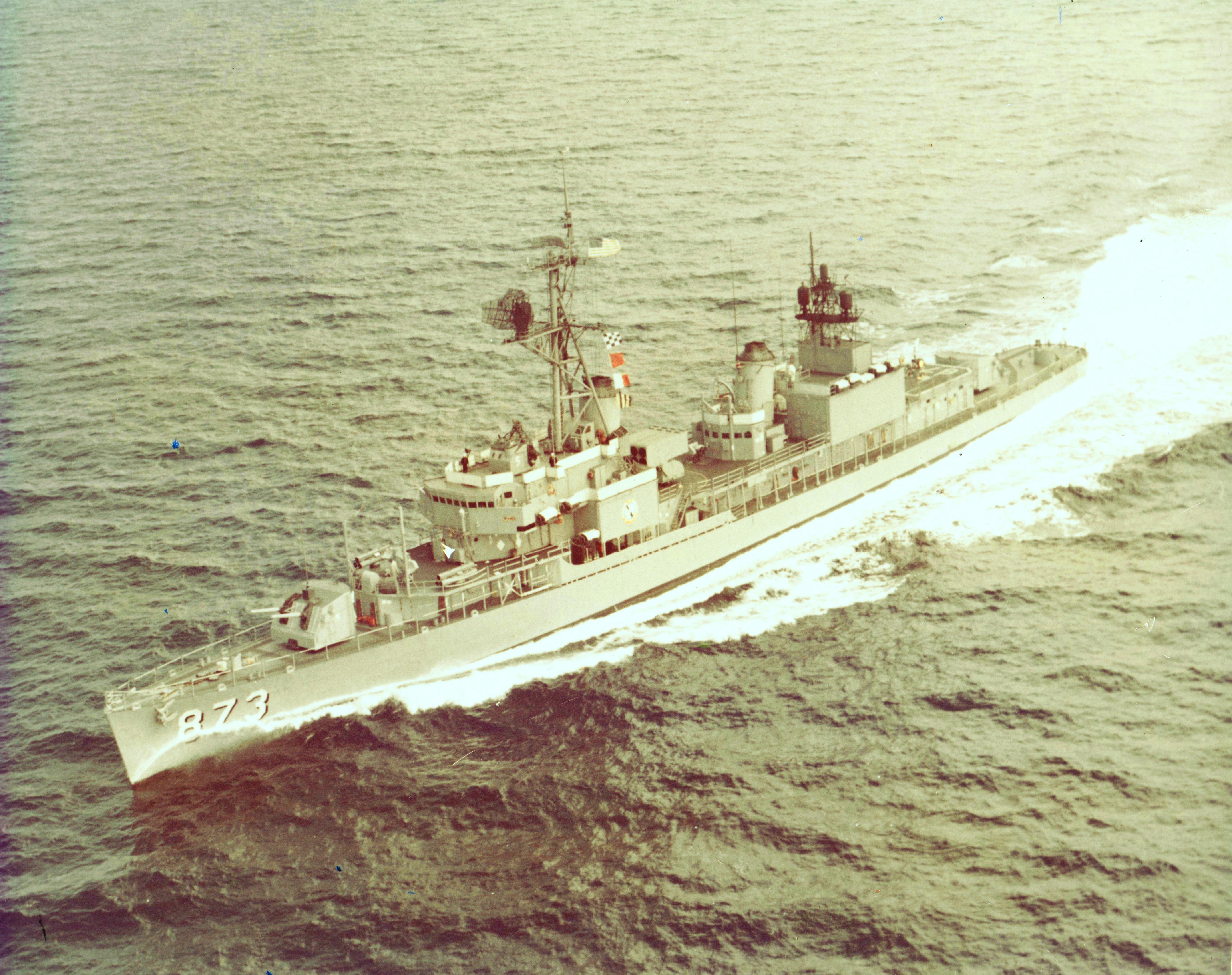
USS Hawkins (DD 873), circa 1969

An Ensign learns this quickly. i did. My first ship was the USS Hawkins (DD-873). i had completed the Anti-Submarine Warfare (ASW) Officer course in Key West when i reported aboard in Malaga, Spain in April 1968. The sitting ASW officer would not leave until October. In the interim, i was the First Lieutenant, deck officer in charge of first division, boats, davits, exterior spaces, and anything else that wasn’t specifically related to any other division or department.

BMC Jones was my introduction to the way things worked. He taught me the ropes. It still amazes me how he ran first division, taught me many things about being a division officer and deck seamanship while never appearing to be in charge, always deferring to his division officer. Green upon green me. Crazy. But it worked.

Chief Jones was from the Arkansas Ozarks. He had another four months to reach twenty years. He planned to retire on the button. Chief Jones was a chain spoking, rail thin, ruddy complexion chief boatswainmate, probably around 5-8 and 130. He was not to mess with.

After we crossed the pond and completed our deployment, arriving at our homeport of Newport, Rhode Island in early May, being on a ship was different. Back then, the crew had liberty cards. They reflected which section the sailor was in. There were usually three sections rotating the duty. The duty section remained on board for 24 hours while the other two sections had liberty. Those liberty cards were handed out by the chief or leading petty officer shortly before liberty call. It had many implications not on top of the table. Liberty cards were incredible leverage for the LPO’s and CPO’s.

We had this seaman apprentice who required leverage. He was a strapping, very fit 6’2,” 180-pound young man, and pretty smart too. Problem was he wanted to use his smarts to get away with stuff until he had completed his obligation. We called sailors like this “sea lawyers.” Chiefs and LPO’s didn’t like sea lawyers. To put them in their place, the chiefs and LPO’s used leverage. Like liberty cards.

We will call this guy Seaman Farkle. Back then, you didn’t have to be so polite. Anyone below chief was called by their last name. Period. Chiefs were called chiefs. Officers were called by their rank, e.g. “Ensign Jewell.”

It was a Friday. We were cutting the hard working folks some slack. Liberty call was at noon, not the usual 1600. i had gone down to the first division berthing to check out the material condition. Farkle was there, upset. It seems he had tried some sea lawyering out on BM2 Carrier, our LPO and a very good one. Farkle was in section 2, section 3 had the duty. But when Carrier passed out liberty cards to the division, he couldn’t find Farkle’s. That meant Farkle had to remain aboard the ship, even though it wasn’t his duty day.

Farkle decided an ensign was ripe for using his sea lawyer tactics. He approached me and began an intense tirade about abuse of his rights, how he was demeaned, how the chief and LPO were acting outside of procedure, were in violation of regulations.

He was making headway on this green ensign. i wasn’t yet wise in the ways of that Navy. He had some good points, from a sea lawyer’s perspective about rights and all that, but i wanted to back Carrier and Chief Jones.

Farkle was in my face, livid with his sea lawyering when Chief Jones slid down the ladder (forward, not climbing down backwards; that’s how true sailors descended ladders). The slender, wiry chief slid in front of me and grabbed Farkle’s shirt at the top two buttons. Then he pushed Farkle against the bulkhead and with one hand lifting the young man about six inches off the ground. Then Chief Jones read Farkle the riot act like only Boatswainmate chiefs can do. It was classic and can not be repeated here because non-that-era tincan sailors are the only people who would understand, and others will read this.

All sea lawyering disappeared from Farkle. He was a quivering mass of fear, nodding affirmatively and declaring his fealty.

Farkle stayed on board that weekend.

i learned a valuable lesson about the old Navy…and i loved it.

A Typical Morning in the Life of an old Jewell

They came yesterday afternoon. Two of them. They call them wand tilters.

We have replaced about one quarter of our blinds over twenty-seven years. The wand tilters on the old ones are nearly all broken. The mechanism still works, sort of, but the wand connector thingie (notice my expert technical jargon) has broken and wands, a critical part, can’t be attached.

So we decided to try out two new wand tilters before ordering more.

This morning, right after breakfast, i  took to the replacement task. With my penchant for screwing tasks up initially, i figured it would take somewhere between ten minutes to four hours. As usual, i planned ten minutes. i figured i would tackle the two of the smallest blinds, the four small windows in our living room/dining room for ease of handling. While Maureen was getting ready to go to yoga — i know, i know, what do you do to get ready for yoga? — i took down the smallest blind, replaced the part, rehung the blind and the valence.

The first mistake. i showed it to Maureen. She was thrilled. As i was going to take down the next small blind, she stopped me.

“Why don’t we do one of the larger ones in the family room? They are the ones i have the most trouble with and they’ve got a pull-down problem too,” she said.

Having been married to her going on thirty-five years, i correctly did not take this comment as a question and explanation. i took it as a direct, nonnegotiable order. Of course, in spite of my whining and making fun, i was right.

She left for yoga. i took on the big blind in the family room. Since i now had some realistic expectations on the time of repair, i figured 15 minutes. Max.

But you see, i forgot about the valence. The valence is among eleven my folks made. From 1985 until 2001 (my father was 87, my mother 84 on their last cross country trip in their RV), Jimmy and Estelle Jewell would drive out to miss the kind of weather the east is having now. They stayed in a nearby RV park and come over every day. They would work on projects, enjoy their granddaughter (as they enjoyed all children, grand, great grand, or simply children), Mother would cook meals, and we would play bridge after supper until they went back to their RV park, sometimes taking Sarah for the night.

And the projects? Well, Daddy constructed the framework for the back yard patio, laid the the tile in the courtyard, erected the trellis outside our bedroom, built a desk out of scrap lumber for Sarah, made and hung the shelves in Sarah’s bedroom. Mother cut and sewed the fabric which he installed on the dining room chairs. And then she cut and sewed the fabric for the eleven valences in the kitchen, the family room, and the hallway windows.

These valences are a piece of art. They are also constructed to remain intact through Armageddon.

That’s not a problem. Taking them down is a problem. Because i have to undo all of the securing mechanisms my father put in place. This is not a small thing.

It did not help that the stapler gun and the ratchet wrench broke during breakdown and re-installation, that a support frame had to be relocated, and somewhere around 489 tools had to be checked to see if they would work best.

The guilty blind and its indestructible valence.

So the quarter hour project was crammed into about four. Working out, writing on my book, going to the driving range, and reading all went away this morning. Blind mechanism replacement, you see.

But this afternoon, we have working blind wand tilters with wands installed in two blinds. The valence for one is back in place.

The bad news i have just ordered 15 more wand tilters. They will arrive tomorrow or Saturday. i now know what i will be doing all weekend.

i took a NORP..

Roads Taken

i am an old cantankerous curmudgeon. Sort of been that way my entire life except for that “old” part.

i have traveled down many roads, a lot more if you consider sea routes.

i don’t particularly handle self-importance very well.

So when someone tells me, “It’s my way or the highway,” i’m back on the road again.