All posts by Jim

A Note of Thanks in Between Chapters

This is a note to thank all of you who thus far provided me feedback on the installments of my book, Steel Decks and Glass Ceilings.

Those who have complimented the book have motivated me to keep at it. That is good. i need motivation.

Others have included corrections, edits, or revisions. This changed my perspective on the installments. i now look upon that feedback as essential in making this a more accurate and much better read in the long run.

Thank you.

One issue about the book has bugged me from the beginning. That is using the actual names of sailors who did some things wrong during the deployment. i initially decided it was not big deal. i checked with several folks who have more knowledge and experience than i do. From that i concluded naming the guilty was not my problem and what risk of a law suit existed, i was willing to chance for the book being as accurate as it could be.

Several friends including my wife were concerned about possible libel suits from the guilty. Although i had considered such a possibility, this is not the reason i have changed my mind about names. But with the number of folks voicing concern, i sat down with myself and reconsidered the situation.

First off, i concluded naming those guilty folks would serve no purpose other than to put their names out there with a negative connotation for the public at large. During my two-year tour aboard Yosemite there were four crew members, one female and three males, that drove me bonkers with their disruption of good order and discipline. As a problem, they didn’t go away until i left the ship for my next duty station. Although i told myself i was only being accurate, there could have been a hint of revenge for the trouble they caused me, at least subconsciously. i believe i am better than that, above revenge, above holding a grudge.

Then there was and what continues to be my job as executive officer of the USS Yosemite. The executive officer has many facets of his job to perform. There are none more important than supporting the commanding officer in all matters, regardless of what  the XO personally believes is a better course of action. As Captain Boyle and i discussed at the end of one incident, the captain’s job includes ensuring justice is carried out aboard his ship. The exec, as i pointed out, is responsible for good order and discipline, and i added, if a few innocent folks are condemned falsely and good order and discipline has benefitted from their misfortune, the the XO, me, though sad at the fate of the innocent,  i can go with it.

That is not the captain’s position then nor is it now. He stands for justice. And if his XO is worth a damn, that XO is ultimately for justice as well. And i am. To not use the real names is justice at work.

Finally, i have tried to do what is correct in all of my personal and professional life. i certainly haven’t been perfect, but i have tried. My good friend and shipmate during my last tour, Peter Thomas articulated this well in a discussion we had several years ago when i asked him what one characteristic, one competency that was most important in being an effective leader. Peter said, “Do the right thing.” i had never articulated what i was trying to do so succinctly. Peter’s words have stuck with me, and i considered what is the right thing in this instance.

The names will be changed. i have already begun the process and will give these individuals the generic name of “Schmidt.” Why? Why not “Doe” or “Smith,” or even the old Navy moniker of “Joe Shit the Rag Man.”

Because for me, “Schmidt” is perfect. i was raised in a strict Southern Methodist family. We didn’t have any booze in the house except whiskey flavoring for boil custard at Christmas. There was no profanity. Then, my father told a joke at the breakfast table on the Sunday before Christmas. i was fourteen, my younger brother Joe, was nine.

Daddy turned to Joe and said, “On one Christmas Eve, Santa was in his sleigh in the sky headed to give gifts to all of the children. His sleigh was being pulled by his reindeer with Rudolph the Red Nose Reindeer in the lead. Santa was giving instructions to Rudolph about which roof to land on next. All of sudden, Rudolph took a steep dive downward. The other reindeer followed and then came the sleigh carrying Santa.

“Rudolph and the whole shebang crashed into an outhouse. Santa climbed out of his sleigh, out of the outhouse basement and finally outside. As he wiped all of the foul content off his red outfit, he cried out, ‘Dammit, Rudolph, i said the Schmidt house!'”

My mother was aghast. My sister chuckled. Joe and i were rolling on the breakfast room floor laughing.

But as Paul Harvey used to say, that was not the end of the story. 

As we often did on Sundays after church, we went to dinner (also known as lunch in other parts of the country) along with our Aunt Bettye Kate and Uncle Snooks Hall. It was a nice family restaurant on North Cumberland near East High Street. i don’t remember the name, but it was good and on that Sunday crowded. We sat at a table in the middle of the room. The men, Joe, Uncle Snooks, our father, and i, sat at one end. The women, Aunt Bettye Kate, Martha, and our mother sat at the other end.

Sometime during the repast, brother Joe asked our father if he could tell the Santa joke to Uncle Snooks. Daddy, with a mischievous grin, nodded it was okay. Joe, all nine-years old of boy, got excited and began to tell the story. As he described Rudolph going into his dive, Joe became more excited and increasingly  louder. By the time he reached the part where Santa was climbing out of the outhouse and brushing himself off, he was practically yelling. Quite a few of the other diners had stopped eating and were listening. 

When he reached the final line, Joe shouted, “Rudolph, I said the Schmidt house!” my mother was aghast, Martha and Aunt Bettye Kate were trying to hold back their laughter, but Uncle Snooks, Daddy, and i were practically rolling on the floor.

Aunt Bettye Kate memorialized the event with a cross-stitch of the scene with Rudolph, Santa, the outhouse, and the punch line. i still have the cross-stitch and pull it out every Christmas to put it in a place of honor, and i laugh once again. My anonymous trouble makers have to be named Schmidt in honor of my family and the legendary joke.

Different?

You might think we are different.

i mean we grew up together, shared a bedroom until we left for points beyond. He was smart, really smart. His older brother, aka me, was not so smart. i was called “mighty mouse”, and “junior jock,” which translates to being a fairly decent athlete but too small to do much. So not being too smart, that’s what i hung my star on. The star fell out of the night sky.

The younger one graduated from Vanderbilt and got his theological degree and philosophy masters from Boston University. Smart.

One of us went to sea: me. The younger, he, became a Methodist minister and by my account, one of the best because he cared for his flocks.

The older, me, settled in the Southwest corner. The younger, he, settled in the Northeast, New England, about as far away from each other as we could get and remain in the U.S. of A.

He looks like his father. i look like my mother.

Pretty different, alright.

But we were both a bit goofy. Still are goofy.

Today he turns 70. We are once again in the same decade.

And we think a lot alike, and along with our sister Martha, we remain as close knit as two brothers and a sister could be spread across the country as we are.

And he is my brother:

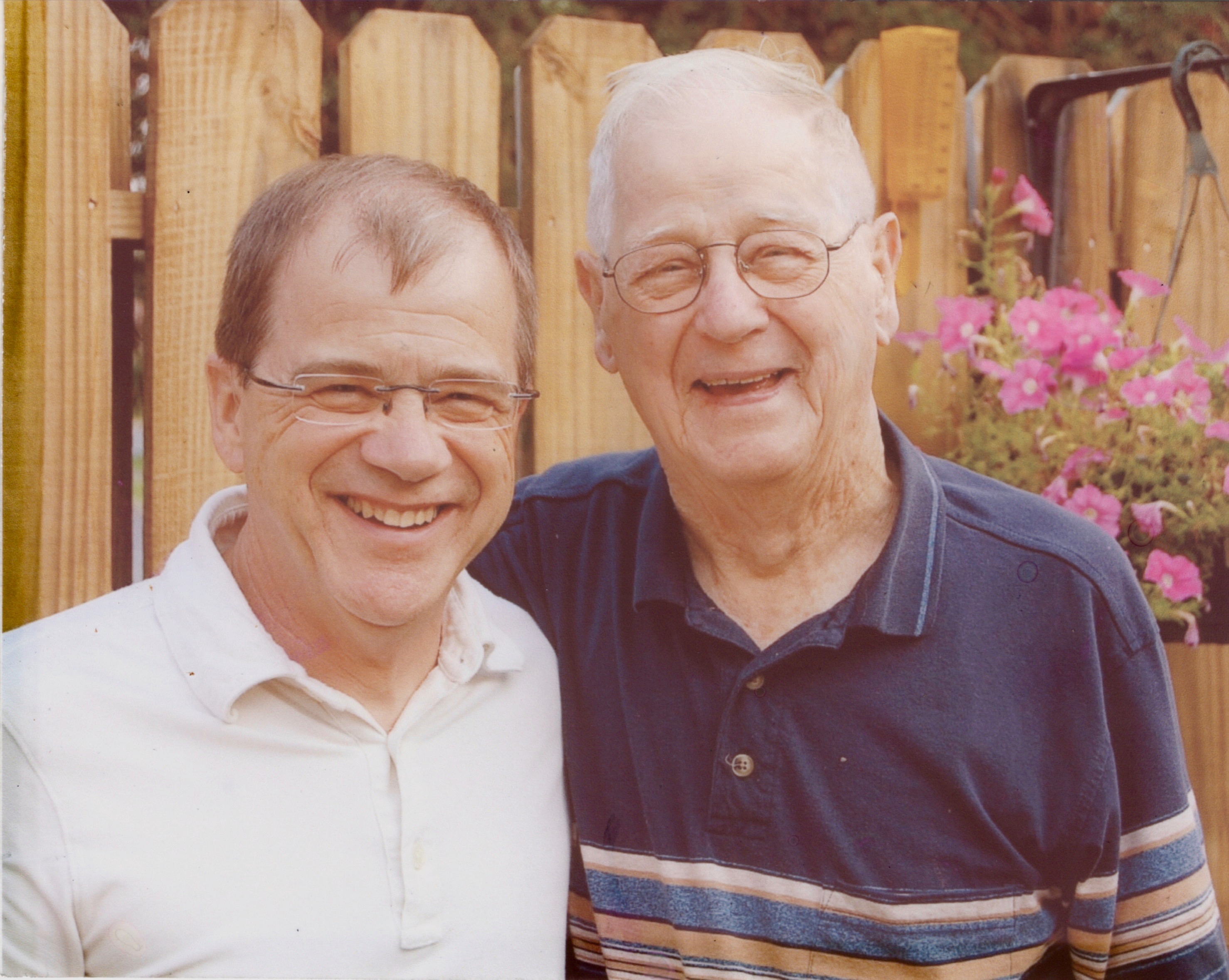
Happy Seventieth Birthday, Joe. You, as someone gave the highest compliment to our father, are a good man.


Once Upon a Time

Jim Howell posed a question to me on a Facebook post today, although the post was made quite some time ago. His question was about John Walker and Bill Cowan. Jimmy was on our undefeated 1956 team and the post included a photo of the team at Lebanon Junior High the next year when John, Bill, and i were in the eighth grade. i responded accordingly while my mind went back to once upon a time a long time ago.

Lebanon, Tennessee. Late 1940’s, early 1950’s.

Bill Cowan was probably my best friend for those first years. The Cowans lived in the first house on the west side of Castle Heights Avenue before they moved to West End Heights when he and i were in second grade. We remained close and visited each other through junior high. Bill, Townley Johnson, and i worked on being a band in junior high. They were good. i was not.  They went on to musical careers. Bill was killed in an auto accident in his early twenties, a tragedy.

John was another soul i liked and lost our connection. John Walker was much involved in my early years because we played sports together. He played on our junior high football and basketball teams and our Castle Heights freshman football team. Then he left. Texas as i recall. Good man. Went to Baylor i heard. That was the last i heard many years ago.

There were two others to whom i was closer in those years who took off from my memories. Bobby Weatherly was one cool dude if you could be a cool dude in Lebanon in the first through third grades at McClain School in 1950 through 1954. He was a good friend and as much of a heart throb for the girls as a boy could be in the third grade. His family left after our third grade. Lost track.

Then there was the year older Bill Simpson. He was Mr. Jackson’s grandson, you know the guy who ran “Little Eskew’s” on the intersection of West Main and South Tarver. We all would stop there walking home from McClain School (they didn’t feel the need to add “elementary” to the name back then) to get candy bars, bubble gum, and baseball cards we could put in our bicycle spokes to make them sound like a really bad motorbike when we pedaled.

Even though Bill was a year older, i played with him constantly in those early years, many games and cowboy fantasies in the Padgett’s lot next our house and in the tree house Mr. Jackson built for him in the large lot behind their house next to the Baird’s at the top of the hill. If i remember correctly, Bill’s father was killed in World War II and Bill and his mother, the Jackson’s daughter lived with them until the daughter and Bill moved to Nashville in my third or fourth grade year. i missed him a lot.

Now, of course, the memories are streaming through this old brain. Strangely, the one that keeps sticking is the traffic light. It was elementary school and i don’t remember exactly when they enlarged West Main from two to four lanes but it was sometime around then. Probably no need for that back then except for bragging rights. West Main was mostly larger homes of established families. We thought the traffic was terrible, but of course, it would be considered a trickle today.

The city considered the traffic so bad, they decided to put a traffic light at the intersection of Castle Heights Avenue and West Main. On the north side was the entrance to Castle Heights Military Academy.

Well, they put it in along with the newest high fangled technologically advanced system for traffic control at the  time. i’m guessing this was sometime around my third or fourth grade years. About ten to twenty yards up Castle Heights Avenue in the middle of the north bound land, they installed a rubber activating strip about six inches wide and five feet long. When a car ran over the strip, the weight would depress the strip sending a signal to the traffic light, which would turn the light on West Main to red, allowing the car or cars on Castle Heights to enter West Main.

Oh yes, there were some other things that could activate the traffic light…like two or three boys jumping on the rubber strip simultaneously. i know because it was fun. Coming home from McClain, whoever was with me would join the fun and jump with me in sync on the rubber strip, then we would hide in the bush row next to the road and watch the cars stop with drivers wondering why there was a red light.

Yep, i can remember some real strange things.

Chapter Four, part two

Chapter Four, Crossing the Pond; part two

All of my previous transits in the Atlantic had been a SOA (speed of advance) of 17 knots. This was primarily because my previous ships in the Atlantic had been destroyers. At one time, the old Yosemite had been capable of a maximum speed of 19.6 knots. But age of the machinery and addition of lots of weight for new repair equipment, CAPT Boyle believed her maximum was about 16 knots. The transit from Mayport to Rota, Spain was planned at a cruising speed of 14 knots. I was pessimistic and suspected she would be lucky to grind it out at 12 knots.

Captain Boyle and Ken Clausen, the chief engineer discussed how the thirty-nine-year-old ship could handle speed. Captain Boyle had plenty of experience and knowledge concerning steam ships. He served in three engineering tours, was an engineering instructor at Navy Destroyer School and a senior examiner on the Atlantic Fleet Propulsion Examining Board. Ken had already established himself in my opinion as one of the best chief engineers with whom I had served.

Prior to departure, we had three non-crew members board for the transit across the Atlantic. Navy Campus for Achievement provided Mr. Mabry for conducting GED and CLEP tests and other educational services for the crew. The Fleet Weather Center, Norfolk sent a first class and a second class aerographer’s mates (AG’s) temporary duty to give us the most current and complete weather information. It was the season for tropical storms and hurricanes.

After our first night underway, AG1 Scollan came to me with a message from his command in Norfolk. A tropical depression off of Bermuda was developing and was being watched closely. In two days, the depression strengthened into a tropical storm and on September 11, it became Hurricane Chantal, the one I described in my letter to Maureen above.

Looking at the charts, Captain Boyle and I assessed our options. Both of us had significant experience with hurricanes, typhoons, and tropical cyclones and storms. We believed it would be safest for the ship to cross well ahead of the northern path of Chantal. To remain on the western side of the storm could put the ship in a precarious position without maneuvering room if Chantal moved northeast. The fleet weather center disagreed and directed us to stay east until the hurricane passed.

Frustrated, Captain Boyle with my agreement decided to obey the direction of the weather center. There was a very, very slight chance our crossing north of the hurricane track could put us in a dangerous position. Although we were sure this wouldn’t happen, if it did we would have no leg to stand on in defense of our actions.

By Monday evening, September 12, Chantal had dissipated and was no longer classified a hurricane, reverting to a tropical storm. We resumed our course to Rota. I was not sure the old “Busy Lady” could make up the delay to arrive on time. She proved me wrong.

Although Yosemite was expected to steam around ten knots, the boiler technicians used oversized sprayer plates for the boiler burners and the old grey lady made it across the big pond at an estimated SOA (Speed of Advance) of twelve knots. At times, she even topped out at sixteen knots. Beautiful old lady. She arrived in Rota as scheduled, Tuesday, September 20.

*     *     *

In all of the other Navy ships on which I deployed, going to sea was an extremely busy time for all hands. Everyone had watches, usually three or four sections. If it was four sections, the watch sections would rotate through the four-hour watches, which gave them a different watch each day. Yosemite was in four-section watches on the bridge, Combat Information Center (CIC), lookouts, and engineering. But the vast majority of the ship’s complement was the Repair, Medical, and Dental departments, and none of those crew members stood watches.

However, Captain Boyle had determined early on the material condition of the thirty-nine-year-old ship was poor. There was a large amount of rust throughout the ship, especially on the weather decks. The first lieutenant, chief engineer, and the repair officer came up with a plan to address the problems and bring the ship back to respectable material condition by the time we returned to Mayport. Captain Boyle approved.

The plan went into effect as soon as we left Mayport. Nearly the entire ship kept busy throughout the transit, a massive effort by the Repair department was made cutting and welding rotten metal throughout the ship.

I was getting the feel of communicating with the crew. The POD became my daily connection with all of them. The POD was read, or at least was supposed to be read to all hands at morning quarters. I tried to convey good order and discipline was a primary concern for everyone, but we could take care of business and still have fun. I was learning on the fly.

I also was learning how Navy officers, chiefs, and sailors heeded my cardboard signs I hung on my office door. If the sign indicated I was out of the office and where I was, whoever had come to see me would leave, go back to work, and return later. However, if the sign indicated I was in, I qualified that information with additions. My normal sign was “Knock and Enter.” Then there was “Quiet Time: Please Do Not Enter,” “Conference in Session: Please Do Not Enter,” “XO’s Mast: Please Do Not Enter,” etc.

Then as president of the wardroom mess, I would sit at the head of the wardroom table. In one of the first days at sea at the end of the noon mess, I arose and announced, “I hear the rack monster calling (“rack” was the old sailors’ term for beds, which were canvas bottoms tied to a metal frame); it is time for a “NORP.” The old salts knew about the “rack monster” even though the new officers didn’t understand, and no one knew what a “NORP” was. When they all inquired, I explained “NORP” was the acronym for “Naval Officer’s Rest Period.”

CHENG and the First Lieutenant got together with the assistant repair officer. They had the repair department make another Bakelite sign. This one was blue with a gold background. Instead of letters, the threesome had the repair department paint Navy signal flags on the blue background for November, Oscar, Romeo, and Papa. One had to know the signal flags to read it, but soon everyone on board knew it spelled “NORP.”

No one seemed to pay attention to any of the other signs and would barge into my office regardless of what the sign said. However, when I hung the “NORP” sign on my door, no one dared to enter. It worked and continued to work until the day I left the ship.

One particular incident occurring on the transit to Rota was related to later events. The repair department had an informal leader who was a positive influence on the crew’s morale. ET2 (Second Class Petty Officer, Electronics Technician) Schmidt was constantly involved in supporting the ship’s policy. He was a leader in group physical fitness workouts and other social activities.

One late morning after I had conducted my messing and berthing inspection, he knocked on my door and sat down. In the POD that morning, I had inserted my hand-written assessment of the previous day’s messing and berthing inspection. In it, I had named a culprit of having a gross rack, in the engineering berthing as I recall. Padelsky decided the new XO needed a lesson in leadership. He told me it was not right to identify poor performers in public, that, as the old saw goes, I should praise in public and condemn in private.

I listened politely and then told Schmidt his idea might work somewhere else, but we were in the Navy and should be held accountable. I could put the poor and gross rack maker on report, which would lead to a rather lengthy NJP process, which was silly, or I could point out in public the rack-maker was creating a bad and unhealthy atmosphere for the others in his berthing compartment, which should put pressure on him to clean up his act.

I thanked him for his input and I would consider his advice in future POD notes.

On the fourth day after leaving port, a chief came to the bridge to report two sailors, male and female, had been found in a locked compartment. Apparently, nothing of significance had happened yet, but the situation was grossly inappropriate in our situation. The two went to Captain’s Mast and were dismissed with stern warnings.

This occurred as the captain and I were discussing how we should deal with male and female relationships when they went on liberty throughout the cruise. I went through the regulations concerning women at sea. We considered an incident during the previous regime when two crew members, a male and female kissed each other crossing the brow onto the ship. Of course, the sea trials incident of standing lights on after sunset and the two crew members locked in a compartment were also considered.

As far as I can recall, we never wrote any of these rules down officially, but it was known throughout the ship these rules were in effect throughout the deployment and continued once we returned stateside:

  1. There are no female or male sailors and officers aboard the There are only sailors and officers aboard and we are all going to act like sailors and officers.
  2. No two sailors or more shall ever be inside a compartment locked from within.
  3. No affection will be demonstrated between crew members on board or in any area controlled by the ship including the pier or landing areas for liberty boats.

It was a different time, different cultural mores and different fashion. An example was in my handwritten POD note:

  1. Shaved heads. General regulations on grooming standards state that the standards are based on “neatness, cleanliness, safety, military image and appearance.” While shaved heads might be clean, they do not project the military image and appearance. This is especially important when Yosemite enters foreign ports and represents the U.S. in our sailors’ appearance and conduct ashore. Consequently, no personnel will be allowed ashore after ROTA with shaved heads.

Then on September 16, Captain’s Mast was held for several sailors put on report. MMFN Edmunds, the deserter whose wife required me to write a letter of explanation to the First Lady, was one of them. The captain assigned Edmunds to a Special Court Martial.

At 1000, Thursday, September 20, Yosemite entered Rota Bay and tied up port side to the pier at Naval Station, Rota.

By the captain’s and my assessment, the transit had been successful. We still had a long way to go to reach our destination of Diego Garcia, the first of the four legs had gone pretty well. We had made our projected arrival date at Rota on time in spite of the threat of Hurricane Chantal. The crew had gotten their sea legs and all seemed to be faring fairly well. From our experience with this new idea of women in ships, we had been able to formulate some rules. It seemed the crew had bought into the idea they were sailors, regardless of gender.

It was now time for a short liberty port visit and to prepare to cross the Mediterranean.
“Murphy’s Law”

From my “Murphy’s Law” desk calendar archives thanks to Aunt Evelyn, Uncle Pipey, and cousin Nancy:

Emerson’s Observation: In every work of genius we recognize our rejected thoughts.

Goofy guy’s annex to Emerson’s Observation: Unfortunately, we also recognize our rejected thoughts in a whole bunch of non-genius.